

Austria combines elegant imperial cities, dramatic Alpine scenery, crystal-clear lakes, historic towns, classical music, and centuries of European culture within a relatively compact country. From Vienna’s magnificent palaces and Salzburg’s Baroque streets to mountain villages surrounded by some of the most spectacular landscapes in the Alps, Austria offers an impressive variety of experiences for travelers.
Although Vienna is the country’s most famous destination, Austria extends far beyond its capital. Travelers can explore historic Salzburg, picturesque Hallstatt, the mountain landscapes around Innsbruck, beautiful lakes in the Salzkammergut region, charming towns along the Danube, and Alpine valleys filled with hiking trails and traditional villages.
Austria is also relatively easy to explore thanks to an efficient railway network connecting many major cities and regions. Whether you are interested in architecture, history, music, outdoor adventures, food, or scenic landscapes, the country works equally well for short European trips and longer journeys.
This guide explores the best places to visit in Austria in 2026, including famous cities, historic towns, Alpine destinations, and beautiful natural areas worth adding to your itinerary.
Best Places to Visit in Austria
1. Vienna
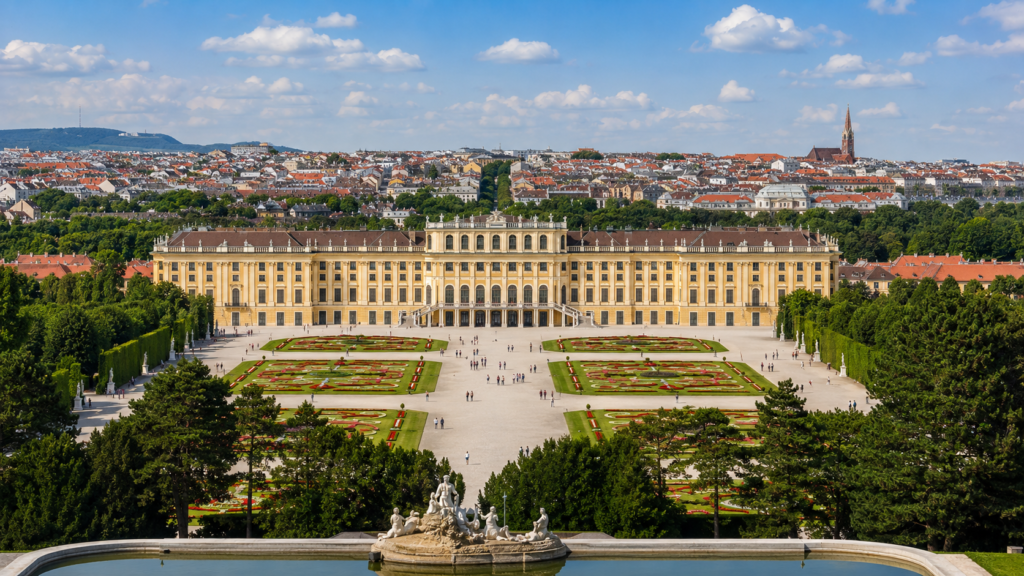
Vienna is Austria’s capital and one of Europe’s great cultural cities. For centuries it served as the center of the Habsburg Empire, leaving behind an extraordinary collection of imperial palaces, grand boulevards, museums, churches, concert halls, and elegant historic architecture.
Schönbrunn Palace is one of Vienna’s most recognizable landmarks. The former imperial summer residence includes magnificent rooms, extensive gardens, fountains, monuments, and elevated viewpoints overlooking the palace grounds and city.
In Vienna’s historic center, St. Stephen’s Cathedral rises above streets filled with historic buildings, cafés, shops, and cultural attractions. Nearby, the Hofburg complex provides another opportunity to explore Austria’s imperial history.
Art and museum enthusiasts can spend considerable time around the MuseumsQuartier and major institutions such as the Kunsthistorisches Museum and Belvedere Palace. The Belvedere is particularly famous for its art collection as well as its Baroque architecture and landscaped gardens.
Vienna’s traditional coffeehouse culture is another important part of the city experience. Historic cafés provide atmospheric places to enjoy coffee, pastries, and classic Viennese desserts while experiencing a tradition closely connected with the city’s cultural identity.
Allow at least two to three full days for Vienna if visiting for the first time.
2. Salzburg
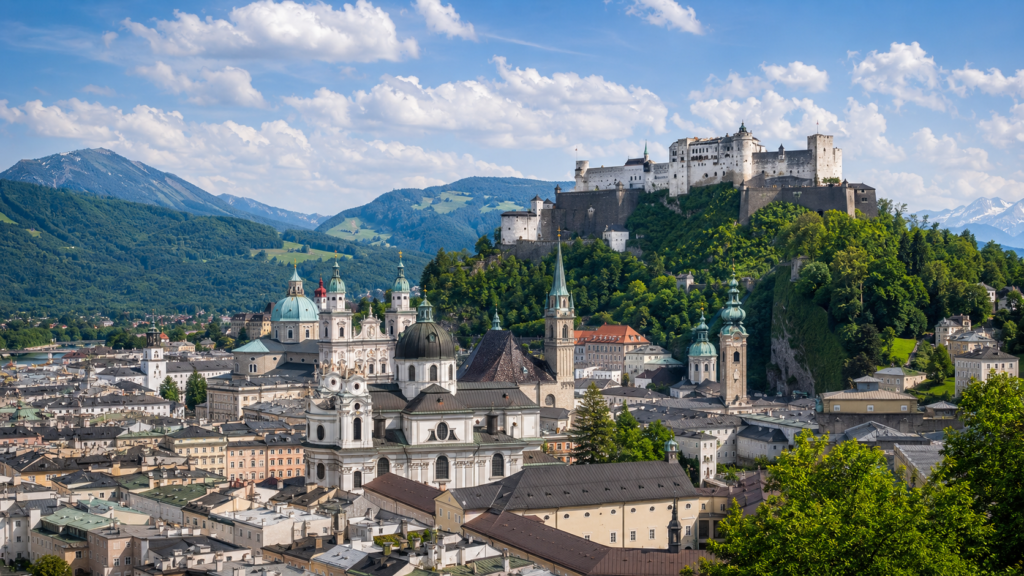
Salzburg combines Baroque architecture, musical heritage, mountain scenery, and one of Austria’s most attractive historic centers.
The city is internationally associated with Wolfgang Amadeus Mozart, who was born here in 1756. Visitors interested in classical music can explore locations connected with the composer while discovering Salzburg’s broader cultural history.
The UNESCO-listed historic center is characterized by elegant churches, narrow streets, traditional shops, historic squares, and impressive Baroque buildings. Getreidegasse is among the best-known streets and leads through the heart of the old city.
Above Salzburg stands Hohensalzburg Fortress, one of the city’s defining landmarks. Its elevated position provides panoramic views across the rooftops toward the surrounding mountains.
Mirabell Palace and Gardens offer another classic Salzburg experience, with formal gardens and views toward the old city and fortress.
Salzburg also works as a useful base for exploring surrounding lakes, mountains, villages, and the wider Salzkammergut region.
3. Hallstatt

Hallstatt is one of Austria’s most recognizable villages, positioned between the mountains and the calm waters of Hallstätter See.
Traditional Alpine houses rise along the lakeshore beneath steep mountain slopes, creating the dramatic landscape that has made Hallstatt internationally famous. The village itself is compact and can largely be explored on foot.
Visitors can walk through the historic center, explore the waterfront, visit local churches, and enjoy viewpoints overlooking the lake and surrounding mountains.
Hallstatt also has an important connection with salt mining stretching back thousands of years. The wider region has considerable archaeological and cultural significance in addition to its natural beauty.
Because Hallstatt receives large numbers of day visitors during popular travel periods, arriving early or staying overnight can provide a quieter experience.
Hallstatt can be combined with other destinations around the Salzkammergut rather than treated as the only attraction in the region.
4. Innsbruck
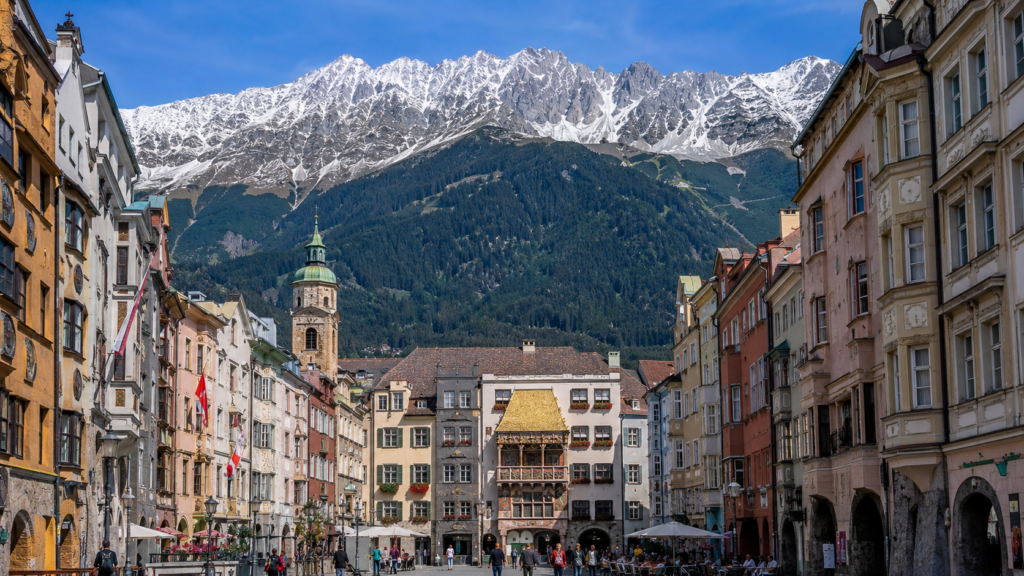
Innsbruck is surrounded by dramatic Alpine mountains and offers one of Austria’s strongest combinations of historic city sightseeing and outdoor adventure.
The compact historic center contains colorful traditional buildings, narrow streets, churches, cafés, and the famous Golden Roof, one of the city’s most recognizable landmarks.
What makes Innsbruck particularly distinctive is how quickly travelers can move from the city center into the mountains. Cable cars and mountain railways provide access to elevated viewpoints and hiking areas with spectacular views across the Inn Valley and surrounding peaks.
The Nordkette mountain range is especially accessible from Innsbruck and provides a dramatic contrast to the historic architecture below.
In winter, Innsbruck becomes a convenient base for skiing and other snow activities in the surrounding Tyrol region. During warmer months, hiking, cycling, mountain excursions, and scenic drives become major attractions.
Travelers interested in both European culture and Alpine scenery should consider spending at least two days in Innsbruck.
5. Salzkammergut
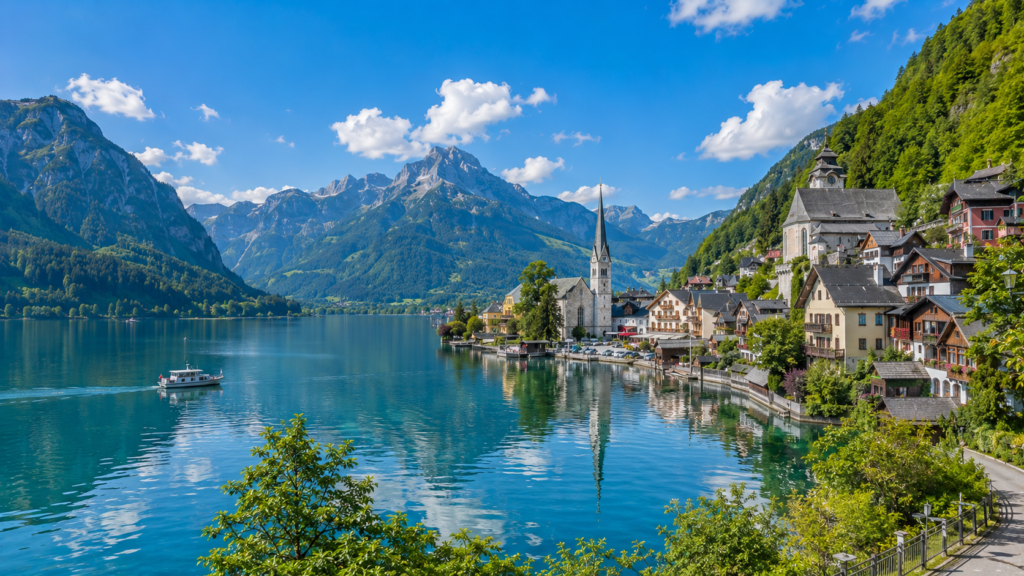
The Salzkammergut is one of Austria’s most beautiful regions, known for its Alpine lakes, dramatic mountains, traditional villages, forests, and peaceful countryside. Located mainly east of Salzburg, the region is an excellent choice for travelers who want to combine natural scenery with small-town Austrian culture.
Wolfgangsee, Mondsee, Attersee, and Traunsee are among the region’s best-known lakes. Their clear waters are surrounded by mountains and attractive communities, creating opportunities for swimming, boating, hiking, cycling, and scenic drives during the warmer months.
St. Wolfgang is one of the most appealing towns in the region, with traditional architecture and a beautiful position beside Wolfgangsee. Nearby viewpoints and mountain railways provide spectacular perspectives across the surrounding lake district.
Hallstatt is also part of the wider Salzkammergut region, but travelers who explore beyond its famous village will discover many quieter lakes, mountain communities, and scenic landscapes.
Spending several days in the Salzkammergut allows visitors to experience a more relaxed side of Austria while remaining within relatively easy reach of Salzburg.
6. Graz

Graz is Austria’s second-largest city and offers an attractive combination of historic architecture, contemporary design, museums, university culture, and regional cuisine.
The historic center is filled with narrow streets, courtyards, colorful buildings, churches, shops, and elegant public squares. Above the city rises the Schlossberg, a forested hill crowned by the famous Graz Clock Tower.
Visitors can walk or take transportation to the top of the Schlossberg for panoramic views across Graz and the surrounding region. The contrast between red-roofed historic buildings and modern architecture is one of the city’s distinctive characteristics.
Graz is also known for its food culture. The surrounding region of Styria produces pumpkins, apples, wine, and other agricultural products, while pumpkin seed oil is one of the area’s best-known specialties.
Compared with Vienna and Salzburg, Graz receives fewer international visitors, making it a rewarding destination for travelers interested in experiencing another side of Austrian urban culture.
7. Wachau Valley
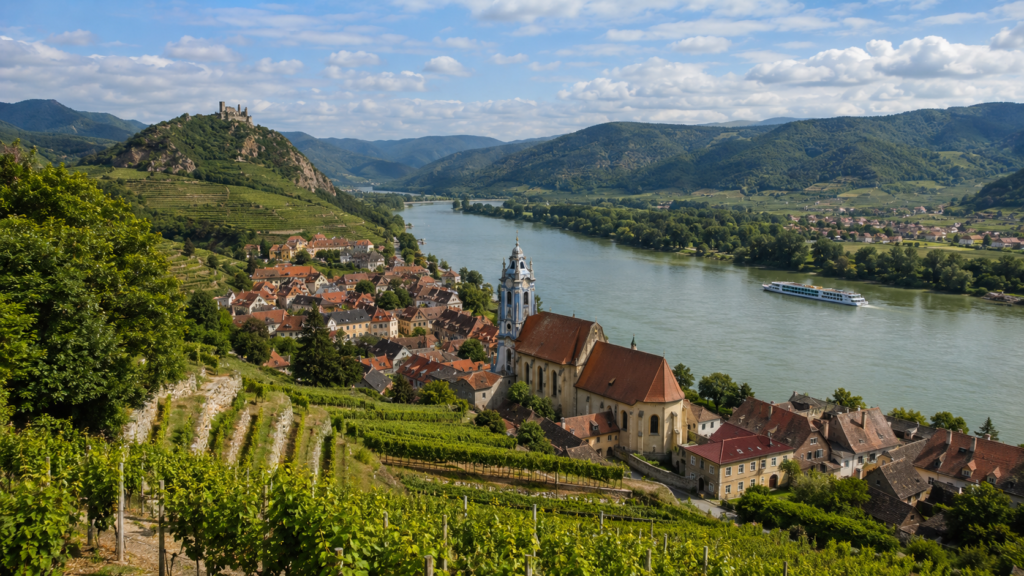
The Wachau Valley stretches along the Danube River between Melk and Krems and is one of Austria’s most attractive cultural landscapes.
Vineyards cover hillsides above the river, while historic villages, castles, monasteries, orchards, and church towers appear throughout the valley. The combination of natural scenery and centuries of human settlement has made the region particularly appealing for scenic travel.
Melk Abbey is one of the Wachau’s most impressive landmarks. The enormous Baroque monastery stands prominently above the Danube and contains elaborate interiors, historic collections, and landscaped grounds.
Further along the valley, towns and villages such as Dürnstein provide opportunities to explore traditional architecture, riverside streets, vineyards, and castle ruins.
River cruises are a popular way to experience the Wachau, while cycling routes along the Danube provide another excellent perspective during warmer months.
The region can be visited as a day trip from Vienna, although staying overnight provides more time to explore its smaller communities and countryside.
8. Zell am See
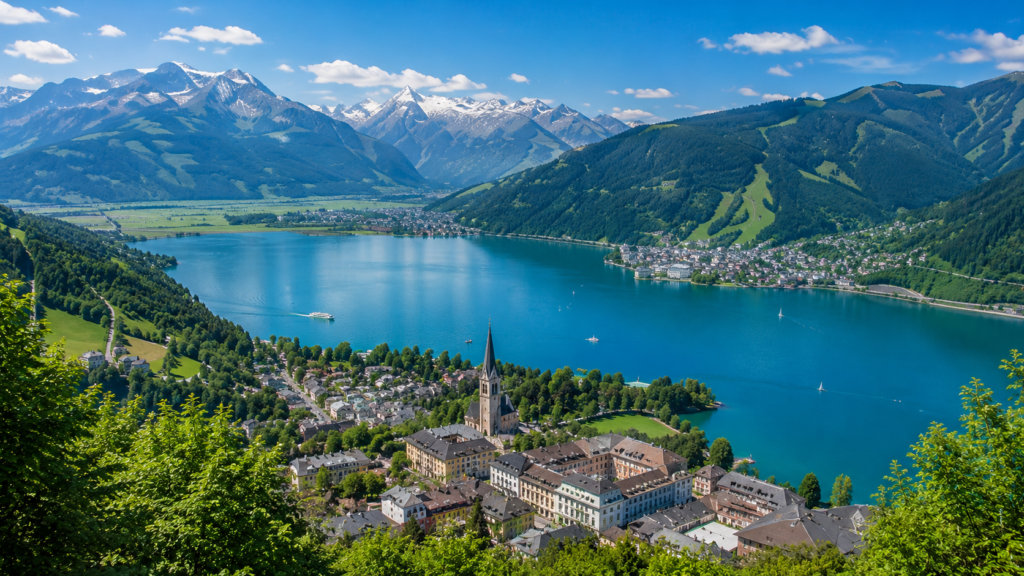
Zell am See is a picturesque Alpine destination centered around the beautiful Lake Zell and surrounded by high mountains.
The town combines a compact historic center with easy access to outdoor activities. During summer, visitors can enjoy swimming, boating, lakeside walks, cycling, hiking, and mountain excursions.
Cable cars provide access to elevated viewpoints overlooking the lake and surrounding peaks, creating some of the most impressive panoramas in the region.
Winter transforms Zell am See into a popular snow-sports destination. Ski areas around the town and neighboring Kaprun provide access to extensive mountain terrain, while the nearby Kitzsteinhorn offers high-altitude scenery.
Zell am See works particularly well for travelers who want a traditional Austrian mountain destination where lakes and Alpine landscapes can be experienced within the same trip.
9. Grossglockner High Alpine Road
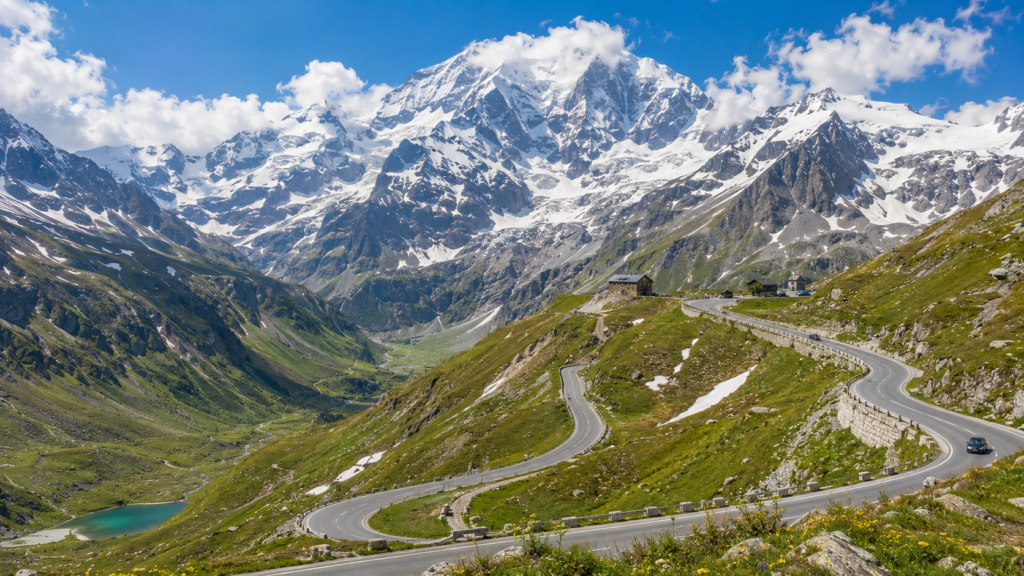
The Grossglockner High Alpine Road is one of Austria’s most spectacular scenic drives, crossing dramatic mountain landscapes within the Hohe Tauern region.
The road climbs through forests, Alpine meadows, high mountain terrain, and a series of viewpoints overlooking some of Austria’s highest peaks. Grossglockner, the country’s highest mountain, dominates the surrounding landscape.
Observation areas along the route allow travelers to stop for panoramic views, short walks, photography, and opportunities to appreciate the scale of the Austrian Alps.
Weather conditions can change quickly at high altitude, and the road operates seasonally rather than throughout the entire year. Travelers should check current opening conditions before planning the journey.
Driving the route slowly and allowing time for multiple stops provides a much better experience than treating it simply as transportation between destinations.
For travelers visiting Austria by car during the warmer months, the Grossglockner High Alpine Road can become one of the highlights of an Alpine itinerary.
10. Bregenz and Lake Constance
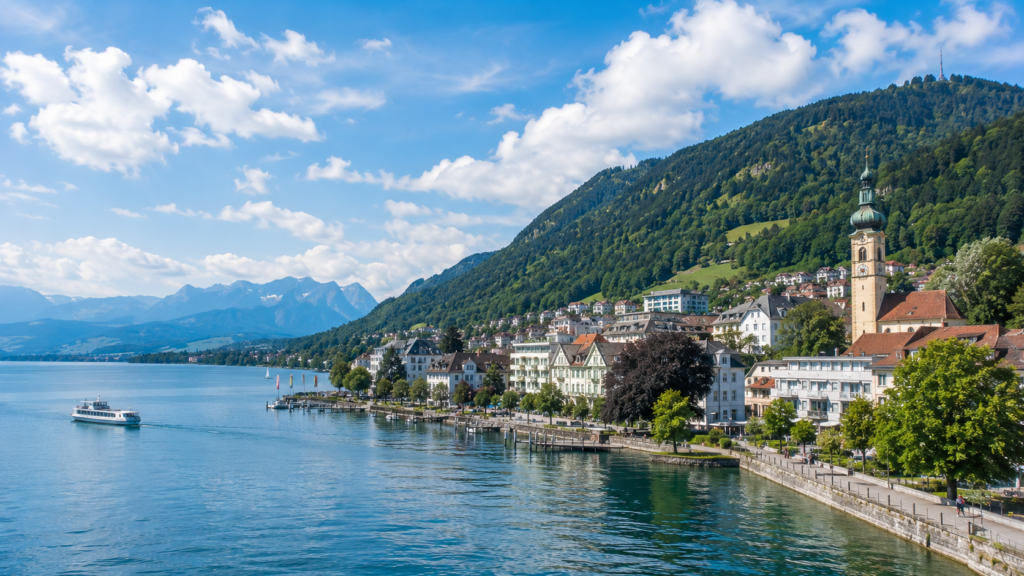
Bregenz is located in western Austria on the shores of Lake Constance, close to the borders with Germany and Switzerland. Its location makes it particularly convenient for travelers planning a multi-country journey through the Alpine region.
The waterfront provides attractive walking and cycling areas with views across the lake, while the compact city center offers museums, cafés, historic streets, and cultural attractions.
Bregenz is internationally known for the Bregenz Festival, which features spectacular performances on a large floating stage built over Lake Constance. The festival attracts substantial visitor numbers during the summer season.
Above the city, Pfänder mountain provides panoramic views across Lake Constance and toward the surrounding Alpine landscapes. Visitors can reach the mountain by cable car and explore walking routes around the summit area.
Bregenz offers a different Austrian experience from Vienna, Salzburg, or Innsbruck, combining lakeside scenery, mountains, culture, and convenient access to neighboring countries.
Best Time to Visit Austria
Austria can be visited throughout the year, but the best season depends largely on the type of trip you are planning.
Late spring and early summer are excellent for city sightseeing, lakes, countryside trips, and hiking at lower elevations. May and June generally provide long daylight hours and increasingly pleasant temperatures, although mountain weather can remain unpredictable.
July and August are among the busiest months, particularly in Salzburg, Hallstatt, the Salzkammergut, and popular Alpine destinations. The warmer weather is ideal for hiking, swimming, scenic drives, and outdoor activities, but accommodation should be booked well in advance.
September can be particularly attractive because temperatures are often comfortable while some destinations become less crowded. Vineyards and agricultural landscapes also make regions such as the Wachau Valley especially appealing around late summer and early autumn.
December is popular for Christmas markets and festive city trips. Vienna, Salzburg, Innsbruck, Graz, and many smaller communities host seasonal markets surrounded by historic architecture and winter decorations.
For skiing and winter sports, the main season generally extends through the colder months, although snow conditions vary according to altitude and location. Travelers planning specific winter activities should always check current local conditions before departure.
Local Food You Should Try
Austrian cuisine combines Central European traditions with strong regional influences. Vienna, Salzburg, Tyrol, Styria, and other parts of the country each contribute distinctive dishes and ingredients.
Wiener Schnitzel – One of Austria’s most famous dishes, traditionally made from thinly pounded veal coated in breadcrumbs and fried until crisp.
Tafelspitz – Boiled beef traditionally served with accompaniments such as potatoes, vegetables, horseradish, and sauces. It is particularly associated with Viennese cuisine.
Käsespätzle – Soft egg noodles combined with melted cheese and often topped with fried onions. This hearty dish is especially popular in Austria’s Alpine regions.
Tiroler Gröstl – A traditional Tyrolean dish commonly prepared with potatoes, onions, meat, and a fried egg.
Apfelstrudel – Apple strudel is one of Austria’s best-known desserts, made with thin pastry surrounding a filling typically containing apples, sugar, spices, and sometimes raisins.
Kaiserschmarrn – A fluffy shredded pancake usually served with powdered sugar and fruit compote. It is particularly popular in Alpine areas.
Sachertorte – Vienna’s famous chocolate cake traditionally combines dense chocolate sponge, apricot preserve, and chocolate glaze.
Salzburger Nockerl – A light soufflé-style dessert associated with Salzburg, traditionally shaped to resemble the mountains surrounding the city.
Austrian Coffeehouse Culture – Coffeehouses are an important part of Austrian cultural life, especially in Vienna. Taking time for coffee and cake in a traditional café can be as much a cultural experience as a meal.
Transportation
Austria has an excellent public transportation system, making it relatively easy to explore the country without renting a car. Trains connect major destinations including Vienna, Salzburg, Innsbruck, Graz, and many smaller towns, while regional buses provide connections to villages and areas without direct railway access.
Rail travel is particularly convenient between Austria’s major cities. The journey between Vienna and Salzburg passes through attractive countryside, while routes toward Innsbruck provide increasingly dramatic Alpine scenery.
Within Vienna, an extensive network of underground trains, trams, buses, and suburban railways makes getting around straightforward. Salzburg, Graz, and Innsbruck also have efficient local transportation systems, although their historic centers are compact enough to explore largely on foot.
A rental car becomes more useful when visiting rural areas, Alpine valleys, smaller lakeside communities, or scenic routes such as the Grossglockner High Alpine Road. Travelers driving in Austria should check local motorway toll requirements, parking regulations, seasonal road conditions, and winter equipment rules when applicable.
For an itinerary focused on Vienna, Salzburg, Innsbruck, and Graz, trains are usually the easiest option. A combination of rail travel and a short-term rental car can work particularly well for travelers who also want to explore Austria’s countryside.
Accommodation
Austria offers accommodation for a wide range of travel styles, including hostels, apartments, traditional guesthouses, boutique hotels, international hotel chains, mountain lodges, and luxury resorts.
Vienna has the country’s largest selection of accommodation. Staying near a metro or tram stop can provide convenient access to the historic center without requiring travelers to book directly beside the busiest attractions.
In Salzburg, accommodation within or near the historic center is convenient for sightseeing, while properties farther from the center may provide better value during busy periods.
Alpine destinations such as Innsbruck, Zell am See, and the Salzkammergut offer numerous traditional guesthouses and family-operated hotels. These can provide a more regional experience than larger international properties.
Accommodation prices can rise considerably during summer, ski season, Christmas market periods, festivals, and major events. Hallstatt and other highly popular destinations have limited accommodation compared with larger cities, so early reservations are advisable.
Practical Travel Tips
- Currency: Austria uses the euro (€). Cards are widely accepted, although carrying some cash can still be useful in smaller establishments.
- Language: German is Austria’s official language. English is commonly understood in major tourist destinations, hotels, and attractions.
- Use trains between major cities: Vienna, Salzburg, Graz, and Innsbruck are well connected by rail.
- Book popular destinations early: Accommodation in Salzburg, Hallstatt, and major Alpine resorts can fill quickly during peak periods.
- Prepare for mountain weather: Conditions can change rapidly in the Alps, even during summer.
- Wear comfortable shoes: Historic centers often contain cobblestone streets, while Alpine destinations may involve considerable walking.
- Check seasonal attractions: Mountain roads, cable cars, hiking routes, and some attractions may operate only during particular seasons.
- Consider a car for rural areas: Public transportation is excellent between major destinations, but a car provides greater flexibility around lakes, valleys, and remote Alpine locations.
- Do not rush Hallstatt: Visiting early, later in the day, or staying overnight can provide a more enjoyable experience than arriving during peak day-trip hours.
Frequently Asked Questions
Is Austria expensive to visit?
Austria can be moderately expensive, particularly in Vienna, Salzburg, Hallstatt, and popular Alpine resorts. Accommodation is often one of the largest expenses. Travelers can reduce costs by booking early, using public transportation, staying outside the most central areas, and choosing local bakeries or casual restaurants for some meals.
How many days should I spend in Austria?
Seven to ten days is a good amount of time for a first visit. A one-week itinerary can combine Vienna, Salzburg, and one additional destination, while ten to fourteen days provides more time for Innsbruck, Hallstatt, the Salzkammergut, Graz, or other Alpine regions.
What are the best places to visit in Austria for first-time travelers?
Vienna and Salzburg are excellent starting points because they combine major cultural attractions with convenient transportation. Hallstatt and the Salzkammergut are ideal for lakes and mountain scenery, while Innsbruck is particularly suitable for travelers who want easy access to the Alps.
Can I travel around Austria without a car?
Yes. Austria’s railway and regional transportation networks make it possible to visit many major destinations without driving. Vienna, Salzburg, Innsbruck, and Graz are particularly easy to combine by train. A car is more useful for remote villages, scenic mountain roads, and flexible countryside itineraries.
Is Austria suitable for families?
Yes. Austria offers family-friendly museums, palaces, lakes, cable cars, scenic railways, parks, easy walking routes, winter activities, and numerous outdoor attractions. Families should consider altitude, weather conditions, and the difficulty of mountain trails when planning Alpine activities.
Is Austria worth visiting outside the winter season?
Absolutely. Austria is a year-round destination. Spring and summer are excellent for historic cities, lakes, hiking, cycling, and mountain scenery, while autumn offers attractive countryside and vineyard landscapes. Winter is particularly popular for skiing, Christmas markets, and snow-covered Alpine destinations.
Official Tourism Website
For official destination information, transportation inspiration, seasonal activities, accommodation ideas, cultural attractions, and practical resources for planning your trip, visit Austria’s Official Tourism Website – Austria Tourism.
Related Destinations
Best Places to Visit in Germany in 2026
Continue north into Germany to explore historic cities, medieval towns, magnificent castles, scenic river valleys, beautiful forests, and distinctive regional cultures.
Best Places to Visit in Switzerland in 2026
Travel west into Switzerland for spectacular Alpine peaks, crystal-clear lakes, scenic railway journeys, traditional mountain villages, and elegant historic cities.
Best Places to Visit in Italy in 2026
Continue south into Italy for historic cities, Renaissance masterpieces, Mediterranean coastlines, beautiful lakes, the Dolomites, and celebrated regional cuisine.
Best Places to Visit in Poland in 2026
Extend your Central European journey to Poland for medieval old towns, impressive castles, historic cities, mountain landscapes, Baltic coastline, and rich cultural heritage.