
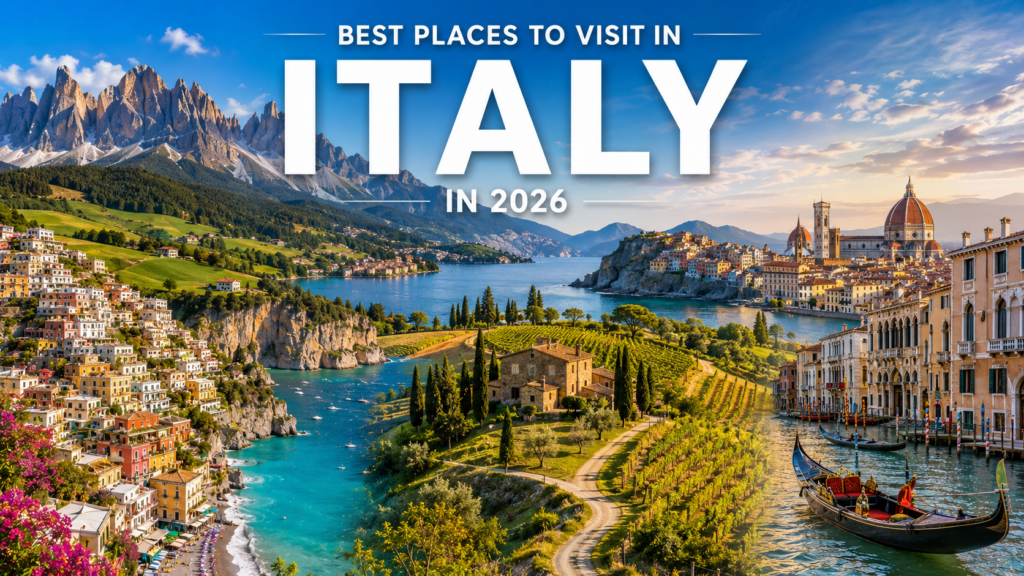
Italy is a country where history, art, cuisine, and breathtaking landscapes come together like nowhere else in the world. From ancient Roman ruins and Renaissance masterpieces to dramatic coastlines, alpine lakes, and charming hilltop villages, every region offers its own unforgettable experiences. Whether you’re exploring bustling cities or relaxing in the countryside, Italy rewards travelers with remarkable diversity and timeless beauty.
Although many visitors begin their journey in Rome, Italy is far more than its capital. The country stretches from the snow-capped Dolomites in the north to the sun-soaked island of Sicily in the south, offering everything from picturesque vineyards and crystal-clear lakes to colorful fishing villages and world-famous beaches.
This guide explores the best places to visit in Italy in 2026, helping you discover iconic destinations as well as regions that deserve a place on every travel itinerary. If you’re also planning to explore neighboring countries, don’t miss our guides to Best Places to Visit in France in 2026, Best Places to Visit in Amsterdam in 2026, Best Places to Visit in Ireland in 2026, and Best Places to Visit in Iceland in 2026.
Why Visit Italy?
Few destinations offer as much variety as Italy. Every region has its own traditions, architecture, cuisine, and landscapes, making each journey feel completely different.
One day you can wander through ancient Roman streets, the next sail along dramatic cliffs on the Amalfi Coast, enjoy fresh seafood beside colorful Mediterranean villages, or hike beneath towering alpine peaks in the Dolomites.
Italy remains one of Europe’s most popular destinations because it offers:
- Thousands of years of fascinating history
- UNESCO World Heritage Sites across the country
- Some of the world’s greatest museums and art collections
- Beautiful coastlines, lakes, mountains, and countryside
- Outstanding regional cuisine and world-famous wines
- Charming medieval towns and vibrant modern cities
- Excellent rail connections between major destinations
- Year-round travel opportunities for every season
Italy is also a destination best enjoyed at a relaxed pace. Long lunches, evening walks through historic piazzas, local markets, and scenic train rides all become memorable parts of the journey.
Top 10 Places to Visit in Italy
1. Amalfi Coast
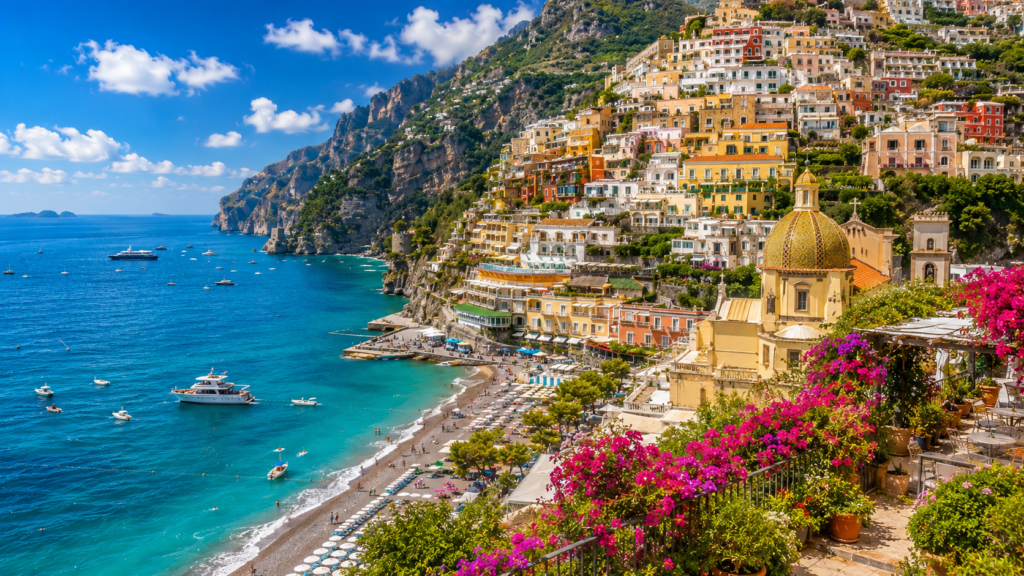
The Amalfi Coast is one of Italy’s most spectacular coastal destinations, famous for dramatic cliffs, colorful seaside villages, and breathtaking Mediterranean views.
Picturesque towns including Positano, Amalfi, and Ravello cling to steep hillsides overlooking crystal-clear blue waters. Visitors can stroll through narrow streets lined with boutiques and cafés, relax on small beaches, or enjoy unforgettable boat trips along the coastline.
Scenic drives along the winding coastal road reveal panoramic viewpoints around every corner, making the Amalfi Coast one of Europe’s most photographed regions.
Whether you’re seeking romance, luxury, or natural beauty, this UNESCO-listed coastline delivers an unforgettable experience.
2. Venice
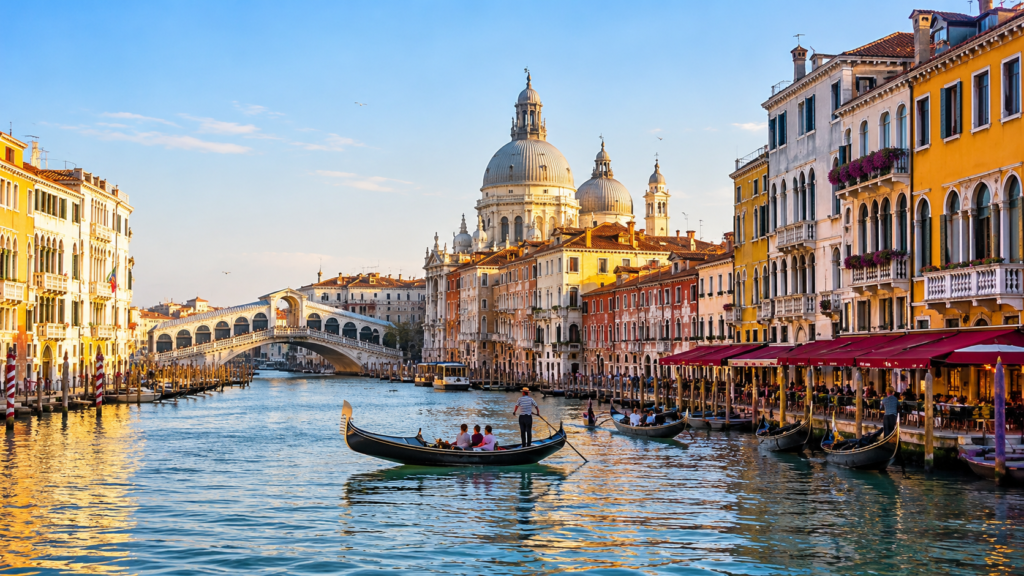
Built across more than one hundred small islands connected by canals and elegant bridges, Venice remains one of the world’s most unique cities.
The city’s timeless atmosphere is best experienced on foot or by boat. Visitors can admire St. Mark’s Basilica, explore the magnificent Doge’s Palace, glide along the Grand Canal, or simply wander through quiet alleyways that reveal hidden squares and charming cafés.
Early mornings and evenings offer the most peaceful atmosphere after many day-trippers have departed, allowing travelers to appreciate Venice’s extraordinary beauty.
3. Tuscany

Tuscany represents the classic Italian countryside with rolling hills, vineyards, cypress-lined roads, and historic hilltop towns.
Cities such as Siena and San Gimignano preserve centuries of history, while the surrounding countryside offers wine estates, olive groves, and scenic drives through some of Europe’s most beautiful landscapes.
Visitors can enjoy wine tastings, cycling routes, local markets, traditional farmhouses, and authentic Tuscan cuisine that celebrates fresh local ingredients.
Tuscany is especially beautiful during spring and autumn when pleasant temperatures make exploring the countryside particularly enjoyable.
4. Dolomites

The Dolomites, located in northern Italy, are among Europe’s most spectacular mountain ranges.
Towering limestone peaks, emerald alpine lakes, flower-filled meadows, and charming mountain villages create breathtaking scenery throughout the year.
Summer attracts hikers, cyclists, photographers, and climbers, while winter transforms the region into one of Europe’s finest skiing destinations.
Famous locations such as Tre Cime di Lavaredo, Seceda Ridge, and Lago di Braies showcase some of Italy’s most extraordinary natural landscapes.
5. Cinque Terre

Cinque Terre is a collection of five colorful fishing villages perched along Italy’s rugged Ligurian coastline. Connected by scenic hiking trails and regional trains, Monterosso al Mare, Vernazza, Corniglia, Manarola, and Riomaggiore each offer their own unique charm.
Visitors can wander through narrow streets lined with pastel-colored houses, enjoy fresh seafood overlooking the sea, relax on small beaches, or hike between villages for breathtaking coastal views. The combination of dramatic cliffs, crystal-clear water, and traditional Italian architecture makes Cinque Terre one of the country’s most photogenic destinations.
6. Florence
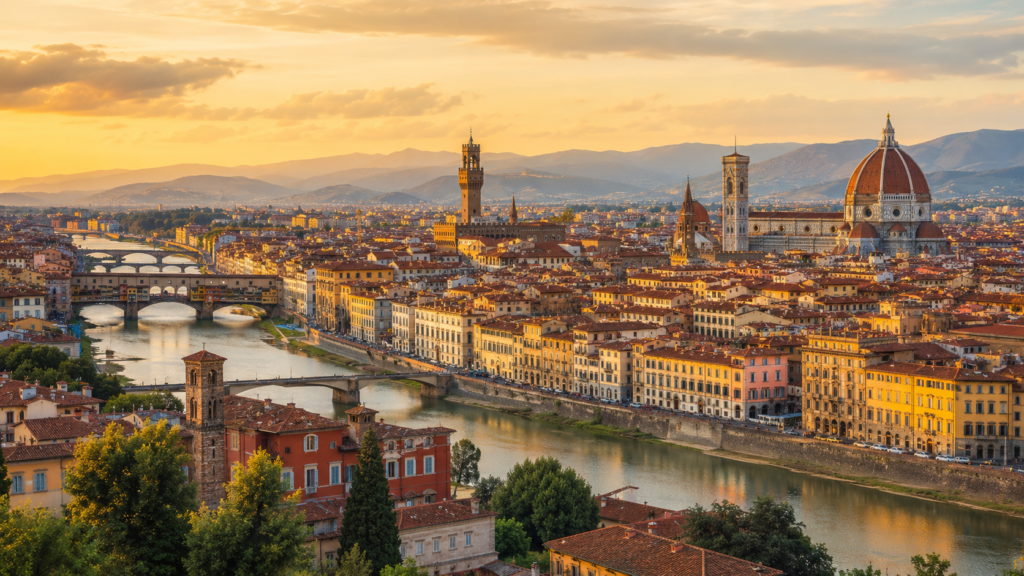
Often regarded as the birthplace of the Renaissance, Florence is a city where art, architecture, and history come together in extraordinary ways.
The city’s historic center is home to magnificent landmarks such as the Florence Cathedral, Piazza della Signoria, and the iconic Ponte Vecchio. World-famous museums display masterpieces created by Michelangelo, Botticelli, Leonardo da Vinci, and many other legendary artists.
Beyond its famous attractions, Florence offers elegant cafés, bustling markets, and charming streets that invite visitors to slow down and appreciate everyday Italian life.
7. Lake Como

Scenic Lake Como surrounded by mountains and lakeside villages in Italy
Surrounded by forested mountains and elegant lakeside villages, Lake Como has been attracting travelers for centuries.
Beautiful towns such as Bellagio, Varenna, and Menaggio feature colorful waterfront promenades, botanical gardens, luxury villas, and spectacular lake views. Visitors can explore the lake by ferry, enjoy waterfront dining, or simply relax while admiring one of Italy’s most picturesque landscapes.
Lake Como offers a peaceful contrast to Italy’s larger cities, making it a favorite destination for couples, photographers, and nature lovers.
8. Sicily

As the largest island in the Mediterranean, Sicily combines ancient history, dramatic landscapes, and rich cultural traditions.
Travelers can explore the ancient Greek temples of Agrigento, stroll through the lively streets of Palermo, relax on beautiful beaches, or hike around Mount Etna, Europe’s highest active volcano.
The island’s unique blend of Italian, Greek, Arab, and Norman influences is reflected in its architecture, cuisine, and local traditions, creating a travel experience unlike anywhere else in Italy.
9. Milan

Known as Italy’s fashion and financial capital, Milan offers much more than luxury shopping.
Visitors can admire the magnificent Duomo di Milano, visit Leonardo da Vinci’s famous masterpiece The Last Supper, explore elegant shopping galleries, and enjoy world-class restaurants throughout the city.
Modern architecture blends seamlessly with centuries of history, making Milan an exciting destination for travelers interested in culture, design, fashion, and contemporary Italian life.
10. Rome

Although Rome deserves its own dedicated guide, no list of Italy’s greatest destinations would be complete without mentioning the Eternal City.
Visitors can discover remarkable landmarks including the Colosseum, Roman Forum, Pantheon, Trevi Fountain, and Vatican City. Every neighborhood reveals layers of history stretching back more than two thousand years.
Because Rome offers countless attractions and deserves a detailed itinerary of its own, we recommend exploring it separately to fully appreciate everything the city has to offer.
Best Time to Visit Italy
Italy is a year-round destination, but the best time to visit depends on your travel style.
Spring (March to May) and autumn (September to October) are generally the most pleasant seasons, with comfortable temperatures and fewer crowds, making them ideal for sightseeing and road trips.
Summer (June to August) is perfect for enjoying the Amalfi Coast, Sicily, Cinque Terre, and other beach destinations, although popular attractions can be busy.
Winter (December to February) is best for skiing in the Dolomites and visiting festive Christmas markets while enjoying a quieter atmosphere in many cities.
Local Food You Should Try
Italian cuisine varies significantly from region to region, making every journey a culinary adventure.
Pizza Napoletana
Originating in Naples, authentic Neapolitan pizza features a soft, airy crust topped with fresh tomatoes, mozzarella, basil, and olive oil.
Fresh Pasta
Every region has its own pasta traditions, from tagliatelle in Emilia-Romagna to handmade pici in Tuscany.
Risotto
Especially popular in northern Italy, creamy risotto is prepared with high-quality rice and seasonal ingredients such as mushrooms, saffron, or seafood.
Gelato
Italian gelato is famous for its smooth texture and rich natural flavors, making it an essential treat throughout the country.
Arancini
These crispy fried rice balls filled with meat, cheese, or vegetables are one of Sicily’s most beloved street foods.
Tiramisu
One of Italy’s most famous desserts, tiramisu combines coffee-soaked ladyfingers with mascarpone cream and cocoa powder.
Parmigiano Reggiano
Produced in northern Italy, this world-famous cheese is enjoyed on its own or grated over countless traditional dishes.
Italian Wine
From Chianti in Tuscany to Prosecco in Veneto and Barolo in Piedmont, Italy’s wine regions produce some of the world’s finest wines.
Transportation
Getting around Italy is easy thanks to its excellent transportation network.
High-speed trains such as Frecciarossa and Italo connect major cities including Rome, Florence, Venice, Milan, and Naples, making train travel the most convenient option for most visitors.
Regional trains are ideal for destinations like Cinque Terre and Lake Como, while renting a car is recommended for exploring Tuscany, the Dolomites, Sicily, and other rural areas at your own pace.
Major cities also have reliable metro, tram, and bus systems, and ferries provide convenient access to Sicily, Sardinia, and many coastal destinations.
Accommodation
Italy offers accommodations for every budget, from luxury hotels and boutique properties to family-run guesthouses, countryside agriturismos, and vacation apartments.
Luxury hotels are common in cities like Venice, Florence, Milan, and along the Amalfi Coast, while boutique hotels provide a more authentic stay in historic centers. Travelers exploring Tuscany or rural regions may enjoy staying at an agriturismo, where they can experience traditional Italian hospitality.
For popular destinations, it’s best to book accommodations several months in advance, especially during summer and major holidays.
Practical Travel Tips
- Carry a contactless payment card, although some small cafés and rural businesses may still prefer cash.
- Validate regional train tickets where required before boarding.
- Book popular attractions online to avoid long queues.
- Comfortable walking shoes are essential, especially in historic cities with cobblestone streets.
- Summer temperatures can exceed 35°C (95°F) in many regions, so carry water and sun protection.
- Respect dress codes when visiting churches and religious sites.
- Learn a few basic Italian phrases such as Buongiorno and Grazie—locals appreciate the effort.
- Travel insurance is recommended, particularly if you plan to hike or participate in outdoor activities.
Frequently Asked Questions
Is Italy expensive to visit?
Italy suits every budget, from affordable guesthouses to luxury hotels. Smaller towns are generally cheaper than major tourist cities.
How many days should I spend in Italy?
A 10 to 14-day trip is ideal for exploring several regions at a comfortable pace.
When is the best time to visit Italy?
Spring and autumn offer pleasant weather and fewer crowds, making them the best seasons for most travelers.
Do I need to rent a car?
Not for major cities, but renting a car is recommended for Tuscany, the Dolomites, Sicily, and rural areas.
Is Italy family-friendly?
Yes. Italy offers family-friendly attractions, beautiful beaches, museums, and outdoor activities for all ages.
Which places should first-time visitors prioritize?
Rome, Florence, Venice, and the Amalfi Coast are excellent choices for a first trip to Italy.
Official Tourism Website
For official travel information, events, and destination guides, visit Italy’s official tourism website:
Italia.it (Official Tourism Website): Italia.it
Related Destinations
Continue exploring Europe with these Velkeno guides: