
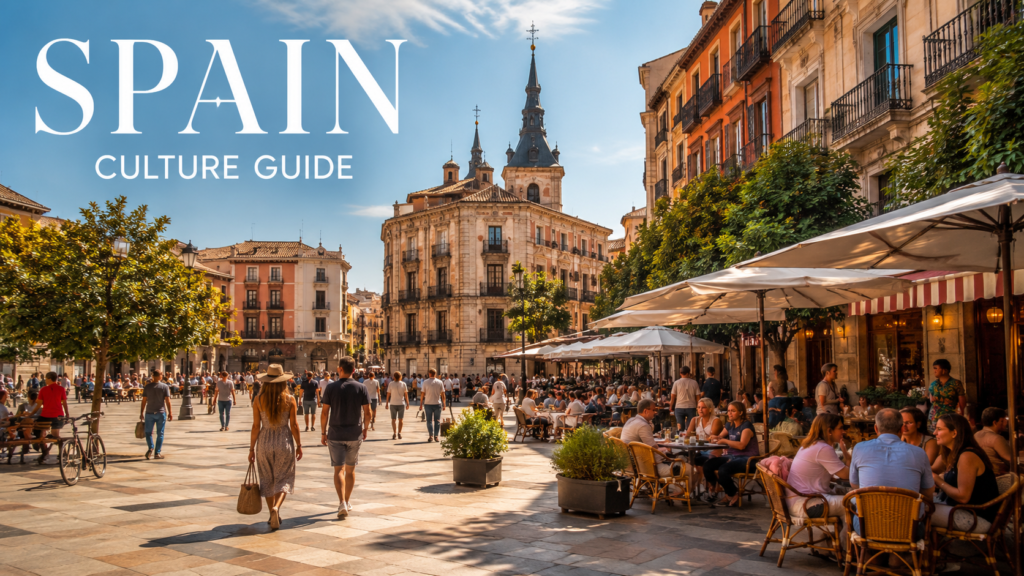
This Spanish Culture Guide introduces the local customs, traditions, and everyday habits every first-time visitor should know before traveling to Spain.
Daily life in Spain often follows a different rhythm from what first-time visitors expect. Lunch happens later, dinner can begin well after sunset, conversations last longer, and social life frequently continues late into the evening.
Understanding a few local customs will not only help you avoid awkward situations but also allow you to experience Spain in a more authentic way.
Whether you are visiting Barcelona, Madrid, Seville, Valencia, or smaller towns across the country, these cultural traditions are worth knowing before your trip.
Why Spanish Culture Matters to Visitors
Spain has been shaped by centuries of Roman, Moorish, Christian, and regional influences.
Rather than having one single national identity, Spain is a country where local traditions remain important. Every region has its own customs, cuisine, festivals, and even languages.
At the same time, many everyday habits are shared across the country, creating a relaxed lifestyle that many visitors quickly come to appreciate.

1. Life Starts Later Than You Might Expect
One of the first things visitors notice is that daily schedules are later than in many other countries.
Shops may open later in the morning, lunch is often served after 2 PM, and restaurants may remain relatively quiet until well into the evening.
Instead of trying to follow your usual routine, adjusting your schedule can make the experience feel much more natural.
2. Lunch Is the Most Important Meal
Lunch is traditionally the biggest meal of the day.
Many restaurants offer a menú del día, a set lunch menu that provides good value and often includes multiple courses.
For travelers, this can be one of the easiest ways to enjoy local cuisine without spending a fortune.
3. Dinner Begins Much Later
Visitors are sometimes surprised to find restaurants nearly empty at 7 PM.
In many parts of Spain, locals do not begin dinner until around 9 PM or even later.
Tourist areas often serve food earlier, but eating later is part of everyday Spanish life.
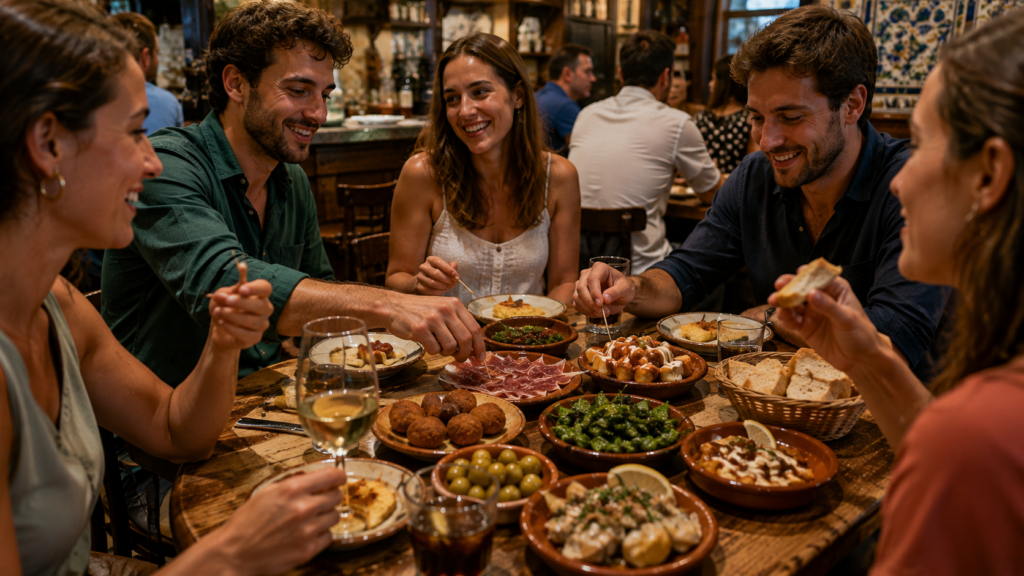
4. Tapas Are About Sharing
Tapas are much more than small dishes.
They represent a social tradition where friends and family gather, order several plates, and share food while talking.
Rather than focusing on one large meal, the experience is often about spending time together.
The exact tapas culture varies from one region to another, making it worth experiencing in different cities.
5. Siesta Is Not What Many Tourists Imagine
Many visitors arrive expecting the entire country to stop every afternoon.
Modern Spain is more complicated than that.
Large cities continue operating throughout the day, while smaller towns and family-run businesses may still close for several hours during the afternoon.
The idea of slowing down during the hottest part of the day remains part of Spanish culture, even if the traditional siesta is less common than many people expect.
6. Greetings Are Warm and Friendly
Spaniards are generally open and sociable.
Friends often greet each other with two cheek kisses, while handshakes remain common in professional situations or when meeting someone for the first time.
Simple greetings such as “Hola” and “Buenos días” are appreciated and help create positive first impressions.
7. Family Life Is Central
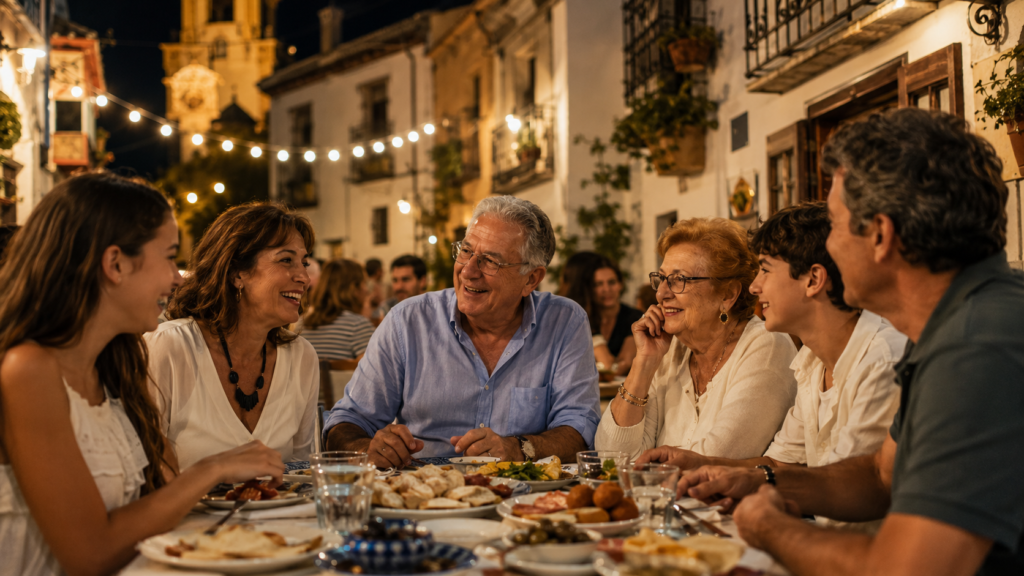
Family continues to play an important role throughout Spanish society.
It is common to see several generations spending time together in parks, restaurants, town squares, and public events.
Weekends often revolve around family gatherings, long meals, and shared activities.
8. Festivals Are Part of Local Identity
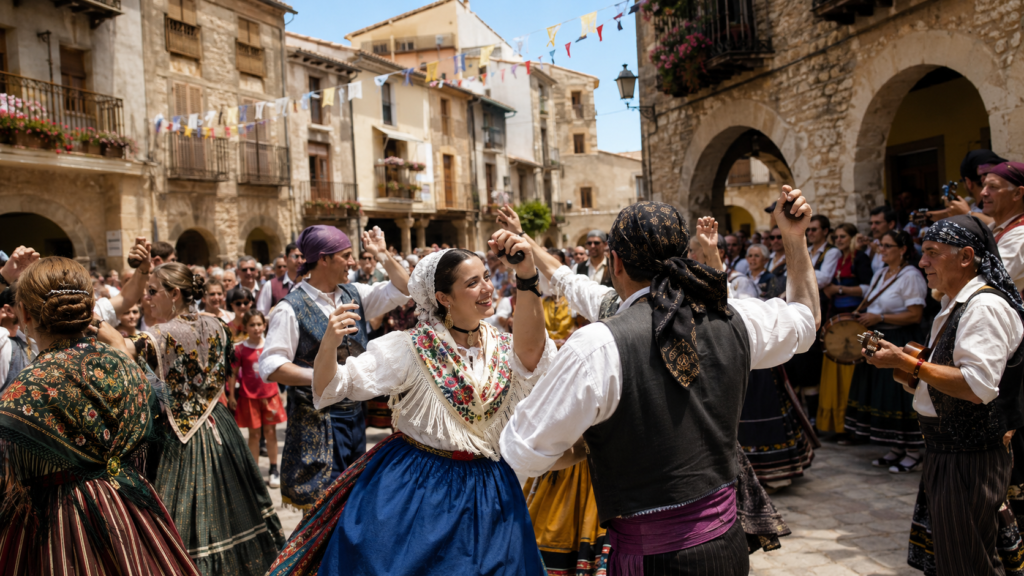
Every region celebrates its own festivals.
Some are internationally famous, while others are small local celebrations that visitors may discover by chance.
These festivals reflect regional traditions, religious history, music, food, and community life.
If your visit coincides with a local festival, it can become one of the most memorable parts of your trip.
9. Football Is Everywhere
Football is deeply connected to everyday life in Spain.
Major clubs such as Real Madrid and FC Barcelona attract global attention, but local teams also enjoy passionate support.
Watching a match in a local bar or experiencing the atmosphere around a stadium can offer another perspective on Spanish culture.
10. Churches and Historic Sites Deserve Respect
Spain is home to countless churches, monasteries, and historic religious buildings.
Even if you visit purely as a tourist, respectful clothing and quiet behavior are appreciated inside many religious sites.
Photography rules may also vary depending on the location.
11. Conversations Are Meant to Be Enjoyed
Meals in Spain are rarely rushed.
People often spend considerable time talking after finishing their food rather than leaving immediately.
For visitors, slowing down and enjoying the conversation can become part of the travel experience itself.
12. Tipping Is Usually Modest
Unlike some countries, tipping in Spain is generally modest.
Many people simply leave a small amount or round up the bill after receiving good service.
Large mandatory tips are not expected in most everyday situations.
13. Regional Identity Matters
Spain is made up of autonomous communities with their own traditions and identities.
Catalonia, Andalusia, Galicia, the Basque Country, Valencia, and many other regions each have distinctive food, architecture, festivals, and cultural traditions.
Exploring these differences is one of the most rewarding parts of traveling around Spain.
14. Sundays Have a Different Rhythm
Many shops close on Sundays, especially outside major tourist areas.
Families often spend the day together, enjoy long lunches, walk through parks, or visit local markets and cafés.
Checking opening hours before planning your day can save unnecessary frustration.
15. Slow Down and Enjoy the Moment
Perhaps the biggest lesson visitors take home from Spain is not a specific custom but a different approach to everyday life.
Meals are longer.
Conversations are more relaxed.
People often spend more time outdoors, especially in public squares and neighborhood cafés.
Rather than trying to fit every attraction into one day, allowing time to simply enjoy the atmosphere can become one of the highlights of the trip.

Cultural Mistakes Tourists Should Avoid
Many cultural misunderstandings are easy to avoid.
Do not expect restaurants to be busy early in the evening.
Avoid assuming every shop will remain open throughout the afternoon or on Sundays.
Respect local customs inside churches and religious buildings.
Remember that each region has its own traditions, and avoid treating Spain as though every destination shares exactly the same culture.
Finally, do not rush every meal.
Some of the best travel memories come from slowing down and enjoying the local rhythm of everyday life.
Final Thoughts
Spanish culture is not defined by a single tradition.
It is a combination of regional identities, long family meals, lively public spaces, local festivals, football, relaxed conversations, and a daily rhythm that encourages people to enjoy the present moment.
Learning these customs before your trip will not only help you feel more comfortable but also allow you to appreciate Spain beyond its famous landmarks.
The more you embrace the local way of life, the more rewarding your journey through Spain is likely to become.