
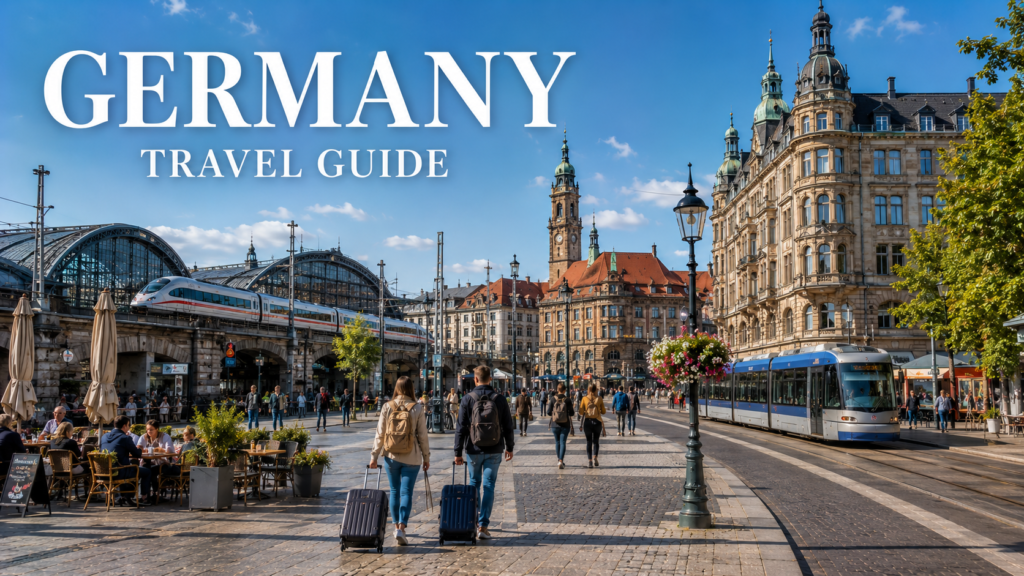
This Germany travel guide is designed to make your first trip easier, from getting around the country to understanding the small everyday details that can shape your experience.
Major cities are connected by fast trains, local public transportation is extensive, and traveling between historic towns, modern cities, river valleys, and mountain regions rarely requires an organized tour.
But Germany also has a few everyday habits that first-time visitors may not expect.
Sunday shopping is limited. Train connections sometimes need more breathing room than the timetable suggests. Cash is still useful in certain situations. And a country that looks manageable on a map can quickly become exhausting if you try to fit Berlin, Bavaria, the Rhine, Hamburg, and the Alps into one short trip.
This guide is about those practical details.
Rather than giving you another list of places to visit, it covers what can actually make a first trip to Germany easier — when to go, how to move around, where to base yourself, what daily life is like, and which common planning mistakes are worth avoiding.
Start With a Region, Not a Checklist
One of the easiest mistakes to make when planning Germany is treating the country as a collection of famous cities.
Berlin, Hamburg, Cologne, Frankfurt, Dresden, and Munich may all appear relatively close when you look at a map of Europe. In reality, connecting too many of them can consume a large part of your trip.
Germany works better when you think in regions.
Berlin and the northeast are strong choices for modern history, museums, neighborhoods, and contemporary culture.
The south offers a different experience entirely. Munich can become a base for exploring Bavaria, with traditional towns, lakes, castles, and the Alps within reach.
Western Germany brings the Rhine, vineyards, historic settlements, and cities such as Cologne. Hamburg and the north introduce ports, waterways, and a more maritime character.
You do not need all of these experiences on your first visit.
Choosing one or two areas and spending more time in them usually produces a better trip than racing across the country simply to say you have been there.
Choose Your Season Around the Experience You Want
There is no single month when everyone should visit Germany.
Spring is a comfortable period for city sightseeing and countryside trips. April can still be unpredictable, but May often brings greener landscapes and pleasant conditions without the full intensity of the summer season.
Summer offers long days, outdoor dining, festivals, lakes, hiking, and lively public spaces. It is also a popular travel period, so accommodation in major destinations can become more expensive.
Early autumn can be particularly rewarding. September often combines comfortable weather with harvest season in wine regions, while Bavaria becomes much busier around Oktoberfest.
Winter changes the atmosphere completely.
Christmas markets draw visitors from late November through December, while mountain regions become more attractive for snow and winter activities. The trade-off is shorter daylight and colder weather.
Instead of looking only for the “best weather,” decide what you actually want to do in Germany and choose your dates around that.
You Probably Do Not Need a Car
For a trip centered on major cities, renting a car is often unnecessary.
Germany’s rail network connects much of the country, while cities commonly have combinations of U-Bahn, S-Bahn, trams, and buses.
Berlin, Munich, Hamburg, Cologne, Frankfurt, and many other urban destinations are easier to explore using public transportation than by driving.
A car starts to make more sense when your plans move away from those networks.
Rural Bavaria, remote hiking areas, smaller villages, parts of the Black Forest, and countryside routes can offer more freedom with your own vehicle.
The important thing is not to assume that a road trip is automatically the best way to see Germany.
For many first-time itineraries, trains and local transport are simpler.
German Trains Are Easy to Use Once You Know the Basics
The different train names can look confusing at first, but visitors only need to understand a few of them.
ICE trains are the main high-speed services and are useful for longer journeys between major cities.
IC and EC trains also cover long-distance routes.
RE and RB services are regional trains, often used to reach smaller cities and towns.
S-Bahn trains operate within and around metropolitan areas and frequently become part of everyday sightseeing.
Long-distance fares can vary depending on when and how you book. Buying earlier may provide cheaper options, while more flexible tickets generally cost more.
Seat reservations can also be useful on busy long-distance journeys.
One expectation is worth adjusting before you arrive: do not build an itinerary that depends on every train running perfectly to the minute.
Delays happen.
If a journey requires a connection, especially before a flight or another important reservation, give yourself some breathing room.

City Transport Has One Detail Visitors Often Miss
Public transportation inside German cities is generally straightforward, but ticket systems vary.
A city may divide its network into different fare zones, and one ticket can often cover trains, trams, underground services, and buses within the permitted area.
The detail to check is whether your ticket is already valid when purchased or needs to be validated before traveling.
Another thing can surprise visitors: many stations do not use physical barriers.
You may be able to walk directly onto a platform.
That does not mean you can travel without a ticket.
Inspections take place, and passengers are expected to have the correct valid fare even when there is no gate preventing them from boarding.

Keep Some Cash With You
Germany has become much more card-friendly, but it is still useful to carry euros in cash.
Hotels, supermarkets, museums, larger restaurants, and many shops commonly accept cards.
Smaller businesses can be different.
A neighborhood bakery, market stall, traditional pub, small café, or rural establishment may prefer cash or impose conditions on card payments.
You do not need to walk around with a large amount of money.
Keeping a modest amount available simply prevents an unnecessary problem when you encounter somewhere that does not accept your preferred payment method.
Where You Stay Can Change the Entire Trip
For first-time visitors, choosing the right base matters more than trying to identify the single “best” city in Germany.
Berlin makes sense if your priorities are history, museums, nightlife, creative neighborhoods, and contemporary urban culture.
Munich works well if you want a city experience combined with access to Bavaria, lakes, traditional towns, and Alpine scenery.
Hamburg offers something noticeably different, with its harbor, waterways, warehouse architecture, and northern identity.
Cologne can work well as a base for western Germany and journeys toward the Rhine.
Frankfurt is often treated purely as an arrival point because of its major international airport, but its central location can also make onward travel convenient.
There is no need to choose the city with the longest list of attractions.
Choose the one that connects naturally with the rest of your itinerary.
Eating in Germany Goes Far Beyond Sausages
German food is strongly regional, which means the dishes you encounter can change as you travel.
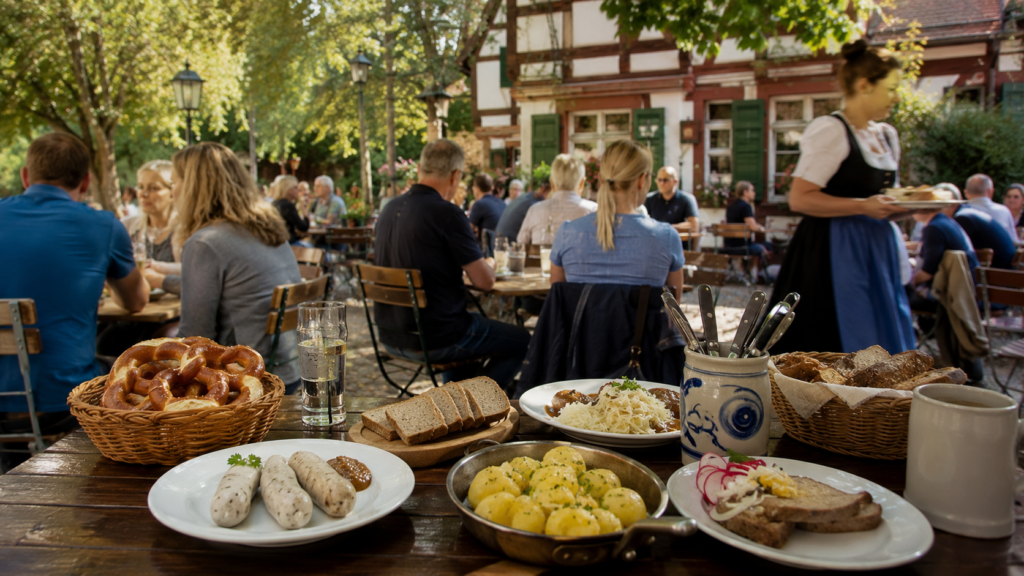
Bavaria is known for hearty cooking, pretzels, sausages, dumplings, and traditional beer halls and gardens.
Northern Germany has stronger maritime influences and greater emphasis on seafood.
Other regions have their own breads, cakes, cheeses, meats, seasonal dishes, and local specialties.
Bakeries are especially useful for travelers.
They are part of everyday German life and can provide a quick breakfast, sandwich, pastry, or inexpensive lunch without requiring a restaurant meal.
Traditional taverns, neighborhood restaurants, food markets, and beer gardens can also be more interesting than searching exclusively for highly promoted tourist restaurants.
Let the region influence what you eat rather than looking for one supposedly definitive “German meal.”
Restaurant Service May Feel Different
Dining in Germany can feel slightly different from what some international visitors are used to.
Service is often efficient without being overly attentive, and staff may not repeatedly check the table during a meal.
When you are finished, you may need to ask for the bill rather than expecting it to arrive automatically.
Tipping is common, but large tips are not generally expected in the same way they are in some countries.
Many diners round up the bill or add a modest amount for good service.
When paying directly to a server, it is also common to state the total amount you want to pay.
Knowing these small habits can make your first few restaurant visits feel much more natural.
Sunday Is Not an Ordinary Shopping Day
This is one of the practical details most worth remembering.
Many ordinary shops and supermarkets in Germany close on Sundays.
There are exceptions. Businesses inside large railway stations and airports may remain open, some bakeries operate limited hours, and tourist areas can have different arrangements.
But you should not plan a normal Sunday grocery or shopping trip and assume everything will be available.
Restaurants, museums, attractions, and public transportation generally continue operating, although individual opening hours should still be checked.
If you are staying in an apartment, buy essential groceries before Sunday.
It is a small piece of planning that can prevent a surprisingly inconvenient start to the day.
A Few Everyday Habits Make Travel Easier
You do not need to memorize a long list of etiquette rules before visiting Germany.
A handful of everyday habits are enough.
Punctuality is generally appreciated, particularly when you have a reservation, guided tour, appointment, or scheduled activity.
Pay attention to bicycle lanes when walking through cities. They can run alongside or through pedestrian areas, and standing in one while checking your phone is an easy mistake for visitors to make.
Residential areas may also have expectations around noise, especially late at night and on Sundays.
Recycling is another visible part of daily life.
If you stay in an apartment or vacation rental, you may find several different waste containers rather than one general bin.
You will also encounter the Pfand deposit system on many bottles and cans. Eligible containers can usually be returned through machines in supermarkets, which issue a voucher for the deposit value.
None of these things is difficult once you know to expect them.
Four Days and Two Weeks Require Very Different Trips
How much of Germany you should attempt to see depends heavily on how long you have.
With four or five days, concentrate on one main area.
Berlin alone can easily fill a short trip, while Munich can be combined with one nearby day trip without turning the itinerary into a race.
With around a week, two well-connected bases can work.
The goal should be variety without changing hotels every night.
Ten days to two weeks gives you much more freedom to combine contrasting experiences — perhaps a major city, a smaller historic destination, and a countryside or mountain region.
What matters is not the number of pins on your map.
Count the hours spent moving between them.
A seven-day itinerary containing five cities may technically be possible while still being a poor use of seven days.
You Can Travel Without Speaking Fluent German
Visitors do not need fluent German to travel independently through the country’s major destinations.
English is commonly understood in hotels, tourist attractions, transportation environments, and many restaurants, particularly in larger cities.
That does not mean you should expect everyone to speak English.
Smaller towns and rural areas can be different, and even in cities you will encounter situations where communication is easier with a few German words.
Learning basic greetings and phrases such as please, thank you, excuse me, and asking whether someone speaks English is worthwhile.
A translation app can handle most of the rest.
Making a small effort with the local language is usually more useful than worrying about speaking perfectly.
Do Not Pack for Germany as if the Weather Never Changes
Weather can shift quickly, especially during spring and autumn.
Comfortable walking shoes should be near the top of your packing list. Historic centers often have cobbled streets, and city sightseeing can involve much more walking than expected.
A lightweight waterproof layer is useful during much of the year.
Layers are generally more flexible than packing for one fixed temperature, particularly when you are moving between heated buildings, trains, city streets, and countryside.
If your trip includes serious hiking or Alpine areas, treat that as a separate packing requirement.
Mountain conditions should not be judged by the weather you experienced earlier that morning in Munich.
Germany Does Not Have to Be an Expensive Trip
Germany is not Europe’s cheapest destination, but costs can vary considerably depending on how you travel.
Accommodation often creates the biggest difference.
Prices can rise sharply during festivals, international trade fairs, major sporting events, Christmas market weekends, and other periods of high demand.
Checking local events before booking a city can therefore be surprisingly important.
Transportation is another area where planning helps. Long-distance train fares may be more affordable when booked ahead.
Food does not need to revolve around full restaurant meals either.
Bakeries, supermarkets, casual restaurants, market halls, and local lunch options can keep everyday spending reasonable.
At the same time, many enjoyable parts of German cities cost little or nothing — historic neighborhoods, parks, riverfront walks, public squares, architecture, and local streets can fill hours without requiring an admission ticket.
The Mistakes That Make a First Trip Harder
Trying to visit too much of Germany is probably the biggest one.
A route that includes Berlin, Hamburg, Cologne, Munich, and the Alps may look exciting during planning but can leave very little time for the places themselves.
Another mistake is assuming Germany’s reputation for efficiency means every transportation connection should be scheduled tightly.
Leave room for delays.
Do not forget Sunday closures, particularly if you need groceries or everyday supplies.
Avoid renting a car automatically when your entire itinerary is built around large cities.
And perhaps most importantly, do not limit Germany to only its most famous landmarks.
A neighborhood bakery, regional train ride, small town, riverside walk, local market, or afternoon outside a major city can tell you as much about the country as another famous attraction.
So, What Does a Good First Trip to Germany Look Like?
It is usually simpler than people expect.
Choose a region or two that match your interests.
Use trains where they make sense rather than assuming you need a car.
Stay long enough in each base to have at least some time without luggage in your hand.
Leave flexibility around transportation.
Try food that belongs to the region you are visiting.
And allow part of the trip to happen outside the checklist of major attractions.
Germany’s biggest strength for travelers is not one castle, one city, or one famous route.
It is the ability to experience very different versions of the country within the same journey.
Final Thoughts
A first trip to Germany becomes much easier once you stop trying to see everything.
The country has enough variety for many completely different itineraries, from Berlin’s museums and neighborhoods to Bavarian towns, Rhine landscapes, northern ports, forests, and the Alps.
You do not need all of them at once.
Build the trip around the places that genuinely interest you, understand the basic transportation system, keep a little cash available, remember that Sunday works differently, and give yourself more time than you think you need between destinations.
The result may include fewer stops on the map.
But you are far more likely to remember what Germany actually felt like between them.