

Introduction
Japanese food is one of the biggest reasons millions of travelers visit the country every year. While sushi may be the first dish that comes to mind, Japan’s culinary culture is far more diverse than many people expect. Every region has its own specialties, seasonal ingredients, traditional cooking methods, and local flavors that reflect centuries of history.
Whether you’re enjoying fresh seafood at Tokyo’s fish markets, tasting authentic ramen in Fukuoka, savoring premium wagyu beef in Kobe, or discovering street food in Osaka, every meal becomes part of the travel experience. Japanese cuisine is not only delicious but also beautifully presented, carefully balanced, and deeply connected to local traditions.
This guide explores the traditional foods every traveler should try when visiting Japan. You’ll also learn dining etiquette, regional specialties, and useful tips that will help you enjoy Japanese cuisine like a local.
Why Japanese Food Is Famous Around the World
Japanese cuisine has earned international recognition for its freshness, attention to detail, and respect for natural ingredients. Rather than relying on heavy sauces or strong seasonings, many Japanese dishes focus on enhancing the original flavor of each ingredient.
Seasonality is another important aspect of Japanese cooking. Restaurants frequently change their menus to reflect the freshest ingredients available during each season. Spring brings bamboo shoots and cherry blossom-inspired desserts, summer features light noodles and grilled seafood, autumn introduces mushrooms and chestnuts, while winter offers warming hot pots and hearty stews.
Presentation is equally important. Meals are carefully arranged to create visual harmony, often using colorful tableware and decorative garnishes that reflect the season.
Japan is also one of the few countries where convenience store meals, train station lunch boxes, and neighborhood restaurants consistently maintain remarkably high quality.
Sushi and Sashimi

No visit to Japan would be complete without trying authentic sushi.
Although sushi is now available worldwide, experiencing it in Japan is entirely different. Fresh seafood arrives daily from local fishing ports, and skilled sushi chefs spend years mastering the techniques required to prepare each piece perfectly.
There are several types of sushi you should try, including:
- Nigiri
- Maki rolls
- Temaki
- Chirashi
- Inari sushi
Sashimi is another must-try dish. Unlike sushi, sashimi consists only of thinly sliced raw seafood served without rice.
Popular seafood choices include:
- Tuna
- Salmon
- Yellowtail
- Sea bream
- Scallops
- Shrimp
- Sea urchin
Many travelers visit sushi restaurants ranging from affordable conveyor belt establishments to high-end omakase experiences where the chef selects each course.
Ramen

Ramen is one of Japan’s most beloved comfort foods and can be found almost everywhere.
Every region has developed its own distinctive style.
Tokyo is known for soy sauce-based ramen with a clear broth.
Hokkaido specializes in rich miso ramen that is especially popular during the cold winter months.
Fukuoka is famous for tonkotsu ramen made from slow-cooked pork bone broth, creating a creamy and intensely flavorful soup.
Other varieties include:
- Shio ramen
- Shoyu ramen
- Curry ramen
- Seafood ramen
- Spicy ramen
Many ramen shops allow customers to customize noodle firmness, broth richness, and additional toppings such as soft-boiled eggs, bamboo shoots, seaweed, roasted pork, green onions, and garlic.
Slurping noodles is perfectly acceptable in Japan and is often seen as a sign that you are enjoying your meal.
Wagyu Beef

Japanese wagyu is widely regarded as one of the finest beef products in the world.
Its famous marbling creates an incredibly tender texture that almost melts in your mouth.
Several regional varieties have achieved international fame, including:
- Kobe Beef
- Matsusaka Beef
- Omi Beef
- Hida Beef
- Miyazaki Beef
Travelers can enjoy wagyu prepared in many different ways.
Popular choices include:
- Steak
- Yakiniku
- Sukiyaki
- Shabu-shabu
- Teppanyaki
Although premium wagyu restaurants can be expensive, many lunch menus provide an affordable opportunity to experience authentic Japanese beef without exceeding your travel budget.
Tempura

Tempura demonstrates the Japanese philosophy of simplicity and precision.
Fresh shrimp, fish, mushrooms, sweet potatoes, pumpkin, eggplant, lotus root, and seasonal vegetables are coated in an extremely light batter before being fried until perfectly crisp.
The batter should never feel heavy or greasy. Instead, it creates a delicate coating that highlights the natural flavor of each ingredient.
Tempura is often served with:
- Rice
- Udon noodles
- Soba noodles
- Tentsuyu dipping sauce
- Grated daikon radish
Many specialist restaurants prepare each piece individually and serve it immediately to preserve maximum crispness.
Yakitori
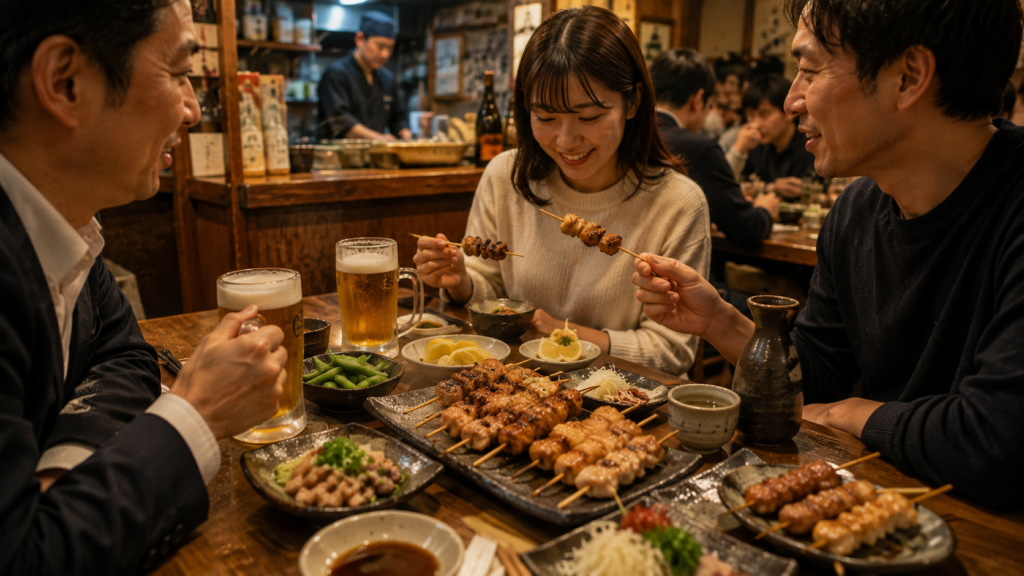
Yakitori refers to grilled chicken skewers cooked over charcoal.
Although simple in appearance, skilled chefs carefully grill each skewer to achieve the perfect balance of smoky flavor and juicy texture.
Popular varieties include:
- Chicken thigh
- Chicken breast
- Chicken skin
- Chicken meatballs
- Chicken wings
- Chicken liver
Yakitori is commonly enjoyed in izakayas alongside cold beer, sake, or Japanese whisky.
For many visitors, spending an evening in a lively neighborhood izakaya offers one of the most authentic dining experiences in Japan.
Udon and Soba
Udon and soba are two of Japan’s most popular noodle dishes, each offering a unique texture and flavor.
Udon noodles are thick, soft, and chewy, making them especially satisfying in warm soups during colder months. They can also be served chilled with dipping sauces during summer, providing a refreshing meal after a day of sightseeing.
Soba noodles are made primarily from buckwheat flour, giving them a slightly nutty flavor and firmer texture. Many Japanese people enjoy soba on New Year’s Eve because it symbolizes longevity and good fortune.
Popular variations include:
- Kake Udon
- Tempura Udon
- Curry Udon
- Zaru Soba
- Kitsune Udon
- Nabeyaki Udon
Whether enjoyed at a small neighborhood restaurant or a busy train station, these traditional noodles are affordable, delicious, and widely available throughout Japan.
Okonomiyaki
Often described as a Japanese savory pancake, okonomiyaki is one of the country’s most beloved comfort foods.
The name roughly translates to “grill what you like,” reflecting the wide variety of ingredients that can be added to the batter.
Typical ingredients include:
- Cabbage
- Pork
- Shrimp
- Squid
- Cheese
- Green onions
- Mochi
After cooking, the pancake is topped with okonomiyaki sauce, Japanese mayonnaise, bonito flakes, seaweed powder, and pickled ginger.
There are two famous regional styles.
The Osaka version mixes all ingredients together before cooking.
The Hiroshima version layers ingredients separately, often including noodles and a fried egg.
Trying both styles is one of the best culinary experiences for travelers exploring western Japan.
Japanese Street Food

Street food offers visitors a fun and affordable way to experience local flavors.
Osaka is often called “Japan’s Kitchen” because of its incredible variety of casual food.
Some of the most popular street foods include:
- Takoyaki
- Yakisoba
- Taiyaki
- Karaage
- Imagawayaki
- Dango
- Corn on the cob
- Grilled seafood
Traditional festivals are excellent places to sample these dishes while enjoying music, performances, and cultural celebrations.
Many local markets also offer freshly prepared snacks made with seasonal ingredients.
Japanese Desserts and Matcha

Japanese desserts are generally less sweet than many Western desserts and often emphasize natural flavors.
Matcha, a finely ground green tea powder, appears in countless desserts including:
- Matcha ice cream
- Matcha cake
- Matcha parfait
- Matcha latte
- Matcha cookies
Traditional sweets known as wagashi are often served with green tea during tea ceremonies.
Popular wagashi include:
- Mochi
- Daifuku
- Dorayaki
- Yokan
- Manju
These delicate desserts beautifully reflect Japan’s appreciation for seasonal ingredients and artistic presentation.
Regional Specialties Across Japan

One of the best reasons to travel across Japan is discovering how dramatically local cuisine changes from region to region.
Tokyo offers outstanding sushi, ramen, and seafood bowls.
Osaka is famous for takoyaki, okonomiyaki, and kushikatsu.
Kyoto is known for elegant kaiseki dining, yudofu, and traditional sweets.
Hokkaido produces exceptional seafood, dairy products, crab, sea urchin, and miso ramen.
Nagoya specializes in hitsumabushi, miso katsu, and chicken wings.
Hiroshima is celebrated for its layered okonomiyaki and fresh oysters.
Fukuoka remains the birthplace of tonkotsu ramen and lively yatai street food stalls.
Trying regional specialties allows travelers to experience the incredible diversity of Japanese cuisine beyond internationally famous dishes.
Dining Etiquette in Japan
Japanese dining culture places great importance on respect and appreciation.
Before eating, many people say “Itadakimasu” as a way of expressing gratitude for the meal.
After finishing, “Gochisosama Deshita” thanks everyone involved in preparing the food.
When using chopsticks, remember these simple rules:
- Never stick chopsticks upright into rice.
- Never pass food directly between chopsticks.
- Avoid pointing at people with chopsticks.
- Use serving utensils when available.
Unlike many countries, tipping is generally unnecessary in Japan.
Excellent service is considered a normal part of hospitality, and leaving extra money may even cause confusion.
Tips for Food Lovers Visiting Japan
Trying new foods is one of the highlights of visiting Japan, but a little preparation makes the experience even better.
Do not hesitate to eat at small local restaurants. Some of Japan’s best meals are served in tiny family-run establishments with only a few seats.
If a restaurant has a line of local customers, it is often a good sign that the food is excellent.
Cash is still accepted almost everywhere, although digital payments have become increasingly common in major cities.
Food allergies should be communicated clearly because ingredients are not always listed in English.
Many restaurants display realistic plastic food models outside, making it easier to order even if you do not speak Japanese.
Keeping a translation app on your phone can also help when reading menus.
Final Thoughts
Japanese cuisine is much more than sushi. Every city, every region, and every season offers unique flavors that reflect the country’s history, geography, and cultural traditions. From comforting bowls of ramen and perfectly grilled yakitori to premium wagyu beef, elegant kaiseki meals, colorful street food, and delicate wagashi desserts, every meal tells a story.
One of the greatest joys of traveling in Japan is discovering these regional specialties while exploring different parts of the country. Eating where local residents dine, trying seasonal ingredients, and respecting Japanese dining etiquette will make your culinary journey even more memorable.
Whether this is your first visit or your fifth, exploring Japan through its food is one of the most rewarding ways to understand the country’s culture. Every meal becomes another unforgettable travel experience, leaving visitors eager to return and discover even more of Japan’s extraordinary culinary traditions.