
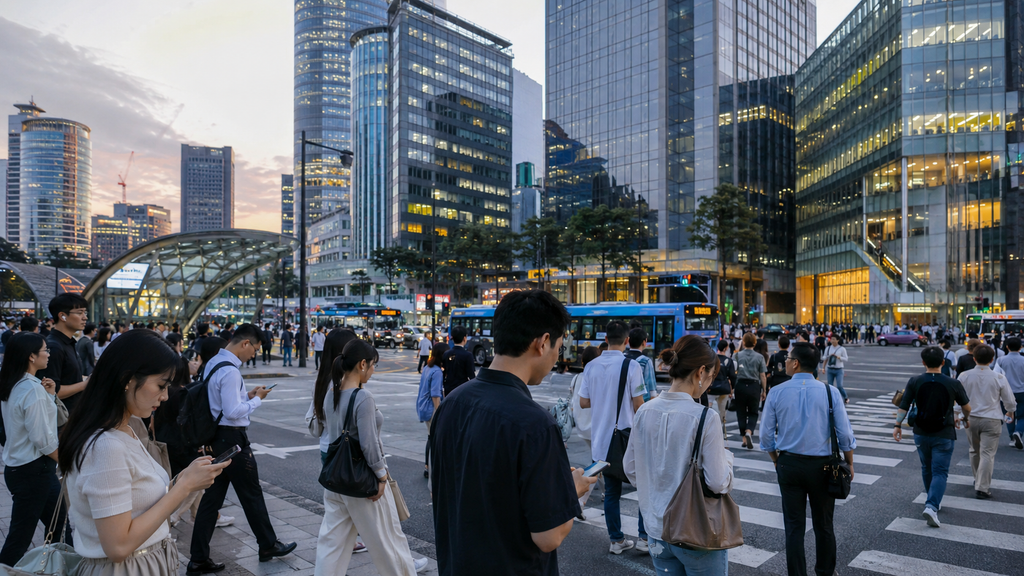
South Korea today is known for global technology companies, high-speed trains, modern cities, K-pop, Korean dramas, cars, electronics, and one of the world’s most connected digital economies.
Visit Seoul and that modern image is everywhere.
Metro trains arrive every few minutes. Cafés are filled with people working on laptops. Apartment towers stretch across the horizon. Digital screens cover buildings in commercial districts, while products from Korean companies are used by millions of people around the world.
But South Korea did not begin its modern economic story as a wealthy country.
In the decades following the Korean War, the country faced damaged infrastructure, limited industrial capacity, widespread poverty, and enormous pressure to rebuild.
What happened afterward became one of the most remarkable economic transformations of the twentieth century.
Within several decades, South Korea developed from a largely agricultural and low-income economy into a major industrial and technological power.
This transformation is one reason South Korea became known as one of the Four Asian Tigers, together with Singapore, Hong Kong, and Taiwan.
But the nickname represents much more than rapid economic growth.
South Korea’s story involves education, exports, industrial policy, enormous family-controlled corporations, demanding work culture, technological investment, and a population that experienced extraordinary social change within only a few generations.
Understanding that transformation makes modern South Korea much more interesting to explore.
What Are the Four Asian Tigers?
The term Four Asian Tigers refers to four East Asian economies that experienced exceptionally rapid industrialization and economic growth during the second half of the twentieth century:
- South Korea
- Singapore
- Hong Kong
- Taiwan
Although their political systems, geography, and economic strategies were not identical, they shared several important characteristics.
All four developed strong export-oriented economies.
Instead of relying primarily on domestic consumers, businesses increasingly produced goods and services for international markets.
Investment in education and workforce skills also played an important role.
Industrial development expanded rapidly, infrastructure improved, and living standards increased dramatically.
South Korea became one of the most striking examples because of the scale of its transformation.
The country moved through different stages of industrial development within a relatively short period, progressing from basic manufacturing toward heavy industry, automobiles, electronics, semiconductors, telecommunications, and advanced technology.
That transformation is visible throughout the country today.
South Korea After the Korean War
To understand why South Korea’s economic rise attracted so much attention, it helps to look at where the country started.
The Korean War ended with an armistice in 1953 after causing enormous destruction across the peninsula.
Cities, transportation networks, industrial facilities, and homes had been damaged. Families were separated, and millions of people had experienced displacement and hardship.
South Korea in the 1950s looked completely different from the country travelers encounter today.
The economy relied heavily on agriculture, and industrial capacity remained limited.
Foreign assistance played an important role during the reconstruction period.
The challenge was enormous.
South Korea needed housing, roads, schools, factories, electricity, transportation, employment, and an economic system capable of supporting a rapidly changing population.
The transformation did not happen immediately.
But during the following decades, economic development became a national priority.
The Shift Toward an Export Economy
One of the most important changes came when South Korea increasingly focused on producing goods for export.
The domestic market alone was relatively small.
International markets offered much greater opportunities.
Manufacturing industries expanded, and Korean businesses began selling products overseas.
Early exports included relatively labor-intensive manufactured goods.
As industrial capabilities improved, the country moved toward more sophisticated products.
Ships, steel, automobiles, electronics, machinery, and eventually semiconductors became increasingly important.
Exports did more than bring money into the economy.
Competing internationally forced Korean companies to improve manufacturing, productivity, technology, and quality.
Factories expanded.
Ports became busier.
Transportation infrastructure improved.
Workers moved from rural areas into rapidly growing cities.
The physical appearance of South Korea began changing along with its economy.
Seoul Became a Symbol of the Transformation
Few places demonstrate South Korea’s development more clearly than Seoul.
The capital experienced enormous population growth during the country’s industrialization.
People moved from rural communities toward cities in search of education and employment.
Housing had to expand rapidly.
Roads, bridges, public transportation, offices, schools, and commercial districts followed.
Modern Seoul is the result of decades of this continuous development.
Stand beside the Han River today and the scale is immediately visible.
Large apartment complexes occupy both sides of the river. Bridges connect dense urban districts. Metro lines carry millions of passengers through a metropolitan region filled with offices, universities, shopping districts, technology companies, and entertainment businesses.
Yet traces of older Korea remain.
Traditional markets operate beneath modern towers.
Historic palaces sit near office districts.
Small restaurants occupy narrow streets only minutes away from some of Asia’s most modern commercial areas.
That contrast makes Seoul particularly useful for understanding how quickly South Korea changed.
Education Became a National Priority
South Korea’s economic development cannot be explained by factories alone.
Education became one of the foundations of the country’s transformation.
Families placed enormous importance on academic achievement, while the country expanded access to schooling and higher education.
A better-educated workforce helped South Korea move beyond industries dependent mainly on inexpensive labor.
Engineers, technicians, researchers, managers, and other skilled workers became increasingly important as companies entered more advanced industries.
This emphasis on education remains visible today.
South Korean students are known for spending long hours studying, and competition for university admission can be intense.
Private education academies, known as hagwons, are common throughout Korean cities.
Walk through certain neighborhoods in Seoul during the evening and you may see students still traveling between classes long after normal school hours have ended.
Education helped create opportunities.
But the intense competition surrounding it also created pressure.
That is an important part of the South Korean story as well.
Rapid development brought enormous improvements in living standards, but it did not come without social costs.
The Rise of the Chaebol
Another important part of South Korea’s economic story is the chaebol.
Chaebol are large family-controlled corporate groups that expanded across multiple industries.
Companies associated with groups such as Samsung, Hyundai, LG, and SK eventually became major forces in the Korean economy.
Their names are difficult to avoid when traveling through South Korea.
A company might be associated with your smartphone, television, apartment building, credit card, shopping center, car, or telecommunications service.
During South Korea’s industrial development, large corporations were able to mobilize capital and resources on a scale necessary to compete internationally.
They entered industries requiring enormous investment, including shipbuilding, automobiles, chemicals, electronics, and semiconductors.
Several eventually became global brands.
Samsung is perhaps the most internationally recognizable example.
Its development from a Korean business group into a major global technology company reflects the broader evolution of South Korea’s economy.
Hyundai provides another example.
South Korean automobiles that once struggled to establish international reputations are now sold across markets around the world.
The chaebol helped accelerate industrial development, although their enormous influence has also generated long-running debates within South Korea about corporate power, competition, governance, and economic concentration.
Heavy Industry Changed the Country
South Korea did not remain focused on light manufacturing.
During the 1970s, the country pushed aggressively into heavy and chemical industries.
Steel, shipbuilding, machinery, petrochemicals, and automobiles became increasingly important.
The southeastern city of Ulsan illustrates this industrial side of Korea particularly well.
Today the region is associated with enormous industrial facilities, automobile production, shipbuilding, and petrochemical operations.
Pohang became closely associated with steel production.
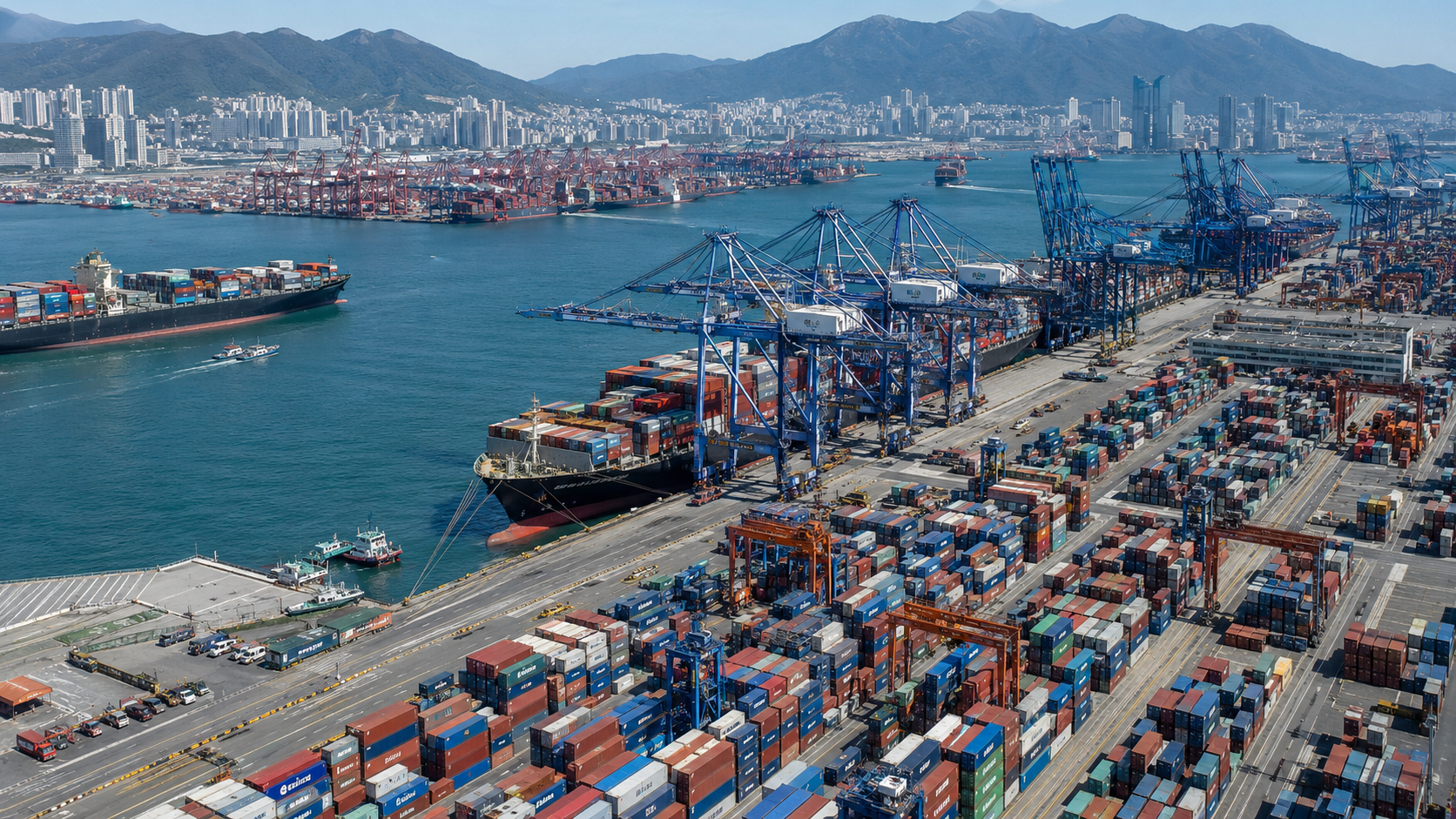
Busan developed as one of the country’s most important port cities.
These places remind travelers that South Korea’s economic transformation did not happen only inside Seoul office towers.
Industrial cities, ports, factories, shipyards, and manufacturing workers were fundamental to the country’s rise.
From Manufacturing to Technology
One of the most impressive parts of South Korea’s development is that the economy continued evolving.
Becoming competitive in basic manufacturing was not enough.
As wages increased and other countries became capable of producing inexpensive manufactured goods, South Korea needed to move into higher-value industries.
Technology became increasingly important.
Electronics expanded.
Research and development grew.
Semiconductors became a major industry.
Telecommunications infrastructure improved rapidly.
South Korean companies eventually became important global producers of memory chips, smartphones, displays, batteries, consumer electronics, and other advanced products.
This technological development also transformed everyday life inside the country.
South Korea became famous for fast internet connections and widespread digital services.
Today, technology is integrated into ordinary routines.
People use smartphones for transportation, banking, shopping, food delivery, communication, entertainment, and navigation.
Visitors often notice this immediately.
The modern Korean economy is not something that exists only in statistics.
You interact with it every day while traveling.
Public Transportation Shows Another Side of Development
South Korea’s transportation system provides another visible example of long-term infrastructure investment.
Seoul has an extensive metro network connecting the capital with surrounding cities.
Bus systems operate throughout the country.
High-speed rail links major urban centers.
The KTX allows travelers to move between Seoul and cities such as Busan in only a few hours.
For tourists, this makes South Korea unusually easy to explore without renting a car.
For the economy, transportation infrastructure serves a much larger purpose.
Efficient movement of people and goods connects businesses, ports, factories, universities, and cities.
Infrastructure does not receive the same attention as smartphones or Korean pop culture, but it is one of the foundations that allowed the economy to function at such scale.
South Korea Became a Cultural Exporter Too
The story did not stop with ships, cars, and electronics.
South Korea eventually became a major exporter of culture.
Korean films, television dramas, music, beauty products, fashion, food, and digital entertainment developed increasingly large international audiences.
The phenomenon became widely known as the Korean Wave, or Hallyu.
K-pop groups began filling arenas outside Asia.
Korean television series found international audiences through streaming platforms.
Korean films received major global awards.
Foods such as kimchi, Korean fried chicken, tteokbokki, and Korean barbecue became increasingly familiar outside the country.
This cultural influence is different from the manufacturing exports that drove earlier stages of South Korea’s development.
But it demonstrates another evolution of the economy.
South Korea was no longer only manufacturing products designed to compete internationally.
It was increasingly exporting ideas, entertainment, aesthetics, and lifestyle.
The Transformation Also Created Problems
The Asian Tiger story can sound almost too perfect when reduced to economic statistics.
Reality is more complicated.
Rapid growth changed Korean society at extraordinary speed.
Urbanization contributed to the decline of many rural communities.
Housing costs became a major concern in Seoul and other desirable urban areas.
Academic competition created intense pressure on young people.
Long working hours became associated with Korean corporate culture.
Competition for secure employment remains difficult for many graduates.
South Korea also faces demographic challenges, including an aging population and an extremely low birth rate.
Economic inequality and the influence of large corporations continue to generate political and social debate.
These issues do not erase the country’s achievements.
They make the story more complete.
South Korea demonstrated how quickly a country could industrialize and improve living standards.
It also demonstrated that rapid development can create new challenges almost as quickly as it solves older ones.
You Can See Several Generations of Korea at Once
One reason South Korea is fascinating to visit is that its transformation remains within living memory.
Older Koreans grew up in a country that was dramatically poorer and less urbanized.
Their grandchildren live in one of the world’s most technologically advanced societies.
That gap is enormous.
You can sometimes see several eras of Korean development within the same neighborhood.
An elderly vendor sells vegetables at a traditional market.
A few streets away, commuters enter a modern metro station using smartphones.
Above them, apartment towers rise across the skyline.
Nearby, teenagers visit cafés decorated around the latest entertainment trends.
None of these scenes is more “real Korea” than another.
Together, they are modern Korea.
Why South Korea Is Called an Asian Tiger
South Korea earned its place among the Four Asian Tigers because of the speed and scale of its economic transformation.
It developed export industries capable of competing internationally.
It invested heavily in education and infrastructure.
Large Korean corporations expanded into global markets.
Manufacturing evolved from relatively simple goods toward automobiles, ships, electronics, semiconductors, batteries, and advanced technology.
Living standards rose dramatically.
Cities transformed.
And eventually, Korean culture itself became a global export.
Few countries compressed so much economic and social change into such a short period.
That is what makes South Korea’s story remarkable.
Final Thoughts
Calling South Korea an Asian Tiger describes an economic achievement, but the phrase alone does not explain what the transformation actually looked like.
You see it in Seoul’s enormous transportation network.
You see it in the industrial cities of the southeast.
You see it in Korean cars driving through cities around the world and semiconductor chips hidden inside everyday electronics.
You see it in crowded universities, technology companies, high-rise apartments, traditional markets, K-pop concerts, and high-speed trains.
Most importantly, you see it in the distance between generations.
South Korea moved from the destruction and poverty surrounding the Korean War to become a major industrial, technological, and cultural economy within the lifetime of people who are still alive today.
That transformation was neither simple nor without consequences.
But it remains one of the defining economic stories of modern Asia.
And that is why South Korea continues to be remembered as one of the Four Asian Tigers.