
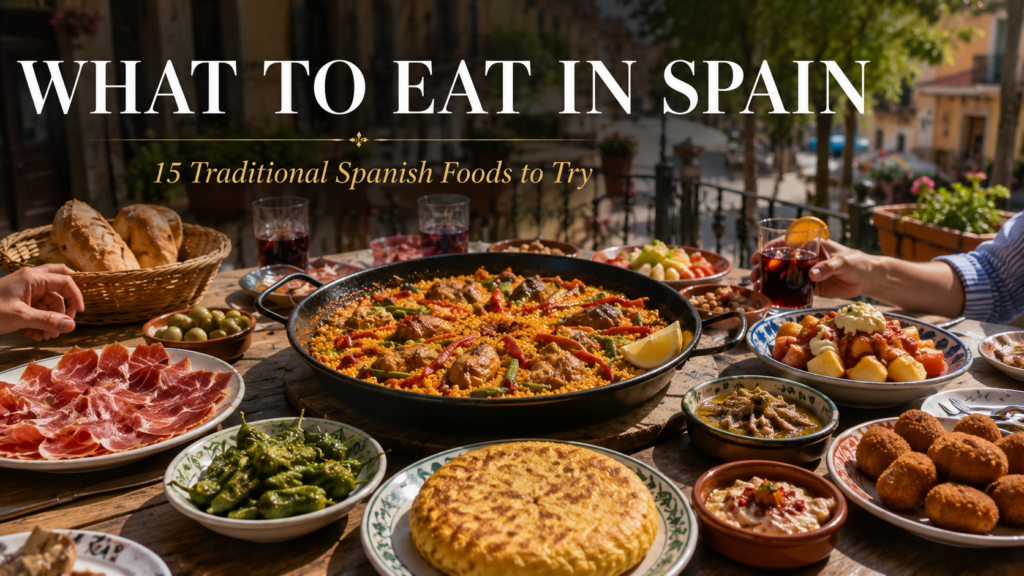
Spain is a country you can taste one region at a time.
A plate of seafood rice on the Mediterranean coast has little in common with a bowl of bean stew in Asturias. In Andalusia, a cold tomato soup can make perfect sense on a hot afternoon, while in Galicia, octopus seasoned simply with olive oil, salt, and paprika is one of the dishes most closely associated with the region.
That variety is one of the reasons eating in Spain can be as memorable as visiting its architecture, beaches, and historic cities.
For a first-time visitor, however, Spanish food can also be surprisingly difficult to summarize. Paella and tapas may be the names most travelers recognize before arriving, but neither tells the whole story.
Spanish cuisine is deeply regional. Ingredients, specialties, meal times, portion sizes, and even the way people socialize around food can change as you travel across the country.
This guide focuses on 15 traditional Spanish foods worth knowing before your trip, along with where they come from, what to expect when ordering them, and a few practical details that can make eating in Spain more enjoyable.
Before the List: Spanish Food Is More Regional Than You Might Expect
There is no single menu that represents all of Spain.
The Mediterranean coast is closely associated with rice, seafood, vegetables, and olive oil. Northern regions bring their own traditions of seafood, hearty stews, cheeses, and cider. Andalusia contributes dishes shaped by its hot climate and long culinary history, while central Spain is known for everything from roast meats to simple tapas served in traditional bars.
Even famous dishes can have strong regional identities.
Paella, for example, is associated above all with Valencia rather than being an everyday national dish prepared in exactly the same way everywhere. Pan con tomate is especially connected with Catalonia. Pulpo a la gallega points directly toward Galicia.
For travelers, this creates a useful rule:
Try regional food where it belongs whenever you can.
You do not need to build your entire itinerary around restaurants. Simply paying attention to where you are can lead to more interesting choices than ordering the same familiar dishes in every city.
1. Paella
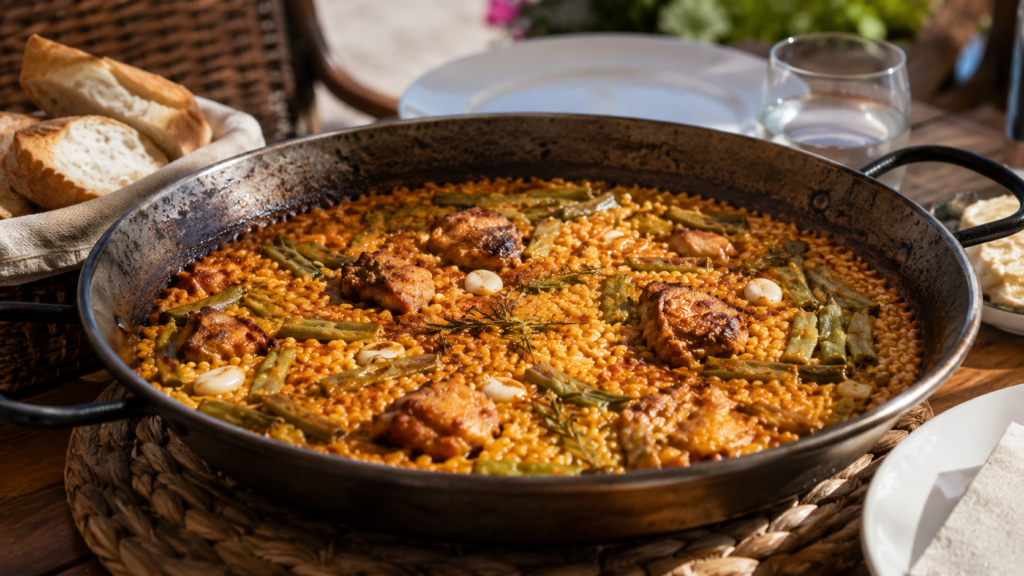
Few Spanish dishes are more internationally recognizable than paella, but the dish travelers encounter abroad is not always a good introduction to the real thing.
Paella originated in Valencia, on Spain’s Mediterranean coast, and traditionally developed as a rice dish cooked in a wide, shallow pan. The rice is as important as anything placed on top of it.
One of the best-known traditional versions is paella valenciana, commonly associated with ingredients such as chicken, rabbit, green beans, and other local components. Seafood versions are also extremely popular, particularly with visitors, but they should not be treated as the only authentic form of paella.
A good paella should not resemble a wet risotto.
The rice is generally cooked so that it absorbs the flavor of the stock while remaining distinct, and many diners particularly value the thin caramelized layer that can develop at the bottom of the pan, known as socarrat.
If paella is high on your food list, Valencia is the obvious place to make it a priority.
Another useful detail is timing. Paella is traditionally more associated with lunch than a late dinner, and many restaurants prepare it for a minimum of two people.
Do not judge Spanish paella by the first restaurant displaying a giant photograph of a bright yellow rice dish outside the door. In heavily visited areas, walking a few streets away from the busiest tourist corridor can make a noticeable difference.
2. Tortilla Española
Tortilla española proves that some of Spain’s most satisfying food is also some of its simplest.
Often called tortilla de patatas, this thick Spanish omelet is built primarily around eggs and potatoes, usually with olive oil and sometimes onion.
That final ingredient can start a surprisingly serious discussion.
Whether a proper tortilla should contain onion — con cebolla or sin cebolla — is a familiar debate in Spain, but travelers do not need to choose sides immediately. Try both if you have the opportunity.
You will see tortilla served in different ways. It may arrive as a slice at a tapas bar, appear inside a sandwich, or form part of a larger meal.
Texture varies as well. Some versions are cooked firmly throughout, while others retain a softer, almost creamy center.
It is inexpensive, widely available, and easy to order, which makes tortilla española one of the most useful dishes for a traveler to recognize.
3. Jamón Ibérico
Jamón is not simply an appetizer placed on Spanish menus for tourists.
Cured ham is deeply embedded in Spanish food culture, and understanding the difference between common types makes ordering much easier.
Jamón serrano is widely available and generally more affordable. Jamón ibérico comes from Iberian pigs and can vary considerably in quality, production method, and price.
At the higher end is jamón ibérico de bellota, produced from Iberian pigs whose finishing diet includes acorns under regulated production standards.
You do not need to order an expensive full plate to experience it.
Markets, traditional food halls, tapas bars, and specialized jamón shops often provide opportunities to try a small portion. Good jamón is usually served in thin slices, allowing its texture and flavor to be appreciated without complicated accompaniments.
For a first visit to Spain, tasting a modest portion of quality jamón can be more worthwhile than automatically ordering the most expensive version on the menu.
4. Patatas Bravas
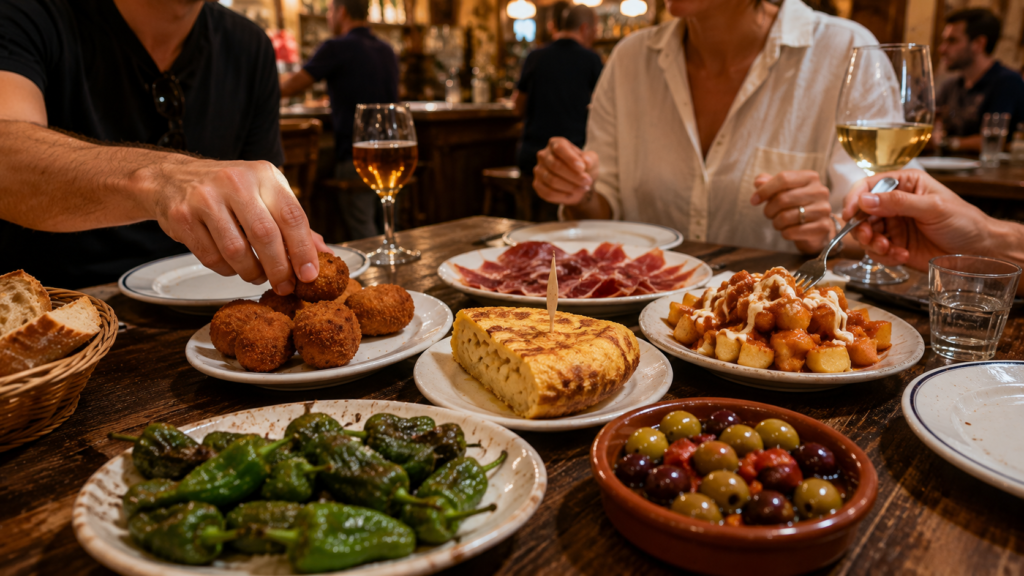
Patatas bravas are one of the easiest introductions to Spanish bar food.
The basic idea is straightforward: fried potato pieces served with a flavorful sauce, usually involving a spicy bravas sauce and, depending on the region or establishment, sometimes aioli.
Yet the result varies enormously from bar to bar.
Some kitchens produce extremely crisp potatoes with carefully balanced sauces. Others serve a much heavier version. That variation is part of what makes such a simple dish worth trying more than once.
Patatas bravas are particularly useful when sharing food with a group because they fit naturally into the Spanish habit of ordering several dishes for the table rather than everyone choosing a completely separate plate.
They are also a reminder that tapas do not need to be elaborate.
Sometimes potatoes, a good sauce, a busy neighborhood bar, and a table of shared dishes provide a more memorable Spanish food experience than a formal restaurant meal.
5. Gazpacho
Gazpacho is one of Andalusia’s best-known dishes, particularly refreshing during the hot summer months. This chilled soup is typically made with ripe tomatoes, olive oil, vegetables, and a touch of acidity.
Seville, Córdoba, and other destinations across Andalusia are excellent places to try it.
6. Gambas al Ajillo
Gambas al ajillo combines shrimp, garlic, olive oil, and sometimes chili in a hot, sizzling dish.
It is a classic choice in tapas bars and is best enjoyed with bread to soak up the garlicky olive oil left behind.
7. Pulpo a la Gallega
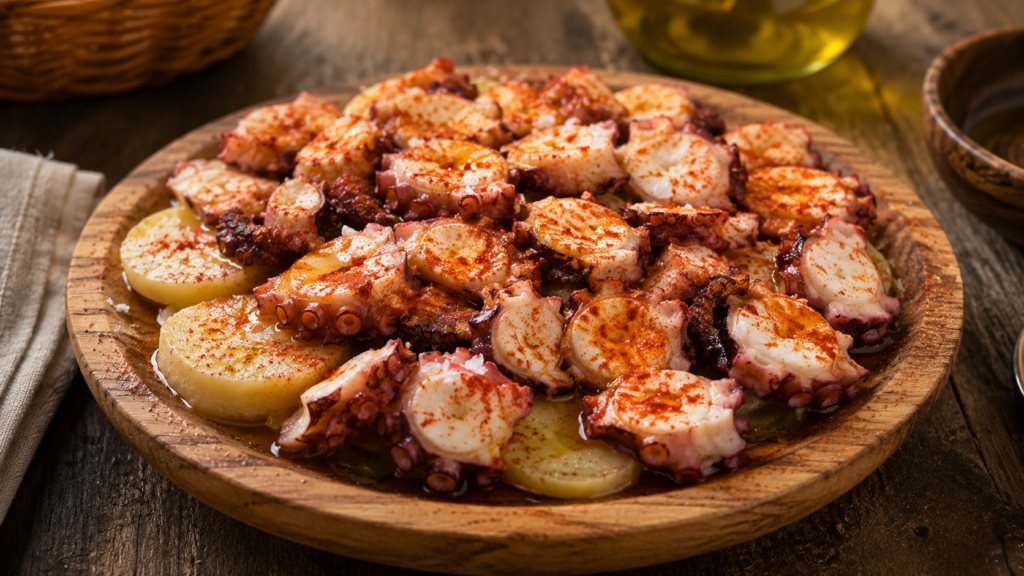
Pulpo a la gallega, or pulpo á feira, is one of Galicia’s signature foods. Tender pieces of octopus are typically seasoned with olive oil, salt, and paprika, often with potatoes underneath.
If your trip reaches Galicia, this is one regional specialty worth saving for the north.
8. Croquetas
Spanish croquetas have a crisp exterior surrounding a rich, creamy filling. Popular versions include jamón, chicken, cod, mushrooms, and cheese.
They are widely available in tapas bars and are ideal for sharing when you want to sample several dishes in one meal.
9. Pan con Tomate
Known in Catalonia as pa amb tomàquet, this simple combination of bread, ripe tomato, olive oil, and salt is a staple of Catalan cuisine.
Barcelona is one of the easiest places for travelers to encounter it, whether at breakfast or alongside other small dishes and cured meats.
10. Churros con Chocolate
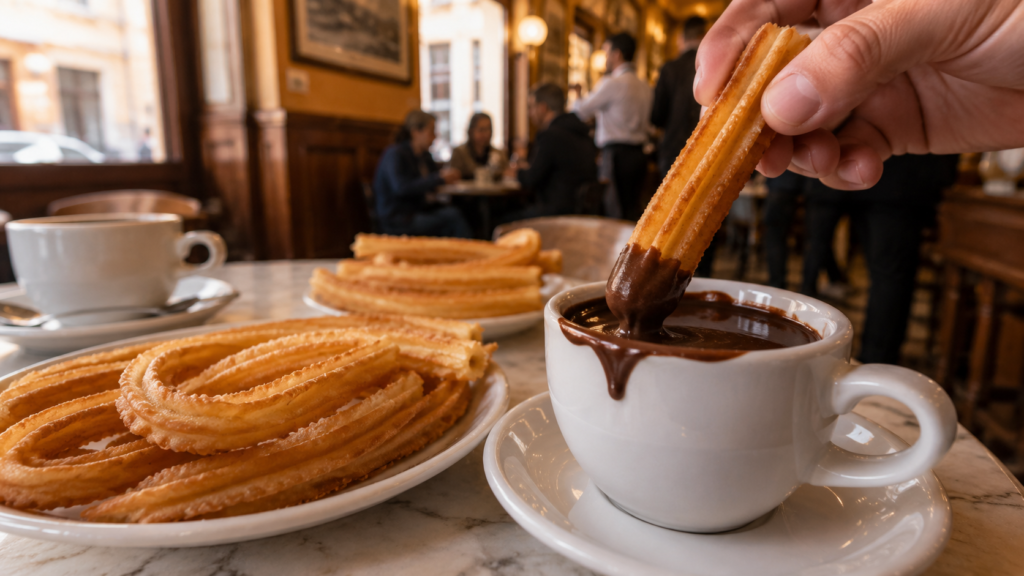
Churros served with thick hot chocolate are one of Spain’s classic sweet combinations.
Madrid is particularly famous for traditional churrerías, where churros can be eaten for breakfast, as an afternoon treat, or even after a late night out.
11. Patatas Bravas
Patatas bravas are fried potatoes served with a bold bravas sauce, sometimes accompanied by aioli depending on the restaurant and region.
They are a familiar sight in tapas bars and an easy dish to share with the table.
12. Pimientos de Padrón
These small green peppers are typically fried in olive oil and finished with coarse salt.
Most are mild, but occasionally you may encounter a surprisingly spicy one. They are particularly associated with Galicia and have become popular in tapas bars throughout Spain.
13. Bacalao
Salt cod, known as bacalao, has a long history in Spanish cooking and appears in numerous regional recipes.
Rather than representing one fixed dish, it may be grilled, baked, served with sauces, or incorporated into other preparations. Trying a regional version can be more interesting than looking for one supposedly definitive recipe.
14. Fabada Asturiana
Northern Spain offers a very different side of Spanish cuisine.
Fabada asturiana is a hearty bean stew from Asturias, traditionally associated with large white beans and pork products such as chorizo and morcilla.
It is rich, filling, and particularly suited to cooler weather — a sharp contrast to the lighter dishes associated with Spain’s Mediterranean coast.
15. Crema Catalana
Finish the list in Catalonia.
Crema catalana is a traditional dessert made from a smooth custard base topped with a thin layer of caramelized sugar.
It may remind visitors of crème brûlée, but it has its own history and flavor profile, commonly including citrus peel and cinnamon.
Barcelona and other destinations across Catalonia are natural places to try it.
What Should You Eat in Different Parts of Spain?
One of the easiest ways to explore Spanish cuisine is to stop thinking of the country as having a single national menu.
In Valencia, make time for rice dishes and traditional paella.
In Barcelona and elsewhere in Catalonia, look for pan con tomate, crema catalana, and Catalan specialties.
Andalusia is an excellent place for gazpacho and a wide range of tapas.
Travel north to Galicia and seafood becomes increasingly important, with pulpo a la gallega among the region’s most recognizable dishes.
Asturias is known for heartier food, including fabada, as well as its cider culture.
Madrid brings together food traditions from across the country, making it particularly convenient for travelers who will not have time to visit every region.
The best approach is not to hunt down all 15 dishes in a single city. Let your route through Spain influence what you order.
A Few Things to Know Before Eating in Spain
Meal times in Spain can be later than many first-time visitors expect, particularly dinner. Restaurants that feel unusually quiet in the early evening may become much busier later.
Tapas also do not represent one universal portion size or dining system across the entire country. Depending on where you eat, you may see tapas, larger portions, shared plates, or regional variations.
Ordering several dishes for the table is a good way to experience more variety without turning every meal into a major event.
And do not overlook ordinary neighborhood establishments. Famous markets and highly reviewed restaurants can be worthwhile, but some of the most enjoyable meals may come from a small bar, bakery, café, or family-run restaurant you discover while exploring.
Final Thoughts
Spanish cuisine becomes much more interesting once you move beyond the idea that it is simply paella, tapas, and sangria.
The country’s food reflects its geography.
Mediterranean rice dishes, Galician seafood, Andalusian cold soups, Asturian stews, Catalan specialties, cured meats, simple bar snacks, and regional desserts all belong to the same country without tasting remotely the same.
For a first trip, you do not need to try everything.
Choose a few dishes that belong naturally to the places on your itinerary, leave room for something you have never heard of, and allow at least a few meals to happen without a detailed plan.
That is often where the best food memories begin.