
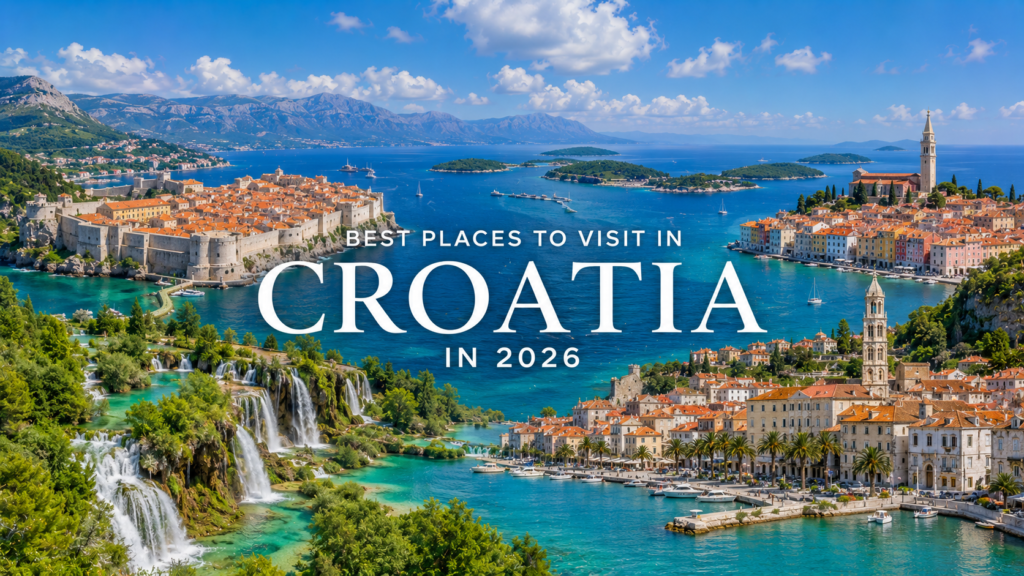
Croatia combines historic coastal cities, beautiful Adriatic islands, medieval architecture, turquoise beaches, dramatic national parks, and centuries of Mediterranean culture within a relatively compact country. From Dubrovnik’s magnificent stone walls and Split’s ancient Roman heritage to picturesque islands surrounded by clear blue water, Croatia offers an impressive variety of experiences for travelers.
Although Dubrovnik and Split are the country’s most famous destinations, Croatia extends far beyond its major coastal cities. Travelers can explore the historic streets of Zagreb, waterfalls and turquoise lakes in Plitvice Lakes National Park, charming towns across the Istrian Peninsula, beautiful islands such as Hvar and Korčula, and peaceful coastal communities scattered along the Adriatic Sea.
Croatia is also well suited to multi-destination trips. Buses, ferries, catamarans, rental cars, and domestic transportation connections make it possible to combine historic cities, islands, beaches, and national parks within a single itinerary. Island schedules and coastal transportation can vary by season, so planning connections in advance is particularly useful.
Whether you are interested in architecture, history, beaches, sailing, food, outdoor adventures, or scenic coastal landscapes, Croatia works equally well for short European holidays and longer journeys along the Adriatic coast.
This guide explores the best places to visit in Croatia in 2026, including famous coastal cities, historic towns, beautiful islands, national parks, and spectacular natural areas worth adding to your itinerary.
Best Places to Visit in Croatia
1. Dubrovnik
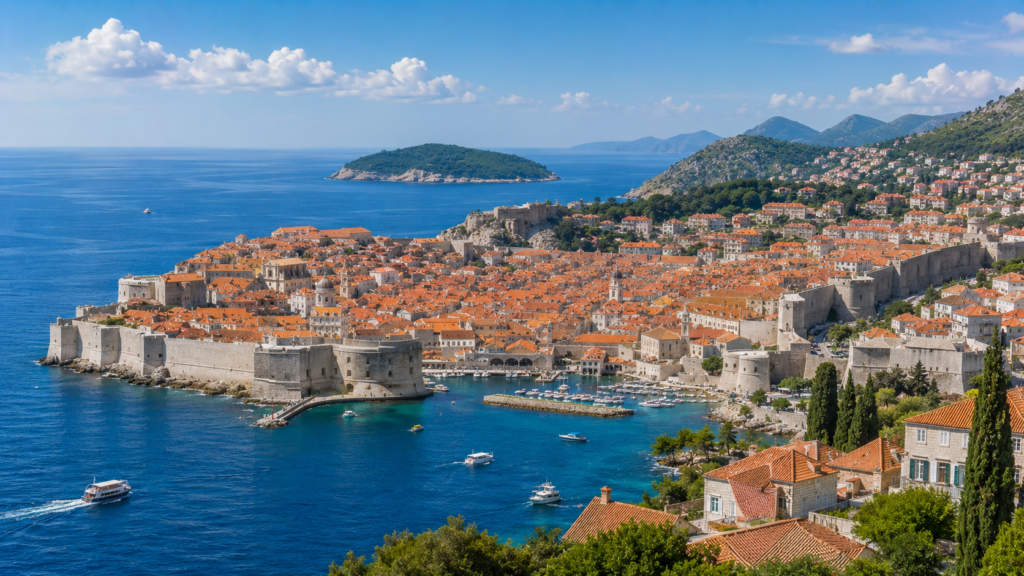
Dubrovnik is Croatia’s most famous historic city and one of the most recognizable destinations on the Adriatic coast. Surrounded by massive stone walls and the deep blue Adriatic Sea, the beautifully preserved Old Town contains historic churches, palaces, narrow streets, stone houses, and impressive viewpoints.
Walking along Dubrovnik’s city walls is one of the essential experiences. The elevated route provides spectacular views across terracotta rooftops, historic fortifications, the surrounding coastline, and the Adriatic Sea.
Inside the Old Town, Stradun forms the main pedestrian street and provides easy access to many important landmarks. Visitors can explore historic squares, churches, monasteries, fountains, and smaller streets extending throughout the medieval center.
For a different perspective, travelers can reach elevated viewpoints above Dubrovnik for panoramic views of the entire walled city, nearby islands, and coastline.
Dubrovnik can become extremely busy during the summer travel season, particularly when cruise ships are visiting. Exploring early in the morning or later in the afternoon can provide a more enjoyable experience.
Allow at least two full days for Dubrovnik if visiting for the first time, with additional time useful for nearby islands, beaches, and coastal excursions.
2. Split
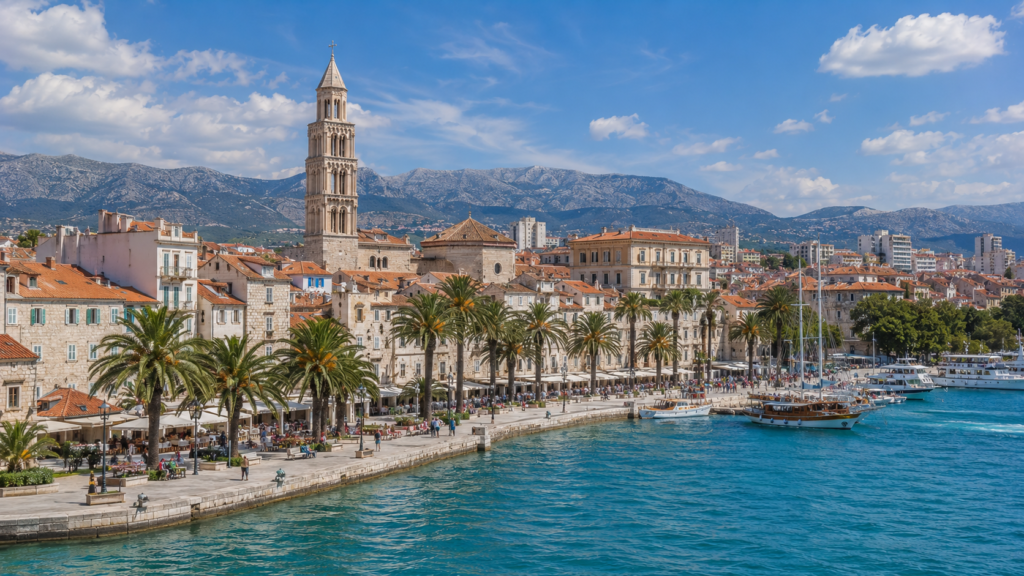
Split is Croatia’s largest city on the Dalmatian coast and combines ancient Roman heritage with a lively Mediterranean waterfront and convenient access to nearby islands.
Diocletian’s Palace forms the historic heart of the city. Built for the Roman emperor Diocletian around the beginning of the fourth century, the enormous palace complex has gradually become integrated into the surrounding city.
Today, visitors can wander through ancient passages, stone courtyards, narrow streets, restaurants, cafés, shops, and residential buildings located within and around the historic complex.
The Cathedral of Saint Domnius and its bell tower are among Split’s most recognizable landmarks. Nearby, the Riva waterfront provides a lively promenade lined with cafés and palm trees overlooking the harbor.
Marjan Hill offers walking trails and elevated viewpoints across Split, the Adriatic Sea, and nearby islands. It provides an easy escape from the busy historic center without traveling far from the city.
Split is also one of Croatia’s most useful transportation hubs for island travel. Ferries and catamarans connect the city with destinations such as Hvar, Brač, Vis, and Korčula, making Split an excellent base for a longer Croatian itinerary.
3. Plitvice Lakes National Park
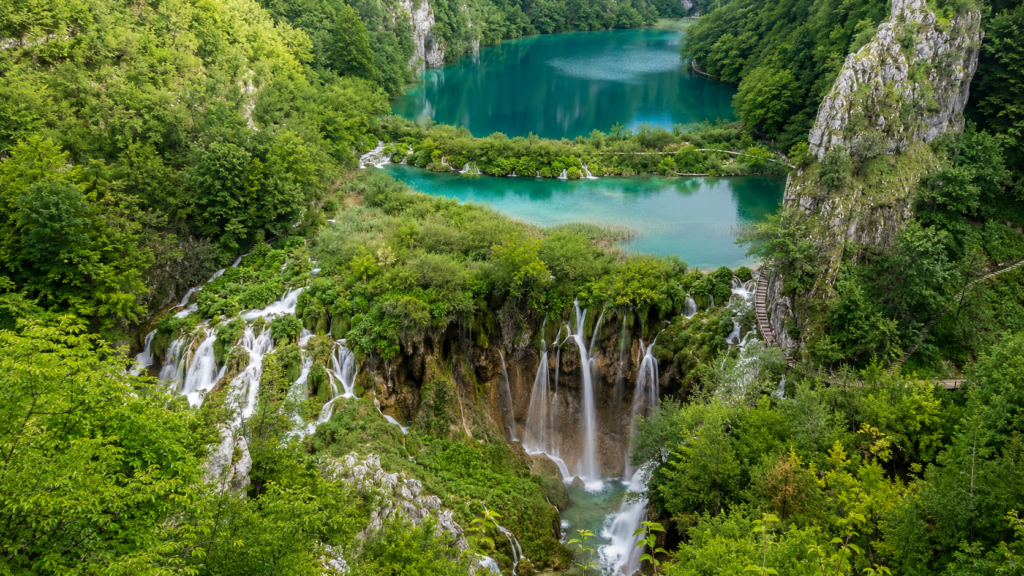
Plitvice Lakes National Park is one of Croatia’s most spectacular natural attractions and provides a dramatic contrast to the historic cities and beaches of the Adriatic coast.
The park is famous for a series of interconnected lakes surrounded by dense forests, limestone landscapes, waterfalls, and remarkably clear water. Wooden walkways and hiking routes allow visitors to explore different sections of the park while remaining close to the lakes and waterfalls.
The color of the water can appear to change between shades of turquoise, blue, and green depending on light, minerals, vegetation, and weather conditions.
Walking routes vary considerably in length, making it possible to experience the park during a shorter visit or spend much of the day exploring its landscapes.
Plitvice is particularly beautiful during spring and autumn, when seasonal colors and changing water conditions create different scenery. Summer is extremely popular, so arriving early and planning tickets in advance can be useful.
The park is located inland between Zagreb and the Adriatic coast and can fit naturally into an itinerary connecting northern and southern Croatia.
4. Hvar
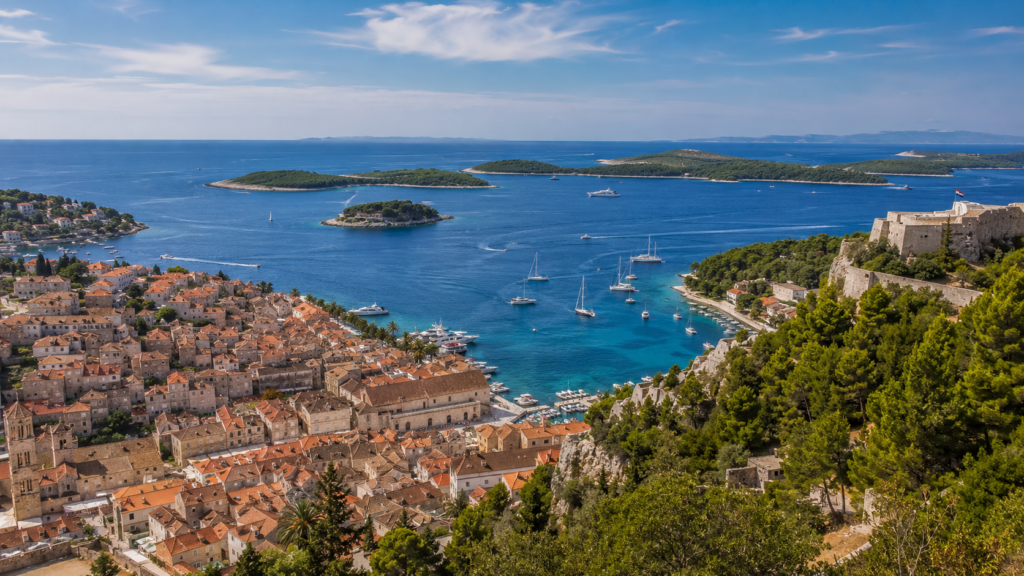
Hvar is one of Croatia’s best-known Adriatic islands, combining historic architecture, beautiful beaches, clear blue water, Mediterranean landscapes, vineyards, and a lively summer atmosphere.
Hvar Town is the island’s most famous destination. Its attractive harbor is surrounded by historic stone buildings, restaurants, cafés, and narrow streets leading into the old town.
Above the town stands Fortica Fortress, which provides spectacular panoramic views across Hvar, the harbor, and the nearby Pakleni Islands.
Outside Hvar Town, the island becomes quieter and more rural. Travelers can discover traditional villages, vineyards, lavender fields, secluded coves, beaches, and scenic roads extending across the island.
Stari Grad provides an alternative base with a quieter atmosphere and significant historic character. The surrounding agricultural landscape has been cultivated for centuries and adds another dimension to the island beyond its beaches.
Hvar is particularly appealing to travelers who want to combine history, island scenery, swimming, boat trips, restaurants, and nightlife. Staying several days allows enough time to experience both Hvar Town and the quieter parts of the island.
5. Rovinj
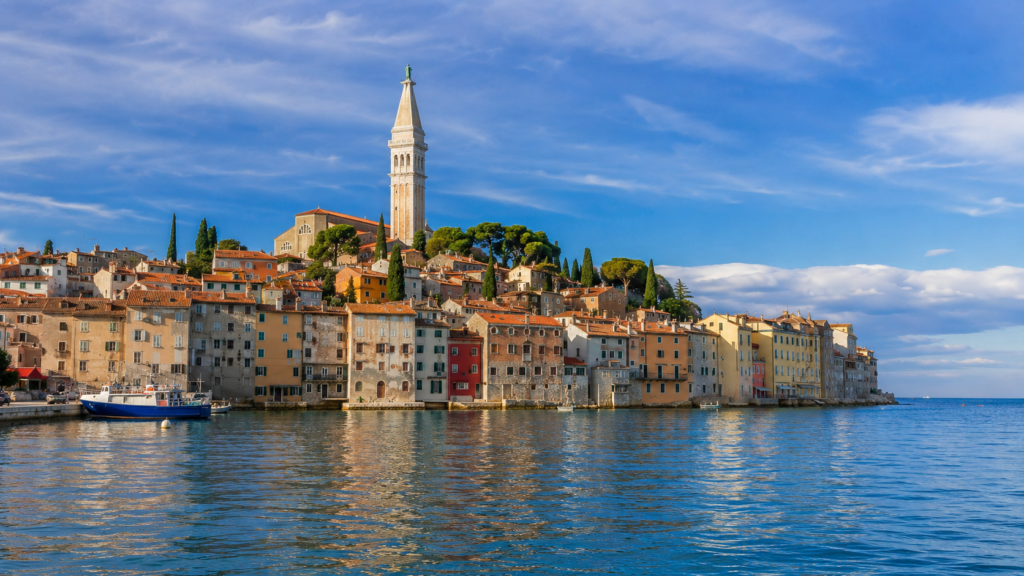
Rovinj is one of the most picturesque coastal towns in Croatia and a highlight of the Istrian Peninsula. Its historic center occupies a small peninsula surrounded by the Adriatic Sea, creating a distinctive skyline of colorful buildings, narrow streets, and the prominent Church of Saint Euphemia.
The Old Town is the main attraction. Cobbled streets climb gradually toward the church, passing traditional stone houses, small galleries, cafés, restaurants, and viewpoints overlooking the coastline.
The waterfront surrounding the historic center provides beautiful views of Rovinj from several different perspectives. Fishing boats, small islands, colorful buildings, and clear Adriatic water create a relaxed Mediterranean atmosphere.
Visitors can also explore beaches and forested areas around Zlatni Rt, or Golden Cape, located just south of the historic center. Walking and cycling routes make this area particularly enjoyable during warmer months.
Rovinj works well as a base for exploring other parts of Istria, including hilltop villages, vineyards, coastal towns, and regional food destinations. Spending at least two nights allows travelers to experience the town beyond a short daytime visit.
6. Zagreb
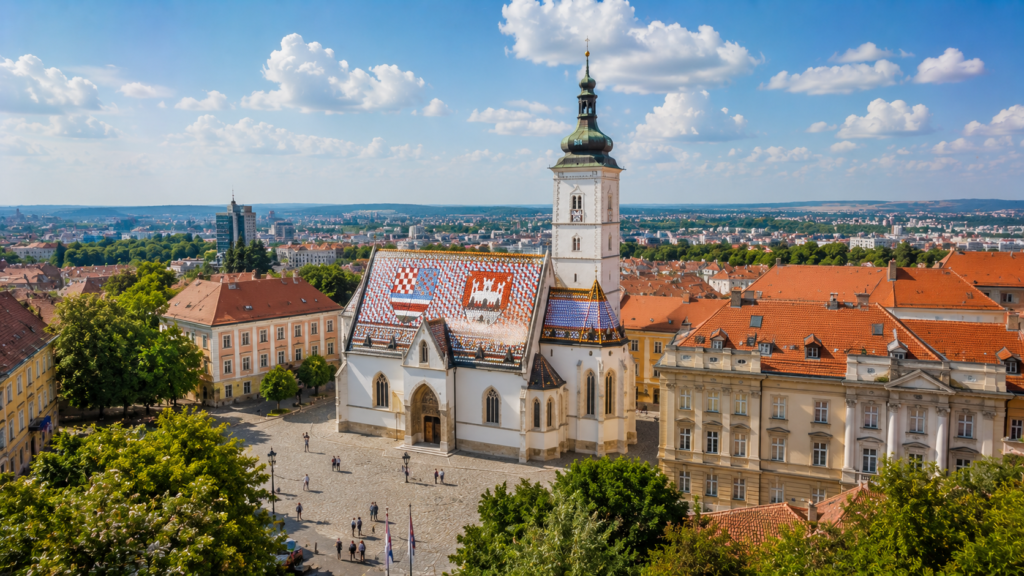
Zagreb is Croatia’s capital and provides a very different experience from the country’s famous Adriatic destinations. Historic architecture, museums, markets, parks, cafés, and lively public spaces give the city a distinctly Central European atmosphere.
The historic Upper Town contains many of Zagreb’s most recognizable landmarks. St. Mark’s Church is particularly distinctive because of its colorful tiled roof, while surrounding streets contain historic buildings and attractive viewpoints.
Ban Jelačić Square forms the center of modern Zagreb and provides convenient access to shopping streets, restaurants, cafés, and public transportation.
Dolac Market is another important part of the city experience. Located close to the central square, the traditional market offers fruit, vegetables, local products, and a glimpse into everyday life in the Croatian capital.
Zagreb also has a strong café culture and numerous museums covering art, history, archaeology, technology, and more unusual subjects.
One or two full days are sufficient for many first-time visitors. Zagreb can also serve as a useful starting or ending point for itineraries connecting Plitvice Lakes with the Croatian coast.
7. Korčula
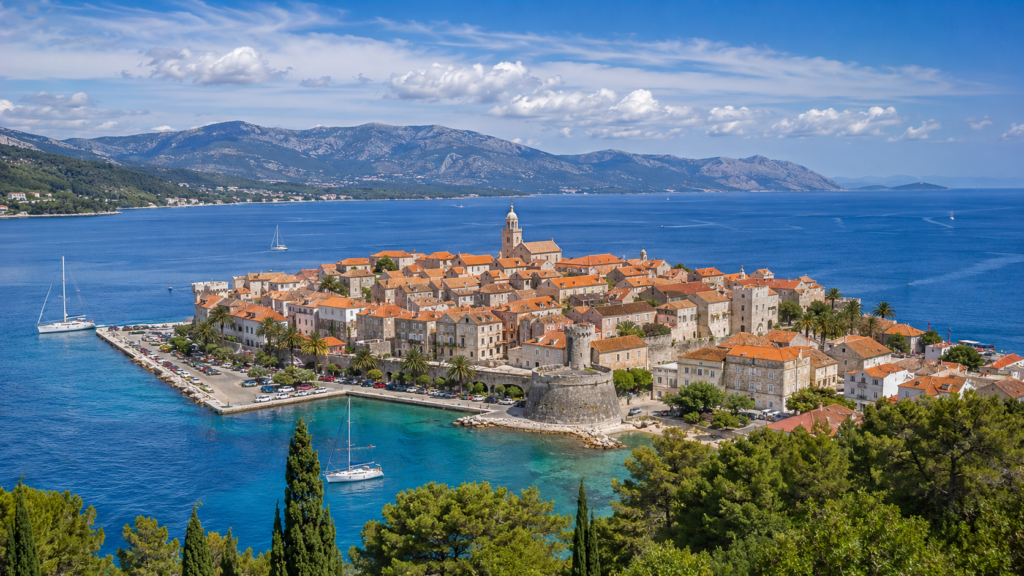
Korčula is a beautiful Adriatic island known for its medieval towns, vineyards, traditional villages, beaches, and clear coastal waters.
Korčula Town is the island’s historic center and is sometimes compared with a smaller version of Dubrovnik because of its stone walls, towers, narrow streets, and picturesque waterfront setting.
St. Mark’s Cathedral stands near the center of the old town and is one of its most important architectural landmarks. Walking through the surrounding streets reveals historic stone buildings, restaurants, shops, and views toward the sea.
Beyond Korčula Town, travelers can explore vineyards, quiet villages, secluded beaches, and agricultural landscapes. The island is particularly known for local wine production, including wines made from native grape varieties.
Cycling, swimming, kayaking, sailing, and boat trips provide additional ways to experience the island during warmer months.
Korčula is a good choice for travelers seeking a combination of history, beaches, food, wine, and a somewhat quieter island atmosphere.
8. Zadar
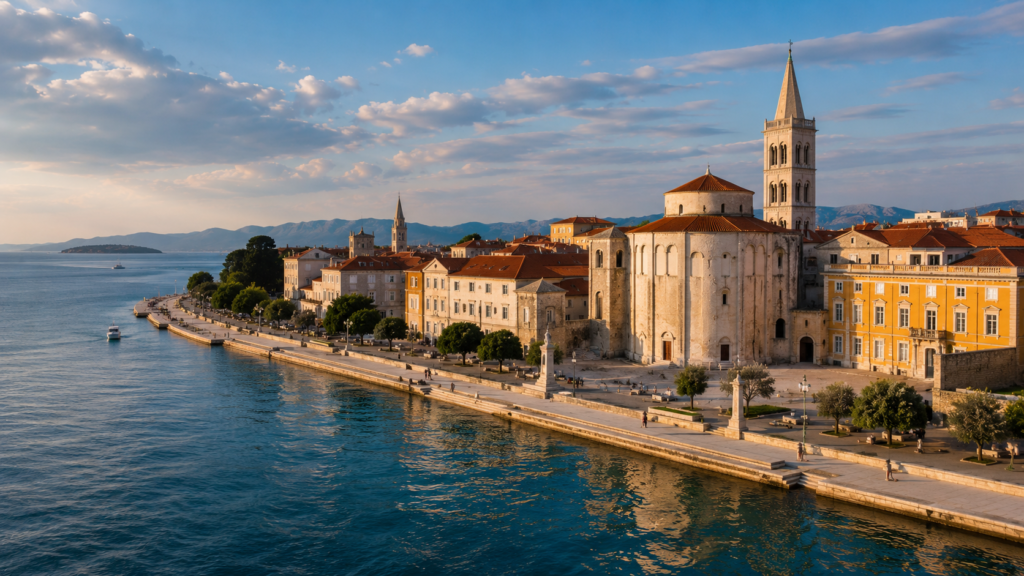
Zadar is a historic coastal city in northern Dalmatia that combines ancient architecture with one of Croatia’s most distinctive modern waterfronts.
The compact Old Town contains Roman ruins, medieval churches, historic squares, stone streets, cafés, and restaurants. The Church of St. Donatus is one of the city’s most recognizable landmarks and stands beside the remains of the ancient Roman Forum.
Zadar’s waterfront is particularly famous for the Sea Organ, an architectural installation that uses the movement of the Adriatic Sea to create changing sounds.
Nearby, the Greeting to the Sun installation creates another distinctive public space along the waterfront and is especially popular around sunset.
The city’s location also makes it a useful base for exploring islands, beaches, national parks, and other destinations across northern Dalmatia.
Zadar generally feels more relaxed than Dubrovnik or Split while still providing substantial history, attractive architecture, restaurants, nightlife, and easy access to the Adriatic coast.
9. Krka National Park
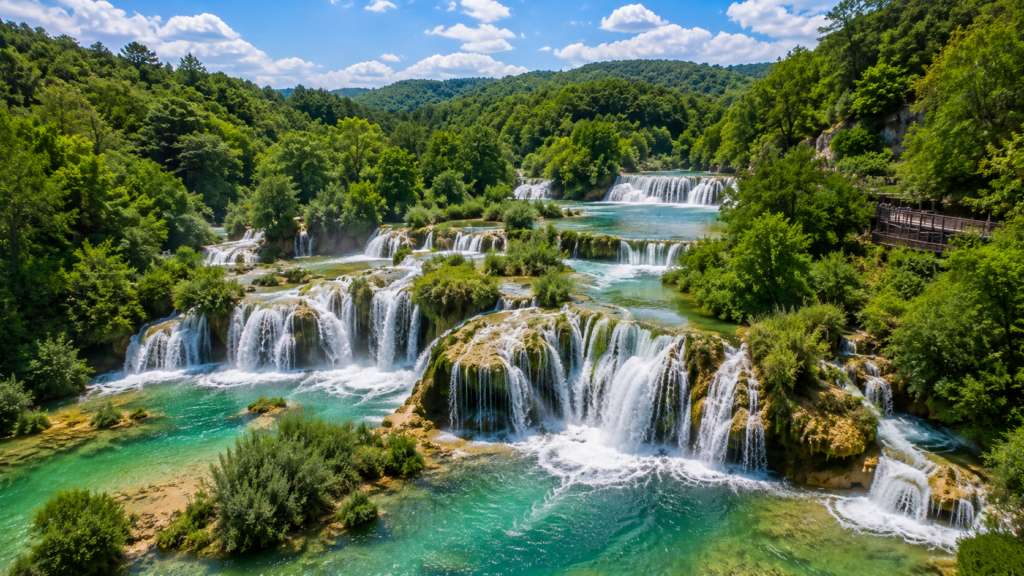
Krka National Park is one of Croatia’s most beautiful natural destinations, known for waterfalls, rivers, forests, walking routes, and historic sites.
The Krka River flows through a dramatic landscape of limestone formations and vegetation, creating a series of waterfalls and pools.
Skradinski Buk is among the park’s best-known attractions. A network of paths and wooden walkways provides different perspectives of the waterfalls and surrounding natural environment.
The park extends beyond its most famous waterfall area and includes additional landscapes, cultural sites, monasteries, and viewpoints.
Krka can be visited from Split, Šibenik, Zadar, and other destinations along the Dalmatian coast, making it relatively easy to include in a broader Croatian itinerary.
Travelers visiting during summer should expect higher visitor numbers. Arriving earlier in the day can provide a more comfortable experience, particularly on popular walking routes.
10. Istria
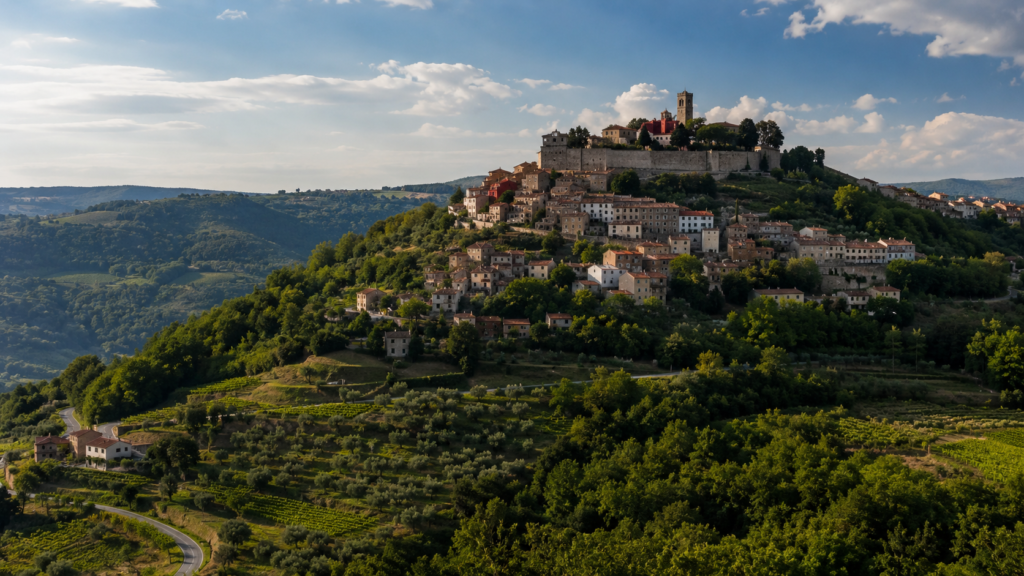
Istria is a peninsula in northwestern Croatia known for historic coastal towns, medieval hilltop villages, vineyards, olive groves, regional cuisine, and attractive Adriatic landscapes.
Rovinj is one of the region’s most famous destinations, but Istria offers considerably more for travelers willing to explore beyond the coast.
Pula contains some of Croatia’s most impressive Roman heritage. The enormous Pula Arena is one of the best-preserved Roman amphitheaters in the region and remains the city’s defining landmark.
Inland Istria provides a completely different atmosphere. Medieval hilltop towns such as Motovun rise above forests, vineyards, and agricultural landscapes, creating scenery that sometimes feels closer to neighboring Italy and Slovenia than to southern Dalmatia.
The region is particularly famous for truffles, olive oil, wine, seafood, and traditional Istrian cuisine. Food-focused travelers can easily combine sightseeing with vineyards, restaurants, farms, and local producers.
A rental car is particularly useful in Istria because many of the most interesting villages and rural destinations are easier to reach independently.
Several days are recommended for travelers who want to combine Rovinj, Pula, inland villages, beaches, food, and countryside.
Best Time to Visit Croatia
Croatia can be visited throughout the year, although late spring through early autumn is the most popular period for coastal travel and island trips.
May and June are particularly attractive for many travelers. Temperatures are generally comfortable, daylight hours are long, and the Adriatic coast is active without reaching the busiest levels of midsummer.
July and August are the peak travel months. Warm weather and sea temperatures make this period ideal for beaches, swimming, sailing, and island hopping, but Dubrovnik, Split, Hvar, and other popular destinations can become extremely busy.
September is another excellent month for coastal travel. The Adriatic Sea remains relatively warm while visitor numbers often begin to decrease after the peak summer period.
Spring and autumn are particularly suitable for Zagreb, Plitvice Lakes, Istria, national parks, hiking, and cultural sightseeing.
Winter is considerably quieter along much of the coast. Zagreb and other cities can still be visited, but some island and seasonal tourism services operate on reduced schedules.
The best time ultimately depends on your itinerary. Travelers primarily interested in beaches and islands will generally prefer summer, while those focusing on historic cities, national parks, road trips, and food may find late spring or early autumn more comfortable.
Local Food You Should Try
Croatian cuisine varies considerably between the Adriatic coast and inland regions, reflecting Mediterranean, Central European, Italian, Ottoman, and local culinary influences.
Peka – A traditional method of preparing meat, seafood, or vegetables beneath a bell-shaped metal lid covered with hot coals.
Black Risotto – A distinctive coastal risotto typically prepared with cuttlefish or squid and colored with squid ink.
Pašticada – A slow-cooked beef dish particularly associated with Dalmatia and commonly served with gnocchi.
Fresh Adriatic Seafood – Grilled fish, octopus, squid, mussels, and other seafood are widely available throughout Croatia’s coastal regions.
Istrian Truffles – Istria is famous for both black and white truffles, which appear in pasta, sauces, cheeses, and other regional dishes.
Fuži – Traditional Istrian pasta commonly served with truffle sauces, meat dishes, or other regional ingredients.
Štrukli – A traditional dish particularly associated with Zagreb and northern Croatia, made from pastry filled with cheese and prepared in several different ways.
Soparnik – A traditional Dalmatian savory pie filled with Swiss chard and other simple ingredients.
Pag Cheese – A distinctive sheep’s milk cheese produced on the island of Pag and one of Croatia’s best-known regional cheeses.
Fritule – Small Croatian pastries commonly served as a sweet snack or dessert, particularly during festivals and holiday periods.
Transportation
Croatia has a useful transportation network connecting its major cities, coastal destinations, islands, and national parks, although travel options vary considerably depending on the region and season.
Buses are one of the most practical ways to travel between Croatian cities. Frequent routes connect Zagreb, Split, Zadar, Dubrovnik, Rijeka, and many smaller coastal towns. In some parts of the country, buses are more convenient than trains.
Croatia’s railway network is useful for selected routes, particularly connections involving Zagreb and northern parts of the country. However, trains are generally less useful for exploring the Dalmatian coast, where buses and ferries provide better connections.
Ferries and passenger catamarans are essential for island travel. Split is one of the country’s most important ferry hubs, with connections to islands such as Hvar, Brač, Vis, and Korčula. Other coastal ports also provide seasonal and year-round island services.
A rental car is particularly useful for travelers exploring Istria, Plitvice Lakes, Krka National Park, smaller coastal communities, and rural areas. Driving also provides greater flexibility for combining destinations that would otherwise require multiple bus connections.
For an itinerary focused on Zagreb, Split, Dubrovnik, and popular islands, travelers can usually rely on buses and ferries. A longer road trip including national parks, Istria, and smaller towns becomes considerably easier with a car.
Accommodation
Croatia offers a wide variety of accommodation, including hostels, apartments, guesthouses, boutique hotels, international hotels, seaside resorts, villas, and traditional properties in historic towns.
Dubrovnik and Split provide extensive accommodation choices, although properties inside or close to their historic centers can become expensive during the summer travel season.
Private apartments are particularly common along the Croatian coast and on the islands. They can be an excellent option for travelers staying several nights in one destination or traveling with families and groups.
On islands such as Hvar and Korčula, staying close to the main town provides convenient access to restaurants, ferries, and nightlife. Travelers seeking a quieter experience can choose smaller villages and coastal communities elsewhere on the islands.
Istria offers everything from coastal hotels to countryside guesthouses, villas, and properties surrounded by vineyards and olive groves.
Booking accommodation well in advance is recommended for July and August, particularly in Dubrovnik, Split, Hvar, Rovinj, and other popular coastal destinations.
Practical Travel Tips
- Currency: Croatia uses the euro (€). Cards are widely accepted, although carrying some cash can be useful in smaller establishments and rural areas.
- Language: Croatian is the official language. English is widely understood in major tourist destinations.
- Plan island connections carefully: Ferry and catamaran schedules can vary depending on the season.
- Book popular attractions ahead: Dubrovnik, Plitvice Lakes, and other major destinations can become extremely busy during summer.
- Consider a rental car: A car is particularly useful for Istria, national parks, rural areas, and longer coastal road trips.
- Wear comfortable shoes: Historic centers such as Dubrovnik, Split, Rovinj, and Korčula contain stone streets, stairs, and uneven surfaces.
- Prepare for summer heat: Sunscreen, water, hats, and appropriate clothing are important when sightseeing during July and August.
- Check swimming conditions: Rocky beaches are common along the Croatian coast, and water shoes can be useful in some locations.
- Allow enough time for islands: Rather than visiting several islands very quickly, spending multiple nights on one or two islands often creates a more relaxed itinerary.
- Travel outside peak summer when possible: May, June, and September can provide excellent conditions with fewer visitors than July and August.
Frequently Asked Questions
Is Croatia expensive to visit?
Travel costs vary considerably depending on the destination and season. Dubrovnik, Hvar, Split, and other popular coastal destinations can be relatively expensive during peak summer, particularly for accommodation.
Traveling during May, June, September, or October and booking accommodation early can help reduce costs.
How many days should I spend in Croatia?
Seven to ten days is suitable for a first trip focusing on several major destinations. For example, travelers could combine Split, Dubrovnik, an island, and a national park.
Around two weeks provides considerably more flexibility for adding Zagreb, Istria, multiple islands, or a slower road trip along the Adriatic coast.
What are the best places to visit in Croatia for first-time travelers?
Dubrovnik and Split are excellent starting points for experiencing Croatia’s historic Adriatic cities. Plitvice Lakes National Park adds spectacular natural scenery, while Hvar or Korčula provides a classic Croatian island experience.
Travelers with additional time can include Zagreb, Rovinj, Zadar, Krka National Park, and other destinations across Istria and Dalmatia.
Can I travel around Croatia without a car?
Yes. Buses connect many major cities and coastal destinations, while ferries and catamarans provide transportation between the mainland and popular islands.
However, renting a car provides greater flexibility when exploring Istria, national parks, smaller coastal towns, and rural areas.
Is Croatia suitable for families?
Yes. Croatia offers beaches, islands, historic towns, national parks, boat trips, swimming, outdoor activities, and family-friendly accommodation.
Families should consider summer heat, steep historic streets, rocky beaches, ferry schedules, and the difficulty of individual hiking routes when planning activities.
Is Croatia worth visiting outside summer?
Yes. Spring and autumn can be excellent seasons for historic cities, national parks, road trips, hiking, and exploring Istria.
May, June, September, and early October can be particularly attractive for travelers who want pleasant weather while avoiding the largest summer crowds.
Official Tourism Website
For official destination information, cities, islands, beaches, national parks, cultural attractions, accommodation ideas, activities, and practical resources for planning your trip, visit Croatia’s Official Tourism Website – Croatia Full of Life.
Related Destinations
Best Places to Visit in Italy in 2026
Continue across the Adriatic to Italy for historic cities, ancient landmarks, Mediterranean coastlines, beautiful lakes, picturesque countryside, and world-famous regional cuisine.
Best Places to Visit in Austria in 2026
Travel north to Austria to explore elegant imperial cities, spectacular Alpine mountains, crystal-clear lakes, historic towns, classical culture, and picturesque mountain villages.
Best Places to Visit in Greece in 2026
Continue through the Mediterranean to Greece for ancient archaeological sites, beautiful islands, turquoise coastlines, traditional villages, historic cities, and spectacular seaside landscapes.
Best Places to Visit in Germany in 2026
Explore Germany for historic cities, medieval towns, fairy-tale castles, forested landscapes, river valleys, cultural attractions, and diverse regional traditions.