

Greece combines ancient history, Mediterranean scenery, island life, and dramatic landscapes in a way few destinations can match. Travelers can explore archaeological sites that shaped Western civilization, wander through whitewashed villages, swim in clear blue water, and discover mountain regions that feel far removed from the country’s famous islands.
Athens is the natural starting point for many first-time visitors, but Greece becomes even more rewarding when you travel beyond the capital. The Cyclades offer iconic Aegean scenery, Crete combines beaches with mountains and historic sites, while mainland destinations such as Meteora and Delphi reveal a quieter and more dramatic side of the country.
This guide covers the best places to visit in Greece in 2026, balancing major cultural destinations with islands, historic towns, coastal scenery, and distinctive regional experiences. Greece also fits naturally into a longer Southern European journey alongside destinations such as Italy and Spain.
Why Visit Greece?
Greece offers an appealing mix of culture, outdoor scenery, food, and relaxed travel. Ancient temples and archaeological sites are among the country’s biggest attractions, but the experience goes far beyond history. Traditional tavernas, island villages, mountain roads, local markets, and quiet beaches give each region its own character.
The landscape is remarkably varied. Some islands are known for volcanic cliffs and whitewashed settlements, while others offer green mountains, long beaches, and traditional communities. On the mainland, travelers can explore monasteries, archaeological sites, rugged mountain scenery, and historic towns that receive fewer international visitors than the most famous islands.
Greek cuisine is another important part of the journey, with olive oil, seafood, grilled meats, cheeses, vegetables, and regional specialties changing from place to place. Greece works equally well for a short city-and-island trip or a longer itinerary combining several regions.
Top 10 Places to Visit in Greece
1. Athens
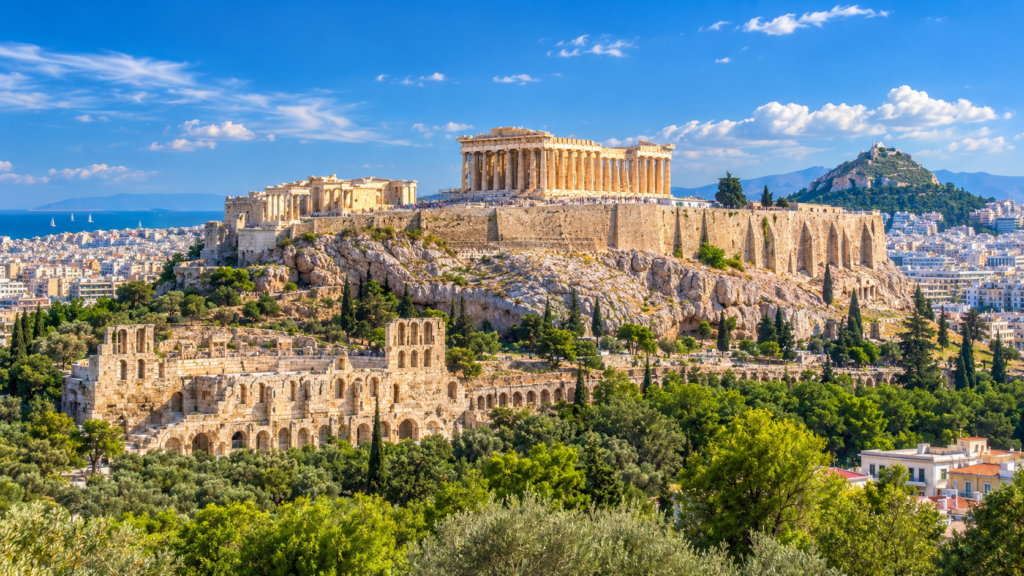
Athens is the best place to begin exploring Greece’s ancient heritage while experiencing the energy of a modern European capital. The Acropolis dominates the skyline, with the Parthenon standing above the city as one of the most recognizable monuments in the country.
Below the Acropolis, neighborhoods such as Plaka and Monastiraki are ideal for walking, with cafés, shops, historic streets, and easy access to major attractions. The Acropolis Museum adds valuable context to the archaeological sites, while viewpoints around the city reveal Athens stretching toward the surrounding hills and coastline.
Rather than treating Athens only as a gateway to the islands, allow at least two or three days to experience its museums, ancient landmarks, local neighborhoods, markets, and food scene at a more comfortable pace.
2. Santorini

Santorini is one of Greece’s most recognizable islands, known for whitewashed villages built along the edge of a dramatic volcanic caldera. Oia is famous for its cliffside houses and sunset views, while Fira offers restaurants, shops, and wide perspectives across the Aegean Sea.
The island has more to offer than its famous scenery. Travelers can walk the route between Fira and Oia, visit volcanic beaches, explore traditional villages, and discover archaeological sites connected to the island’s ancient history. Santorini is also known for vineyards that grow in distinctive volcanic soil.
Summer can be extremely busy, especially in the main towns. Visiting in late spring or early autumn generally provides more comfortable temperatures and a less crowded experience while still offering good conditions for sightseeing and coastal activities.
3. Crete
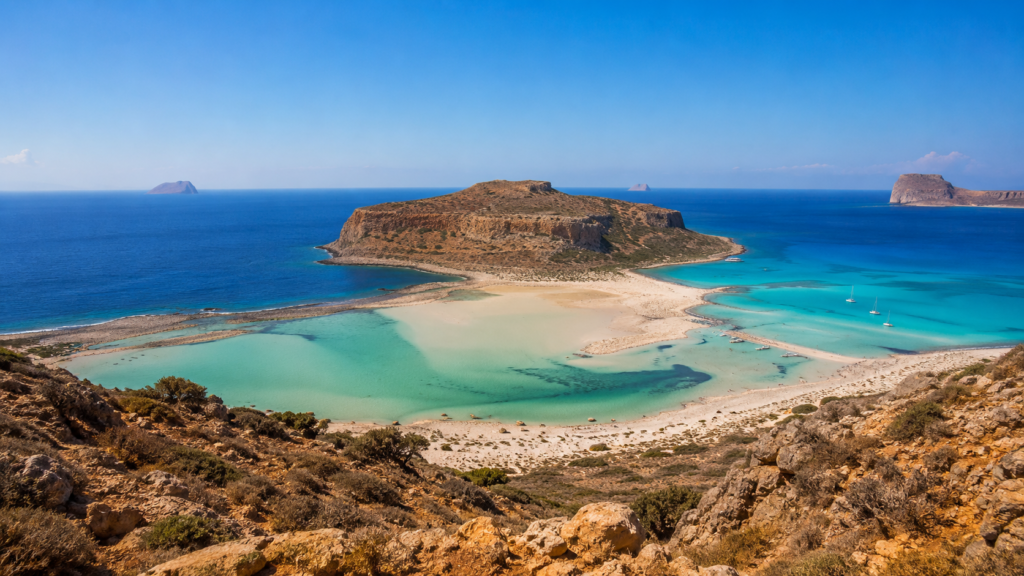
Crete is Greece’s largest island and one of the most varied destinations in the country. It combines long beaches, rugged mountains, historic towns, archaeological sites, traditional villages, and a strong regional food culture.
The Palace of Knossos near Heraklion is one of Crete’s most important historical attractions, while Chania is known for its attractive Venetian harbor and atmospheric old town. Travelers interested in nature can explore mountain landscapes and dramatic gorges, while the island’s coastline includes everything from organized beaches to remote coves.
Crete works especially well for travelers who want more than a simple beach holiday. Renting a car makes it easier to explore different regions, and spending at least several days allows enough time to experience both the coast and the island’s interior.
4. Meteora

Meteora offers one of the most unusual landscapes in Greece. Massive rock pillars rise above the plains of central Greece, with historic monasteries built on top of the formations and along their steep cliffs.
Several monasteries remain open to visitors, providing a combination of religious history, remarkable architecture, and panoramic views across the surrounding countryside. Roads and walking paths connect many of the main viewpoints, making it possible to experience the landscape from different perspectives throughout the day.
Meteora is especially impressive in the early morning and late afternoon, when softer light emphasizes the shape of the rocks. The nearby town of Kalambaka provides the main base for accommodation, restaurants, and access to the monastery area.
5. Mykonos

Mykonos is one of Greece’s best-known islands, combining Cycladic architecture, beautiful beaches, stylish restaurants, and a famous nightlife scene. Mykonos Town is the heart of the island, where narrow pedestrian lanes wind between whitewashed buildings, small churches, boutiques, cafés, and traditional blue-painted doors and balconies.
The waterfront area known as Little Venice is particularly atmospheric, especially around sunset, while the nearby windmills have become one of the island’s most recognizable landmarks. Away from town, visitors can choose between lively organized beaches and quieter stretches of coastline.
Mykonos is especially popular during the summer months, when accommodation prices and visitor numbers rise significantly. Late spring and early autumn can be attractive alternatives for travelers who want warm weather and a more relaxed atmosphere.
6. Rhodes

Rhodes combines Mediterranean beaches with one of the most impressive historic towns in the Greek islands. Rhodes Old Town is surrounded by medieval walls and contains a maze of stone streets, historic buildings, squares, shops, and monuments connected to centuries of changing civilizations.
The Palace of the Grand Master is one of the main landmarks, but the island deserves exploration beyond Rhodes Town. Lindos offers whitewashed houses beneath an ancient acropolis, while the surrounding coastline provides numerous beaches and scenic viewpoints.
Because Rhodes is relatively large, renting a car can be useful for travelers who want to explore villages, archaeological sites, and beaches away from the main resort areas. Its combination of history and coastline makes it particularly suitable for visitors who want both sightseeing and beach time.
7. Corfu
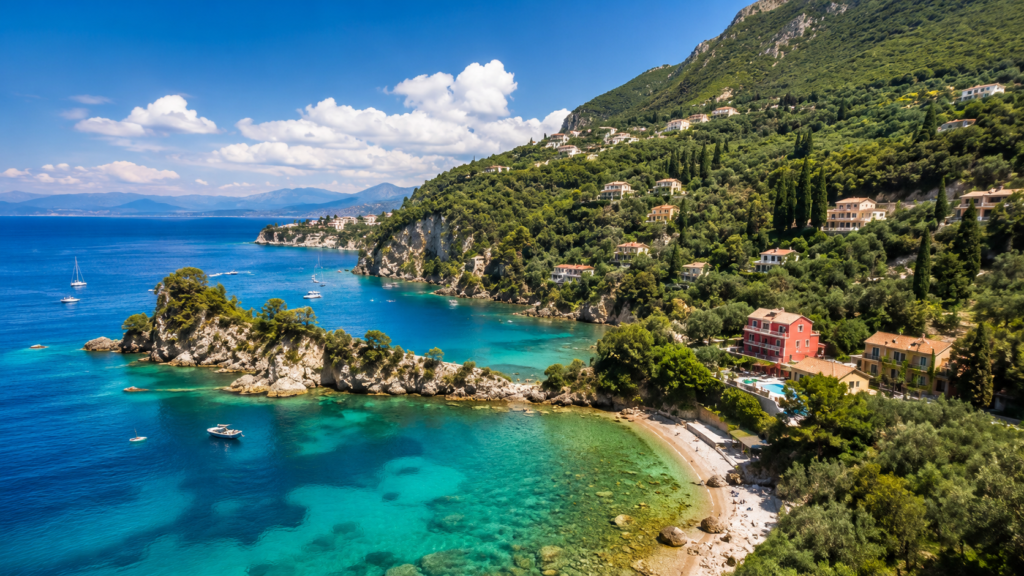
Corfu presents a greener side of the Greek islands. Located in the Ionian Sea, the island is known for forested hills, olive groves, attractive beaches, traditional villages, and architecture influenced by centuries of Venetian and other European rule.
Corfu Town is one of the island’s highlights, with elegant streets, historic fortifications, arcaded buildings, small squares, and waterfront views. Beyond the town, the landscape becomes increasingly rural, with winding roads leading toward coastal villages, viewpoints, and secluded bays.
The island works well for travelers interested in combining cultural sightseeing with a slower coastal holiday. Exploring by car allows greater freedom to reach smaller villages and less accessible beaches, particularly in the northern and western parts of Corfu.
8. Delphi

Set on the slopes of Mount Parnassus, Delphi is one of Greece’s most important archaeological destinations. In the ancient Greek world, the sanctuary was associated with the Oracle of Delphi and attracted visitors seeking guidance from across the Mediterranean.
Today, travelers can walk through the archaeological site and see monuments such as the Temple of Apollo, the ancient theater, and the stadium while enjoying expansive views across the surrounding mountains and valley. The nearby archaeological museum contains important objects discovered at the site and adds valuable context to a visit.
Delphi can be reached on a day trip from Athens, but staying overnight allows more time to explore without rushing. It can also be incorporated into a longer mainland itinerary that includes Meteora and other destinations in central Greece.
9. Naxos

Naxos offers a more relaxed Cycladic experience than some of Greece’s most internationally famous islands. It combines long sandy beaches, mountain villages, ancient monuments, fertile countryside, and traditional food within the largest island of the Cyclades.
Naxos Town provides a convenient starting point, with a waterfront, narrow old streets, and the famous Portara overlooking the sea. Traveling inland reveals traditional villages surrounded by mountains, agricultural landscapes, and historic churches, while the western coastline contains several of the island’s most popular beaches.
Naxos is a strong choice for travelers who want classic Greek island scenery without focusing entirely on nightlife or luxury resorts. Its size and variety also make it worth staying for several days rather than visiting briefly between ferry connections.
10. Peloponnese
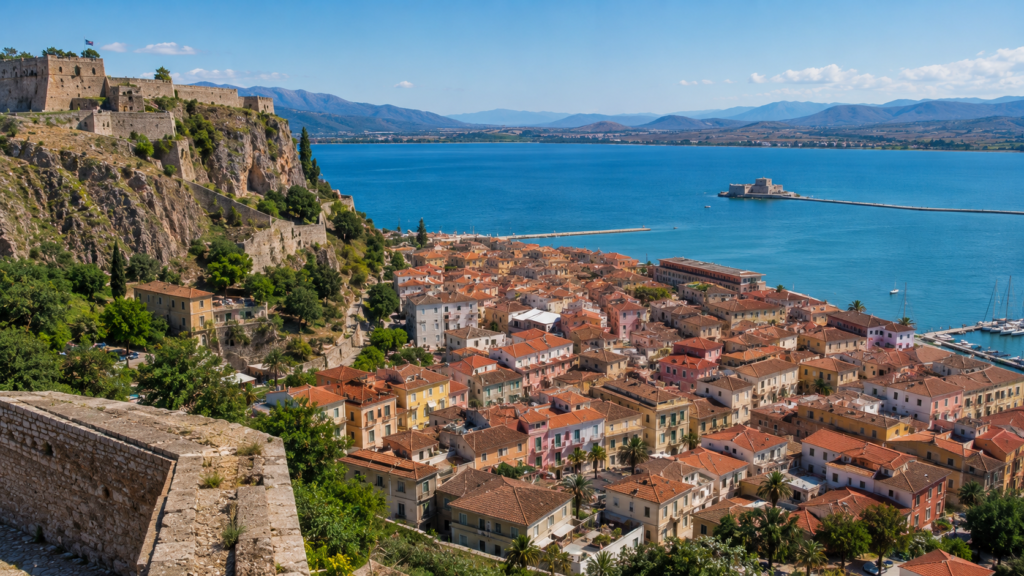
The Peloponnese is one of the best regions for travelers who want to explore mainland Greece beyond Athens. Connected to the rest of the mainland by the Isthmus of Corinth, the peninsula contains archaeological sites, historic towns, mountains, olive groves, traditional villages, and a long coastline.
Ancient Mycenae and Epidaurus are among the region’s major historical attractions, while Nafplio offers an attractive waterfront, neoclassical architecture, and a historic old town. Farther south, the landscape becomes increasingly rugged, with stone settlements, mountain roads, and quieter sections of coastline.
A road trip is one of the best ways to experience the Peloponnese because many attractions are spread across the region. Travelers with several days available can combine archaeological sites with small towns, beaches, and countryside while experiencing a less island-focused side of Greece.
Best Time to Visit Greece
Spring from April to June and early autumn from September to October are excellent periods for many travelers. Temperatures are generally comfortable for sightseeing, archaeological sites, hiking, and exploring towns, while popular destinations are often less crowded than during the height of summer.
July and August bring hot weather and the busiest period for many Greek islands. These months are ideal for swimming and beach holidays, but popular destinations such as Santorini and Mykonos can become crowded and accommodation prices are often higher.
The best time ultimately depends on your itinerary. Travelers focused on ancient sites and mainland destinations may prefer spring or autumn, while those planning an island-centered beach holiday will find the warmest conditions during summer.
Local Food You Should Try
Greek cuisine is closely connected to regional ingredients, seasonality, and simple Mediterranean cooking. Olive oil, vegetables, herbs, seafood, cheeses, grains, and grilled meats appear throughout the country, but individual islands and mainland regions also have their own specialties.
Moussaka – One of Greece’s most recognizable dishes, typically made with layers of eggplant, minced meat, and a creamy béchamel topping.
Souvlaki – Small pieces of grilled meat commonly served on skewers or inside pita with vegetables, sauce, and other accompaniments. It is one of the easiest Greek foods to find while traveling.
Greek Salad – A simple combination commonly featuring tomatoes, cucumber, onion, olives, and feta cheese, particularly enjoyable when made with fresh seasonal ingredients.
Tzatziki – A refreshing yogurt-based dip made with cucumber, garlic, and herbs, usually served with bread, grilled meat, or as part of a selection of small dishes.
Spanakopita – A savory pastry filled with spinach, herbs, and cheese inside thin layers of crisp phyllo dough.
Dolmades – Vine leaves wrapped around a filling that often includes rice, herbs, and sometimes meat, with recipes varying between regions and households.
Fresh Seafood – Coastal towns and islands are excellent places to try grilled fish, octopus, squid, and other seafood prepared with relatively simple Mediterranean flavors.
Baklava – A rich dessert made with layers of phyllo pastry, nuts, and sweet syrup, found in bakeries and restaurants throughout Greece.
Transportation
Getting around Greece requires a combination of transportation depending on your itinerary. Athens has an extensive public transport network, including metro, buses, trams, and suburban rail, while intercity buses connect the capital with many mainland destinations.
Ferries are an important part of island travel, with routes connecting major ports such as Piraeus with destinations across the Cyclades and other island groups. Domestic flights can save considerable time when traveling between Athens and distant islands such as Crete, Rhodes, or Corfu. Renting a car is particularly useful for exploring Crete, the Peloponnese, and other mainland or island regions where attractions are spread across larger areas.
Accommodation
Greece offers accommodation for a wide range of budgets, from hostels and family-run guesthouses to boutique hotels, apartments, beach resorts, and luxury properties. On the islands, small locally operated hotels and traditional guesthouses can provide a more personal alternative to larger resorts.
Accommodation prices vary significantly by destination and season. Santorini and Mykonos are generally among the more expensive choices, particularly during July and August, while mainland destinations and less internationally famous islands can offer better value. Booking early is recommended for popular islands if you plan to travel during the peak summer period.
Practical Travel Tips
- Currency: Greece uses the euro (€), and cards are widely accepted in major cities, tourist destinations, hotels, and restaurants.
- Language: Greek is the official language, while English is commonly spoken in major tourist areas.
- Book popular attractions early: Major archaeological sites and highly sought-after experiences can become busy during peak travel periods.
- Plan island connections carefully: Ferry schedules vary by route and season, so check transportation options before finalizing a multi-island itinerary.
- Prepare for summer heat: July and August can be very hot, particularly around exposed archaeological sites. Early morning and late afternoon are often more comfortable for sightseeing.
- Carry some cash: Cards are common, but cash can still be useful in smaller villages, local businesses, and more remote areas.
- Choose islands selectively: Trying to visit too many islands can result in spending a large part of your holiday in transit. Staying longer on fewer islands often creates a more relaxed trip.
- Consider renting a car outside major cities: A car can make it much easier to reach beaches, villages, archaeological sites, and rural areas with limited public transportation.
Frequently Asked Questions
Is Greece expensive to visit?
Greece can accommodate different travel budgets, but costs vary considerably by destination and season. Santorini and Mykonos are typically more expensive, especially in summer, while mainland destinations and less famous islands can provide better value.
How many days should I spend in Greece?
Around 10 to 14 days is a good amount of time for a first trip. This allows you to combine Athens with one or two islands or explore part of the mainland without changing destinations every day.
When is the best time to visit Greece?
May, June, September, and early October are excellent months for many travelers because they combine pleasant weather with generally lower crowds than July and August. Summer is best for travelers primarily interested in beaches and warm sea conditions.
Which Greek islands are best for first-time visitors?
Santorini and Mykonos offer famous Cycladic scenery, while Crete provides greater variety and works particularly well for longer stays. Naxos is a good alternative for travelers looking for beaches, traditional villages, and a more relaxed atmosphere.
Do I need to rent a car in Greece?
A car is unnecessary for central Athens and many compact island towns. However, renting one can be extremely useful in Crete, the Peloponnese, Corfu, and other destinations where beaches, villages, and attractions are spread across larger areas.
Is Greece suitable for families?
Yes. Greece offers family-friendly beaches, resorts, historic attractions, outdoor activities, and a relaxed dining culture. Larger islands such as Crete, Rhodes, Corfu, and Naxos provide particularly good combinations of beaches, sightseeing, and accommodation options.
Official Tourism Website
For official destination information, travel inspiration, cultural attractions, beaches, activities, and practical resources for planning your trip, visit Greece’s Official Tourism Website – Visit Greece https://www.visitgreece.gr/
Related Destinations
Best Places to Visit in Italy in 2026
Continue your Southern European journey in Italy, where historic cities, Mediterranean coastlines, famous archaeological sites, regional cuisine, and beautiful countryside create another highly varied travel experience.
Best Places to Visit in Spain in 2026
Explore another Mediterranean destination combining historic cities, beaches, islands, distinctive regional cultures, architecture, and some of Europe’s most celebrated food traditions.
Best Places to Visit in France in 2026
Travel west to discover France’s historic cities, Mediterranean coastline, Alpine landscapes, countryside, vineyards, and internationally renowned cultural attractions.
Best Places to Visit in Spain in 2026
For a very different European landscape, explore Ireland’s Atlantic coastline, green countryside, historic towns, dramatic cliffs, and lively cities.