
Introduction
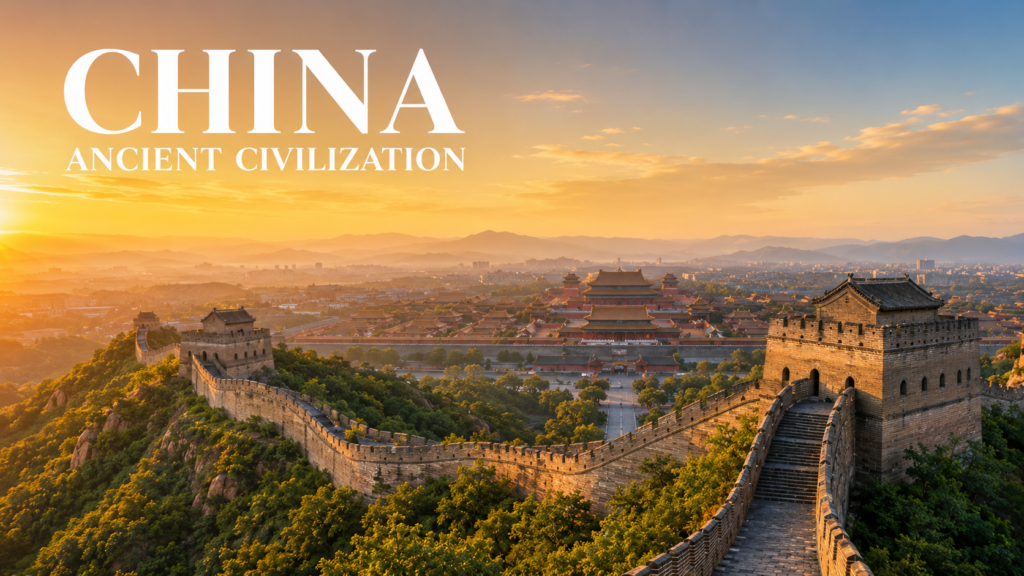
China is one of the world’s most fascinating destinations, attracting travelers with its ancient history, breathtaking landscapes, impressive architecture, and vibrant modern cities. From the Great Wall and the Forbidden City to the futuristic skylines of Shanghai and Shenzhen, China offers an incredible journey through both the past and the future.
What makes China truly unique is its history. While many civilizations rose and disappeared over thousands of years, Chinese civilization has continued to evolve for more than five millennia. Ancient traditions remain visible in everyday life, from traditional festivals and calligraphy to Chinese medicine, tea culture, martial arts, and family values.
Because of this remarkable continuity, China is widely recognized as one of the world’s oldest civilizations. Understanding how this civilization developed allows travelers to appreciate not only China’s famous landmarks but also the cultural traditions that continue to influence more than one billion people today.
What Is an Ancient Civilization?
Historians generally describe an ancient civilization as a society that developed organized governments, written language, agriculture, cities, trade, technology, and cultural traditions thousands of years ago.
Only a handful of civilizations meet these criteria.
Among the earliest civilizations are:
- Ancient Egypt
- Mesopotamia
- The Indus Valley Civilization
- Ancient China
Unlike several early civilizations that eventually disappeared or were absorbed into other cultures, China maintained remarkable continuity.
Although dynasties changed, capitals moved, and political systems evolved, Chinese language, philosophy, customs, and cultural traditions continued to develop without losing their historical foundations.
This continuity is one of the main reasons historians consider China one of humanity’s oldest continuous civilizations.
More Than 5,000 Years of History
Chinese history stretches back more than 5,000 years according to traditional historical records and archaeological discoveries.
Some of the earliest farming communities appeared along the Yellow River, often called the “Cradle of Chinese Civilization.”
The fertile river basin allowed agriculture to flourish, supporting growing populations and increasingly complex societies.
Over time, villages expanded into towns, kingdoms, and eventually powerful dynasties that ruled vast territories.
Generations of scholars, craftsmen, engineers, philosophers, and rulers contributed to the development of one of the world’s most influential civilizations.
Today, visitors can still explore archaeological sites, ancient city walls, imperial palaces, temples, and museums that preserve this extraordinary history.
The Rise of China’s Great Dynasties
Much of China’s history is organized into dynasties, each leaving a lasting impact on the country’s development.
Among the most influential were:
- Xia Dynasty
- Shang Dynasty
- Zhou Dynasty
- Qin Dynasty
- Han Dynasty
- Tang Dynasty
- Song Dynasty
- Yuan Dynasty
- Ming Dynasty
- Qing Dynasty
Each dynasty contributed something significant.
The Qin Dynasty unified much of China under a centralized government and standardized systems of writing, currency, and measurements.
The Han Dynasty expanded trade through the Silk Road and strengthened Chinese culture across Asia.
The Tang Dynasty became known as one of the greatest periods of prosperity, literature, art, and international trade.
The Ming Dynasty oversaw the construction of many sections of the Great Wall that visitors admire today while also completing much of the Forbidden City in Beijing.
Although dynasties rose and fell over thousands of years, each helped shape modern China.
Chinese Philosophy Changed Asian Civilization
China’s influence extends far beyond politics and military history.
Some of the world’s most influential philosophical traditions originated in ancient China.
Confucius emphasized morality, education, respect for family, and responsible leadership.
His teachings continue to influence education, family relationships, and government throughout East Asia.
Laozi introduced Taoism, encouraging harmony with nature, simplicity, and balance in everyday life.
Buddhism later arrived from India and gradually blended with Chinese traditions, creating unique schools of religious thought that spread across the country.
These philosophical traditions shaped not only China but also neighboring countries such as Korea, Japan, and Vietnam.
Even today, travelers can see their influence in temples, gardens, architecture, ceremonies, and daily customs throughout China.
The Four Great Inventions That Changed the World
China’s contribution to world civilization extends far beyond its borders.
Among its greatest achievements are the Four Great Inventions, innovations that transformed human history and influenced societies across continents.
These inventions include:
- Paper
- Printing
- Gunpowder
- The Compass
Paper revolutionized education, literature, and government administration by making written knowledge more accessible.
Printing allowed books and ideas to spread much more rapidly than handwritten manuscripts.
The compass transformed navigation, enabling explorers and merchants to travel farther across oceans with greater confidence.
Gunpowder, originally developed for military purposes, eventually changed warfare around the world.
These inventions reached Europe and many other regions through trade routes, contributing significantly to scientific progress, exploration, and global development.
The Silk Road Connected China to the World
One of ancient China’s greatest achievements was establishing the Silk Road.
Rather than being a single road, it was a vast network of trade routes connecting China with Central Asia, the Middle East, Europe, and parts of Africa.
Merchants transported valuable goods including:
- Silk
- Tea
- Porcelain
- Paper
- Spices
- Precious stones
Trade was not limited to products.
Ideas, religions, scientific discoveries, artistic styles, and technologies also traveled along these routes.
Buddhism spread into China through the Silk Road, while Chinese inventions gradually reached distant civilizations.
Today, the Silk Road remains one of history’s greatest examples of cultural exchange between East and West.
Architecture That Has Survived for Centuries
China’s architectural heritage reflects thousands of years of engineering skill and artistic creativity.
The most famous landmark is undoubtedly the Great Wall of China.
Stretching thousands of kilometers across northern China, the wall protected ancient kingdoms from invasions while becoming one of the world’s most recognizable monuments.
Another extraordinary landmark is the Forbidden City in Beijing.
For nearly five centuries, it served as the imperial palace of Chinese emperors during the Ming and Qing Dynasties.
Visitors today can still admire its magnificent halls, golden rooftops, decorative courtyards, and remarkable wooden architecture.
Other iconic historical sites include:
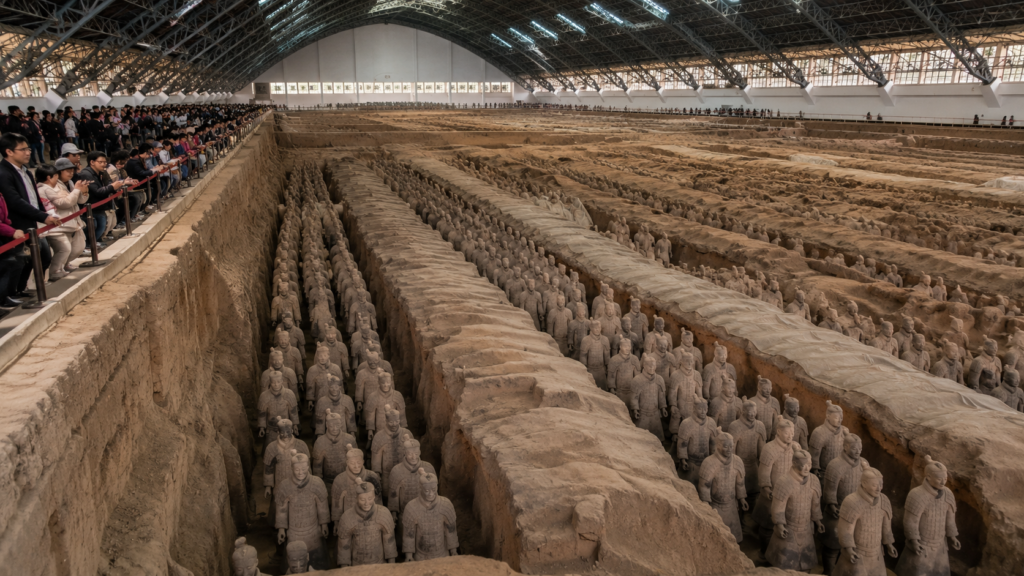
- The Terracotta Army
- The Temple of Heaven
- The Summer Palace
- Ancient city walls in Xi’an
- Longmen Grottoes
- Mogao Caves
Each reflects a different period of Chinese civilization and demonstrates the country’s long tradition of architectural excellence.
Chinese Culture Continues to Shape Daily Life

Unlike many ancient civilizations that exist mainly in museums, Chinese civilization remains part of everyday life.
Traditional customs continue to influence modern society.
Many families still celebrate Lunar New Year with reunion dinners, red decorations, fireworks, and lucky envelopes.
Tea remains an important symbol of hospitality.
Traditional Chinese medicine continues to be practiced alongside modern healthcare.
Calligraphy is respected as both an art form and a method of preserving cultural heritage.
Martial arts such as Tai Chi and Kung Fu continue to attract practitioners around the world.
Family values, respect for elders, and community traditions remain deeply rooted within Chinese society despite rapid modernization.
For travelers, these living traditions make China’s history feel alive rather than confined to the past.
Ancient Civilization Meets Modern Innovation
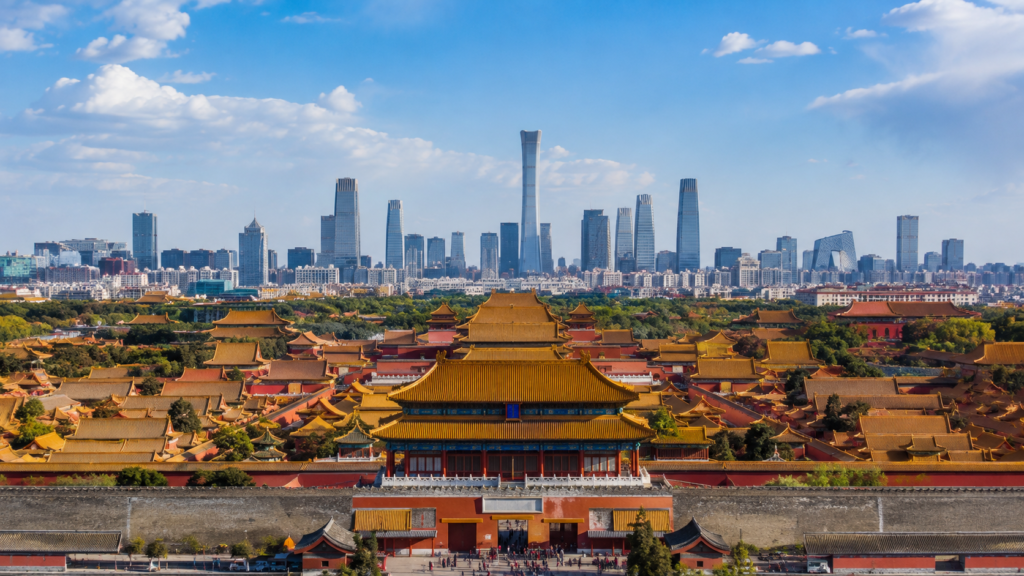
One of the most fascinating aspects of China today is the contrast between its ancient heritage and modern achievements.
Visitors can spend the morning exploring a two-thousand-year-old temple before traveling on one of the world’s fastest high-speed trains to a city filled with futuristic skyscrapers.
Shanghai’s skyline showcases some of the world’s tallest buildings, while Beijing combines imperial palaces with advanced transportation systems.
Cities such as Shenzhen have become global centers for technology and innovation.
Despite this rapid development, traditional festivals, historic neighborhoods, and centuries-old customs continue to play an important role in everyday life.
This coexistence of history and innovation makes China unlike almost any other destination.
Interesting Facts About Chinese Civilization
China’s long history has produced countless fascinating facts.
- Chinese is one of the world’s oldest continuously used writing systems.
- The Great Wall stretches for more than 21,000 kilometers when all sections are included.
- The Forbidden City was home to 24 emperors during the Ming and Qing Dynasties.
- China has more UNESCO World Heritage Sites than almost any other country.
- Tea drinking originated in ancient China before spreading throughout Asia and the rest of the world.
- Chinese porcelain became one of the country’s most valuable exports for centuries.
- Paper money first appeared in China long before it was introduced elsewhere.
These achievements illustrate the lasting influence of Chinese civilization on global history.
Why Travelers Should Learn About China’s History
Understanding China’s ancient civilization makes every journey more meaningful.
Walking along the Great Wall, exploring the Forbidden City, or standing before the Terracotta Army becomes much more memorable when visitors understand the historical significance behind these landmarks.
Ancient philosophy, traditional festivals, local customs, and regional cuisine all become easier to appreciate when viewed within the context of thousands of years of continuous cultural development.
Rather than simply visiting famous attractions, travelers gain a deeper understanding of how China’s past continues to shape its present.
Final Thoughts
China is recognized as one of the world’s oldest civilizations because of its remarkable continuity, rich cultural heritage, and enormous influence on human history. For more than five thousand years, generations of philosophers, inventors, artists, rulers, and ordinary people have contributed to a civilization that continues to evolve while preserving its traditions.
Today, visitors experience a country where ancient temples stand beside futuristic skylines, where traditional festivals remain as important as modern technological innovation, and where historical achievements continue to influence daily life. Whether exploring Beijing, Xi’an, Shanghai, or the countryside, understanding China’s extraordinary history allows every traveler to appreciate one of humanity’s greatest civilizations from a deeper and more meaningful perspective.