
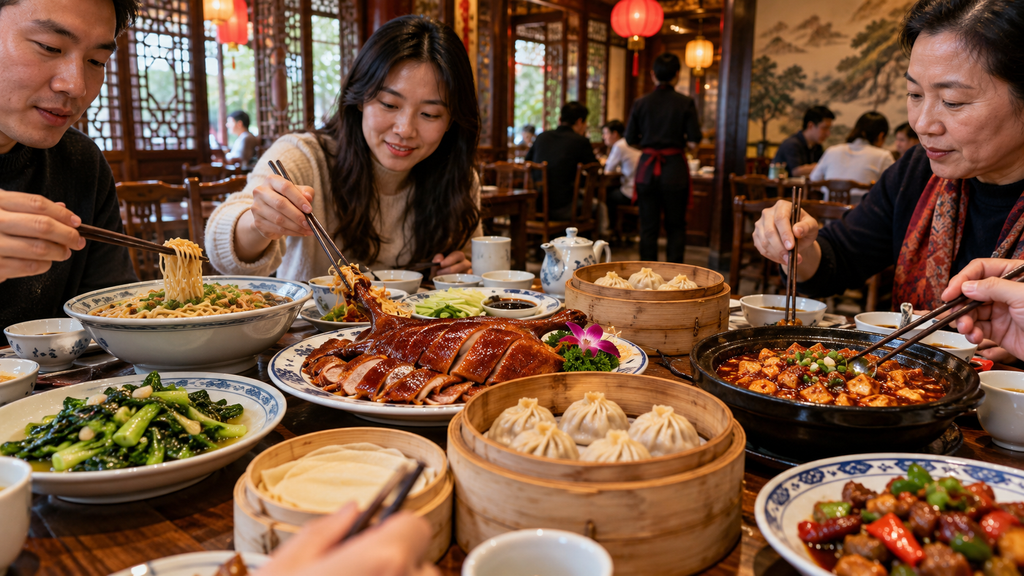
Chinese cuisine is much more diverse than the dishes most travelers encounter outside China. Across the country, food changes dramatically from one region to another, influenced by local ingredients, climate, history, and generations of family traditions.
Travel from Beijing to Shanghai, Sichuan, Xi’an, or Guangdong and the difference can be remarkable. One city may be famous for delicate steamed dumplings, while another is known for fiery dishes filled with chilies and Sichuan peppercorns. In northern China, wheat-based noodles and dumplings are common, while rice plays a much larger role in many southern regions.
For travelers, trying local food is one of the easiest ways to experience Chinese culture beyond famous landmarks. These 12 traditional dishes are an excellent introduction to the flavors, techniques, and regional traditions that make Chinese cuisine so fascinating.
1. Peking Duck
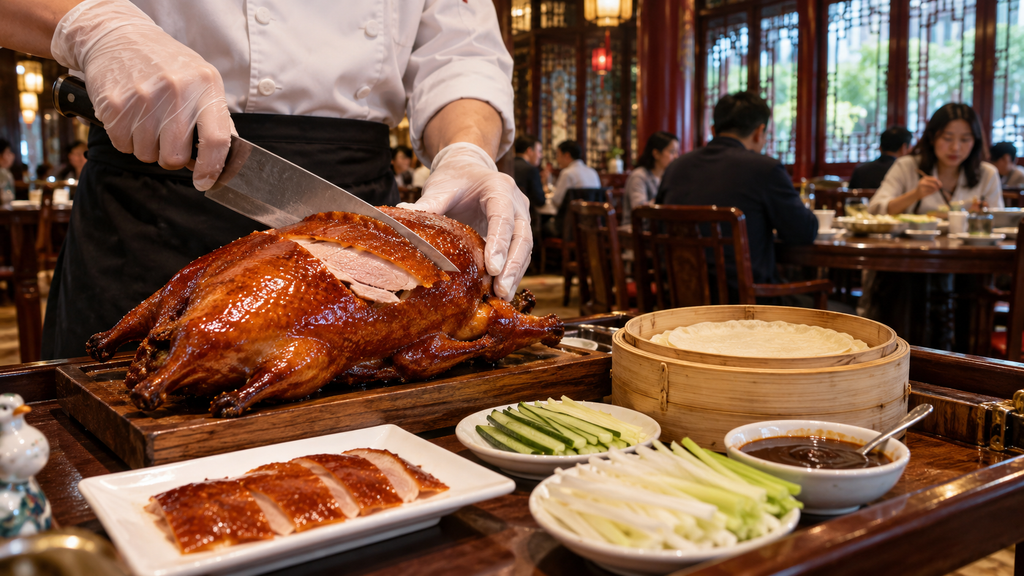
Few Chinese dishes are as internationally famous as Peking duck.
Closely associated with Beijing, the dish is known for its crisp skin and tender meat. Traditional preparation requires considerable time and skill. The duck is carefully prepared and roasted until the exterior develops its distinctive golden-brown color and crisp texture.
At the table, the duck is usually sliced into thin pieces and served with delicate pancakes, cucumber, scallions, and a savory sauce.
Part of the experience is assembling each pancake yourself. A few slices of duck are placed inside with vegetables and sauce before the pancake is folded and eaten.
What makes Peking duck memorable is the contrast between textures. The crispy skin, juicy meat, soft pancake, fresh vegetables, and rich sauce all work together.
For anyone visiting Beijing, enjoying a properly prepared Peking duck is not simply about tasting a famous dish. It is also an opportunity to experience one of the city’s most recognizable culinary traditions.
2. Xiaolongbao
At first glance, xiaolongbao may look like ordinary steamed dumplings.
The first bite reveals why they are different.
Inside the thin wrapper is a savory meat filling surrounded by hot, flavorful broth. During steaming, the broth becomes liquid inside the dumpling, creating the characteristic soup-filled center.
Xiaolongbao are strongly associated with Shanghai and the surrounding Jiangnan region.
Eating them requires a little patience. Freshly steamed xiaolongbao can contain extremely hot soup, so biting directly into one is not always a good idea.
Many diners gently lift a dumpling onto a spoon, make a small opening in the wrapper, allow some steam to escape, and then enjoy the broth and filling.
A good xiaolongbao should have a wrapper thin enough to feel delicate but strong enough to hold the soup without breaking.
It is a relatively simple-looking dish that demonstrates just how much technique can be hidden inside a small dumpling.
3. Mapo Tofu
Sichuan cuisine is famous for powerful flavors, and mapo tofu is one of its best-known dishes.
The dish usually combines soft tofu with minced meat, fermented bean paste, chili oil, garlic, and Sichuan peppercorns.
Its defining characteristic is not simply heat.
Sichuan peppercorn creates a distinctive tingling or numbing sensation known as má, while chilies provide the là, or spicy heat. Together, they create the famous málà flavor found throughout Sichuan cooking.
The softness of the tofu contrasts with the intensely flavored sauce and small pieces of meat.
Mapo tofu is often served with plain steamed rice, which helps balance the richness and heat.
Travelers who think spicy Chinese food is simply about adding more chili may find mapo tofu particularly interesting. The dish demonstrates how Sichuan cuisine layers aroma, saltiness, heat, and numbing sensations rather than relying on a single flavor.
4. Chinese Hot Pot
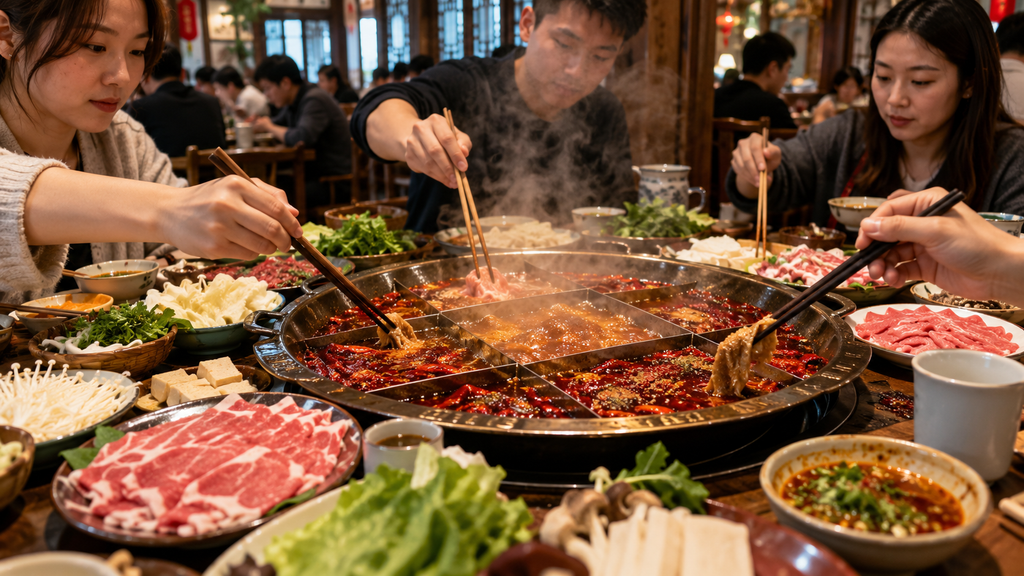
Hot pot is as much a social experience as it is a meal.
A large pot of simmering broth is placed in the center of the table, surrounded by plates of raw ingredients. Diners cook the ingredients themselves by placing them into the bubbling broth.
Depending on the restaurant and region, the table may include thinly sliced meat, mushrooms, tofu, leafy vegetables, seafood, noodles, and various types of dumplings.
Hot pot styles vary considerably across China.
Chongqing and Sichuan are particularly famous for intensely spicy versions filled with dried chilies and Sichuan peppercorns. Other regions offer much milder broths based on mushrooms, tomatoes, seafood, or meat stock.
Many restaurants also provide dipping-sauce stations where diners create their own combinations using ingredients such as sesame paste, garlic, herbs, chili, or soy-based sauces.
Hot pot is especially enjoyable with a group because everyone shares the same cooking pot while choosing their own ingredients.
A meal can easily last for hours.
For travelers, it provides a glimpse into the communal side of Chinese dining, where eating is often about conversation and shared experiences rather than simply finishing an individual plate.
5. Lanzhou Beef Noodles
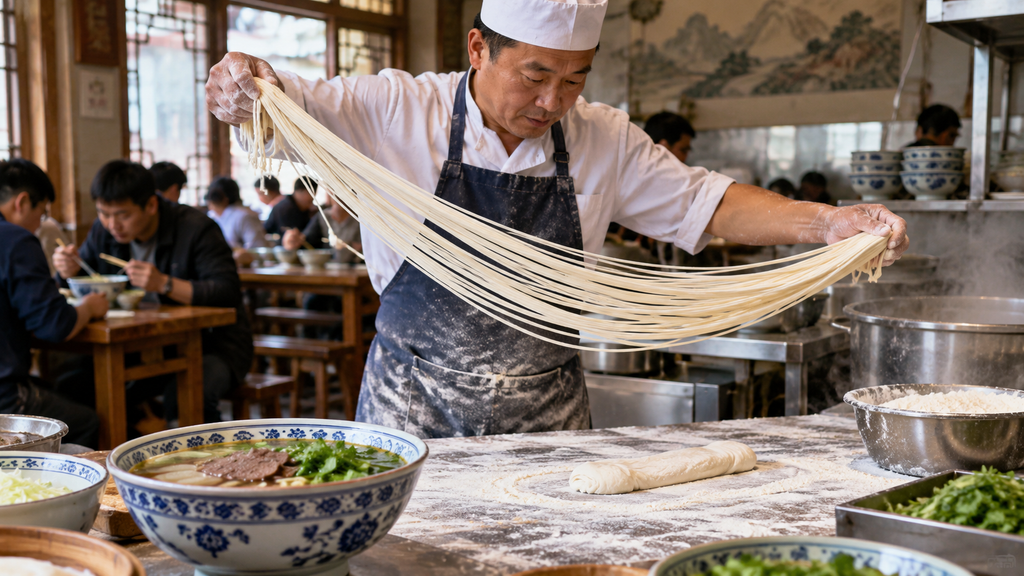
A bowl of Lanzhou beef noodles may appear simple, but preparing the noodles requires impressive skill.
Originating from Lanzhou in Gansu Province, the dish traditionally features hand-pulled noodles served in a clear beef broth with slices of beef, radish, herbs, and chili oil.
The noodles are often the star of the meal.
Experienced noodle makers repeatedly stretch, fold, and pull dough by hand until it forms long, even strands. Different noodle thicknesses can sometimes be requested depending on personal preference.
The broth is generally lighter than many visitors expect from a beef noodle soup.
Rather than being extremely rich or heavy, it is designed to remain aromatic and relatively clear.
Fresh herbs and chili oil add additional layers of flavor.
Watching someone transform a piece of dough into dozens of long noodles can be almost as memorable as eating the finished bowl.
It is an excellent example of how everyday Chinese food can involve techniques perfected through years of practice.
6. Jiaozi
Dumplings are an important part of Chinese food culture, particularly in northern China.
Jiaozi are made by wrapping a filling inside a thin piece of dough. Common fillings include pork, vegetables, shrimp, beef, or combinations of meat and vegetables.
They can be boiled, steamed, or pan-fried.
Although jiaozi are eaten throughout the year, they have a particularly strong connection with Chinese New Year celebrations.
Families may gather together to prepare large batches of dumplings, turning cooking into a shared activity rather than leaving the work to one person.
Their shape is sometimes associated with traditional Chinese silver ingots, which has helped connect dumplings with ideas of prosperity and good fortune.
For travelers, small local dumpling restaurants can be surprisingly rewarding.
The menus may offer numerous fillings, and trying several varieties is often the best way to appreciate how much difference a simple change of ingredients can make.
7. Char Siu
Char siu is one of the most recognizable dishes associated with Cantonese cuisine.
It consists of pork roasted with a sweet and savory marinade that gives the exterior its characteristic reddish-brown glaze.
Depending on the preparation, the marinade may contain ingredients such as soy sauce, sugar or honey, fermented seasonings, and aromatic spices.
The result should balance sweetness and saltiness without allowing either to dominate.
Char siu can be eaten on its own, served over rice, added to noodle dishes, or used as a filling for buns.
In parts of southern China, especially Guangdong and Hong Kong, roasted-meat shops often display different cuts of prepared meat behind glass.
These shops are part of everyday food culture rather than being reserved for special occasions.
A simple plate of char siu with rice can therefore provide travelers with an accessible introduction to Cantonese barbecue traditions.
8. Kung Pao Chicken
Kung Pao chicken has become famous internationally, but versions served in China can be quite different from adaptations found elsewhere.
The dish originates from Sichuan cuisine and traditionally combines diced chicken with dried chilies, peanuts, and a flavorful sauce.
Good Kung Pao chicken balances several tastes rather than being overwhelmingly sweet or spicy.
There is heat from dried chilies, nuttiness from peanuts, savory depth from seasonings, and a subtle sweet-and-sour element in the sauce.
The chicken is typically cut into relatively small pieces, allowing it to absorb flavor while cooking quickly.
Like many Sichuan dishes, its appeal comes from balance.
Visitors familiar only with heavily sweetened versions of Kung Pao chicken may be surprised by the complexity of the dish when eating it closer to its place of origin.
9. Roujiamo
Roujiamo is sometimes casually described as a “Chinese hamburger,” although the comparison does not fully represent its history or character.
It is strongly associated with Shaanxi Province and particularly Xi’an.
The dish consists of chopped or shredded seasoned meat stuffed inside a round flatbread.
The bread should have enough structure to hold the filling while remaining pleasant to eat, and the meat is often cooked slowly until tender and deeply flavored.
Depending on the style, pork, beef, or lamb may be used.
Roujiamo is particularly appealing to travelers because it is convenient street food. You do not need an elaborate restaurant meal or a large group to enjoy it.
It can be purchased quickly and eaten while exploring the city.
In Xi’an, where wheat-based foods play an important role in local cuisine, roujiamo fits naturally alongside the city’s famous noodles and other bread-based dishes.
10. Biang Biang Noodles
Xi’an and the wider Shaanxi region are also famous for exceptionally wide, hand-pulled noodles commonly known as biang biang noodles.
Unlike thin noodles, these can be broad enough to resemble long ribbons.
Their thick, chewy texture allows them to stand up to strong seasonings.
A bowl may include chili oil, garlic, vinegar, vegetables, and other toppings, depending on the restaurant and preparation.
One of the pleasures of eating these noodles is their texture. They are substantial, elastic, and deliberately rustic rather than perfectly uniform.
The dish reflects northern China’s long tradition of wheat-based foods.
Travelers who associate Chinese cuisine primarily with rice often find Xi’an particularly interesting because bread, dumplings, and noodles are everywhere.
Biang biang noodles are an excellent reminder that China’s staple foods vary dramatically between regions.
11. Cantonese Dim Sum
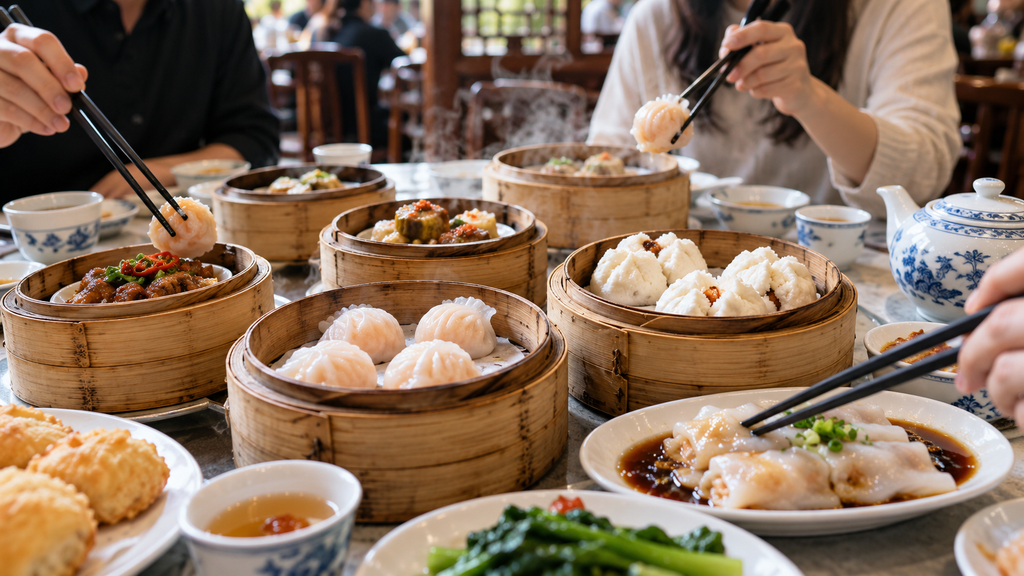
Dim sum is not a single dish but an entire style of eating.
Closely associated with Cantonese food culture, a dim sum meal consists of numerous small dishes designed to be shared.
The selection can include steamed shrimp dumplings, pork dumplings, rice noodle rolls, steamed buns, turnip cakes, chicken feet, and various sweet dishes.
Tea is traditionally an important part of the experience.
Rather than ordering one large main course, diners select several small portions and share them around the table.
This makes dim sum particularly enjoyable for groups because everyone can sample many different flavors during a single meal.
Morning and lunchtime are traditionally popular periods for eating dim sum.
In busy restaurants, the atmosphere can be lively, with families and groups of friends talking over tea while tables gradually fill with bamboo steamers and small plates.
For travelers, dim sum provides a wonderful introduction to the social nature of Cantonese dining.
12. Dongpo Pork
Dongpo pork is a very different experience from the quick noodles and street foods found elsewhere on this list.
Associated particularly with Hangzhou and Zhejiang cuisine, the dish is traditionally prepared using pork belly that is slowly braised until extremely tender.
The long cooking process allows the meat and fat to develop a soft texture while absorbing the flavors of the braising liquid.
Soy sauce, rice wine, and other seasonings contribute to its rich appearance and flavor.
Despite its richness, good Dongpo pork should not simply taste greasy. Slow cooking and careful seasoning are essential to creating balance.
The dish is traditionally connected with the famous Chinese poet and statesman Su Dongpo, giving it an interesting cultural history in addition to its culinary reputation.
Trying Dongpo pork in Hangzhou can therefore connect food, local history, and regional identity in a single meal.
Chinese Food Is About Regional Diversity
One of the biggest mistakes travelers can make is thinking of Chinese cuisine as one unified style of cooking.
China is enormous, and its food reflects that scale.
Sichuan is famous for bold flavors and the combination of chili and Sichuan peppercorn. Cantonese cooking often emphasizes freshness and careful preparation. Northern regions make extensive use of wheat for noodles, breads, and dumplings, while rice is more prominent across many areas of southern China.
Coastal regions naturally incorporate more seafood, while inland areas have developed entirely different culinary traditions.
Even the same dish can change from one city to another.
This is why exploring Chinese cuisine becomes much more interesting when you stop asking, “What is Chinese food?” and begin asking, “What do people eat here?”
Tips for Trying Local Food in China
You do not need to visit expensive restaurants to discover memorable Chinese food.
Some of the most interesting meals can be found in neighborhood restaurants, food markets, noodle shops, dumpling restaurants, and small family-run establishments.
Look at what local diners are ordering. A busy restaurant filled with residents can often be a useful sign when choosing somewhere unfamiliar.
Sharing food is also common in many dining situations. When traveling with friends or family, ordering several dishes for the table allows everyone to try more flavors.
Do not be afraid to explore beyond dishes you already recognize.
A meal that looks unfamiliar may become one of your strongest memories from the trip.
At the same time, travelers with food allergies or dietary restrictions should prepare translations explaining exactly which ingredients they need to avoid. Ingredients and cooking methods may not always be obvious from a menu or from looking at the finished dish.
Final Thoughts
Chinese cuisine cannot be understood through one meal, one city, or even a single trip.
Peking duck represents a very different culinary tradition from Sichuan mapo tofu. Shanghai’s delicate xiaolongbao have little in common with the wide, chewy noodles of Shaanxi. Cantonese dim sum offers yet another experience built around tea, conversation, and numerous small dishes.
That diversity is precisely what makes exploring food in China so rewarding.
Start with famous dishes, but do not stop there. Visit neighborhood restaurants, try regional specialties, watch how local people eat, and allow yourself to order something unfamiliar.
Years after a trip, you may forget the name of a street or the details of a museum visit.
But you are unlikely to forget the first time you carefully lifted a soup-filled xiaolongbao, shared a bubbling hot pot with friends, or watched a noodle maker stretch a piece of dough into a bowl of fresh noodles.
In China, food is not simply something to eat between sightseeing stops.
It is part of the journey itself.