
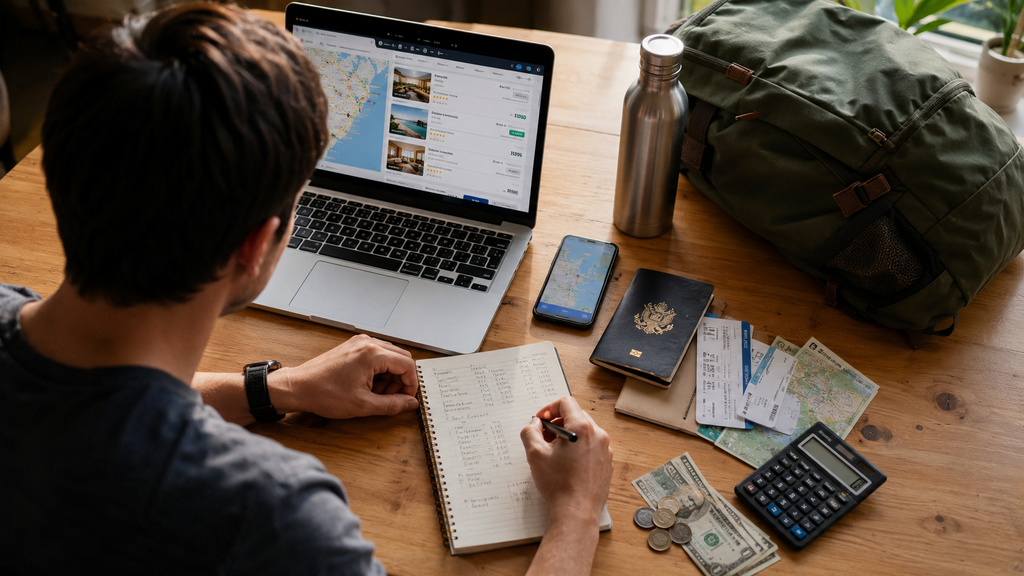
Travel does not have to be expensive.
Some of my most memorable trips were not the ones where I stayed in beautiful hotels or ate at famous restaurants. They were the trips where I learned how to spend money carefully without constantly thinking about money.
There is an important difference between traveling cheaply and traveling smart.
Traveling cheaply often means choosing the lowest price available, even when it makes the trip uncomfortable. Traveling smart means understanding which expenses actually improve your experience and which ones can be reduced without sacrificing much.
A cheaper hotel 15 kilometers outside the city might save $15 a night, for example, but you could easily spend that difference on transportation. A slightly more expensive room near a train station might actually be the better budget choice.
After planning trips this way, I have found that the biggest savings usually come from a few decisions made before the trip even begins.
Here is how to travel on a budget while still having a trip you genuinely enjoy.
Choose Your Destination Carefully
Your destination has a much bigger influence on your budget than most small money-saving tricks.
You can skip coffee, walk instead of taking taxis and search for cheap restaurants every day, but none of that will completely compensate for choosing an expensive destination.
Accommodation, transportation and food prices vary enormously between countries and even between cities in the same country.
Instead of asking:
“Where do I want to go?”
I often think:
“Which of the places I want to visit makes sense with my current budget?”
That small change makes travel planning much easier.
If several destinations interest you, compare the approximate cost of:
- Accommodation
- Flights
- Public transportation
- Food
- Major attractions
- Visa fees
- Travel insurance
- Airport transportation
Do this before booking anything.
Sometimes a flight that costs $100 more can lead to a cheaper trip overall because the destination itself is significantly more affordable.
Travel During the Shoulder Season
One of the easiest ways to reduce travel costs is simply changing when you travel.
Popular destinations often have three general periods: high season, low season and shoulder season.
High season usually offers good weather but also brings larger crowds and higher prices. Low season can be extremely affordable, although weather conditions may be less convenient.
For many travelers, shoulder season offers the best balance.
This is the period immediately before or after the busiest tourist season.
Hotels may be cheaper. Flights can be easier to find at reasonable prices. Attractions are often less crowded, and restaurants in tourist areas are not under the same pressure as during peak periods.
The exact months depend on the destination.
Before booking, research local weather patterns rather than relying only on general advice. Saving money is not particularly useful if you arrive during a period of extreme heat, heavy rain or seasonal closures that prevent you from doing the things you came to experience.
Be Flexible With Flights
Flights can easily become one of the largest expenses of an international trip.
Flexibility helps enormously.
Instead of deciding that you must fly on Friday evening and return exactly one week later, check nearby dates.
Flying one or two days earlier or later can sometimes produce a surprisingly different fare.
I also compare different airports when a destination has several options.
But there is a trap here.
A cheap flight is not automatically a cheap journey.
Budget airlines may charge separately for checked baggage, seat selection, food and other services. Some also use airports far outside the city.
Before booking, calculate the actual cost of getting from your home to your accommodation.
A $50 flight plus $40 baggage fee and $25 airport transfer is not really a $50 flight.
Always compare the final cost.
Travel With Less Luggage
Packing light is one of the few budget strategies that can simultaneously save money and make a trip easier.
For shorter trips, traveling with carry-on luggage can eliminate checked baggage fees on some airlines.
It also makes public transportation much easier.
You can walk from a train station to your hotel instead of immediately looking for a taxi because dragging two large suitcases through the city feels impossible.
The trick is not packing fewer things randomly. It is packing things that can be used repeatedly.
I prioritize neutral clothing that can be combined in different ways, comfortable walking shoes and clothes that can be washed easily.
Laundry is usually cheaper than paying airline baggage fees simply to carry enough clothes for every single day of a long trip.
Do Not Automatically Choose the Cheapest Accommodation
This sounds strange in an article about budget travel, but choosing the absolute cheapest accommodation can sometimes cost more.
Location matters.
Suppose one hotel costs $35 per night but is far from the city center. Another costs $45 but is within walking distance of most places you want to visit.
The $35 room looks cheaper.
But after adding buses, metro tickets or taxis every day, the difference may disappear.
You also lose time.
When comparing accommodation, I look at the price and then immediately check the location on a map.
I prefer somewhere near public transportation, a supermarket and at least a few inexpensive restaurants.
For solo travelers, hostels can offer excellent value. For couples or small groups, a private room, guesthouse or apartment may sometimes be cheaper per person.
There is no single accommodation type that is always the cheapest.
Compare the total cost for your specific trip.
Use Public Transportation Like a Local
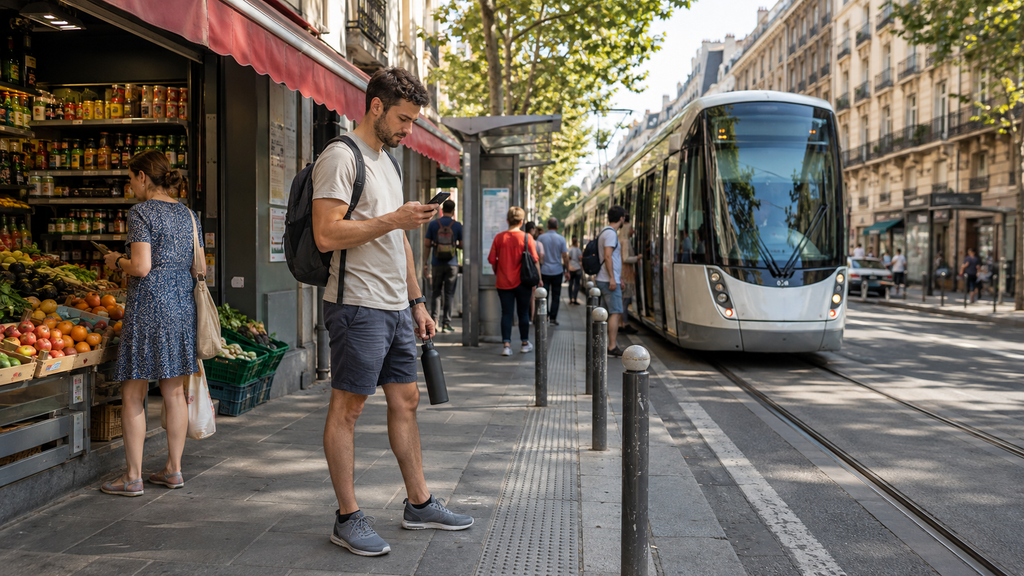
Taxis are convenient, especially after a long flight.
But using them for every journey can quietly destroy a travel budget.
In cities with good public transportation, learning the metro, tram or bus system is usually worth the effort.
Before arriving, I normally check three things:
How do I travel from the airport to the city?
Does the city have a daily or multi-day transportation pass?
Can I pay directly with a contactless bank card, or do I need a transportation card?
Understanding these details before arrival makes the first day much easier.
Walking is also underrated.
You notice small restaurants, markets, parks, residential neighborhoods and everyday city life that you would completely miss from inside a taxi.
Just remember that saving money should never come before personal safety. If walking late at night or using an unfamiliar transportation route feels unsafe, paying for a reliable ride is a reasonable expense.
Eat Away From Major Tourist Attractions
Food is one of the best parts of travel, so I do not recommend surviving on instant noodles just to save money.
Instead, change where you eat.
Restaurants directly beside famous attractions often charge more because location is part of what they are selling.
Walk several streets away and prices can change quickly.
Look for places where local residents actually eat.
Local bakeries, small family restaurants, food markets and casual lunch spots often provide some of the best-value meals of a trip.
Another strategy is spending differently throughout the day.
I might have a simple breakfast, an inexpensive local lunch and then spend more on dinner.
Or I will buy breakfast from a supermarket and use the money saved for a local dish I genuinely want to try later.
Budget travel should still include good food.
The objective is to avoid spending money on forgettable meals simply because you happened to be hungry beside a tourist attraction.
Visit Supermarkets
I visit supermarkets in almost every country I travel to.
Partly because they save money, but also because supermarkets are surprisingly interesting.
You see what people actually buy, discover local snacks and get a small glimpse into everyday life.
They are particularly useful for water, fruit, breakfast, snacks and drinks.
Buying these items individually from convenience stores beside tourist attractions every day can become expensive.
If your accommodation has a refrigerator or basic kitchen facilities, supermarkets become even more useful.
You do not have to cook every meal.
Even replacing one restaurant meal occasionally can make a noticeable difference over a long trip.
Prioritize the Attractions You Actually Care About
A common mistake is trying to visit every famous attraction simply because it appears on a “things to do” list.
Entrance fees accumulate quickly.
Before traveling, I divide attractions into three categories:
Must see: places I would genuinely regret missing.
Interesting: places I would visit if the price and schedule make sense.
Optional: places I am considering mainly because everyone else visits them.
I spend money on the first category without feeling guilty.
The third category is where I save.
Many cities also have excellent free experiences: parks, neighborhoods, markets, viewpoints, beaches, churches, walking routes and public architecture.
A day filled with free activities does not necessarily feel like a cheap day.
Sometimes it becomes one of the most interesting days of the trip.
Watch the Small Daily Expenses
Large expenses are obvious.
Small expenses are dangerous because you barely notice them.
A coffee here, bottled water there, another taxi, an airport snack, an ATM fee and a few unnecessary souvenirs might not seem important individually.
Multiply them by 10 or 14 days and the total can become substantial.
This does not mean recording every cent.
I prefer setting an approximate daily spending budget.
If I spend less one day, I can spend more the next.
It gives me structure without making the trip feel like an accounting exercise.
Avoid Expensive Currency Mistakes
Currency exchange is one of the least exciting parts of international travel, but mistakes here can cost real money.
Before traveling, understand the approximate exchange rate.
You do not need to calculate every purchase perfectly. You simply need enough familiarity to recognize whether something costs roughly $5, $50 or $500 in your home currency.
Also check your bank’s international transaction and ATM fees.
When withdrawing cash abroad, local ATMs may charge their own fees in addition to charges from your bank.
And when a payment terminal or ATM asks whether you want to pay in your home currency or the local currency, understand the exchange-rate implications before choosing.
Convenience can come with an unfavorable conversion rate.
Buy Travel Insurance, Even on a Budget
Travel insurance feels like an obvious place to save money because you may complete the entire trip without using it.
That is exactly what you hope happens.
But unexpected medical treatment, cancellation or serious travel disruption can cost much more than the money saved by skipping insurance.
Compare policies rather than automatically buying the first one offered during flight booking.
Look carefully at what is actually covered, exclusions, deductibles and coverage limits.
The cheapest policy is not necessarily the best value.
Budget travel is about reducing unnecessary costs, not eliminating protection against potentially enormous expenses.
Leave Some Money for Unexpected Costs
A travel budget should never equal every dollar you have available.
Something will usually cost more than expected.
A train ticket may be more expensive. Your baggage might exceed an airline limit. You might miss a bus. Your accommodation could require an unexpected local tax.
Or you might simply discover an experience that you really want to do.
Having a small emergency and flexibility fund removes a lot of stress.
I prefer returning home with money left over rather than reaching the final two days of a trip calculating whether I can afford dinner.
Spend More on the Things That Matter to You
The purpose of budget travel is not to spend as little money as humanly possible.
It is to spend intentionally.
If food is the main reason you travel, eat somewhere special.
If you love history, pay for the museum.
If seeing a particular landscape has been a dream for years, take the tour that gets you there safely.
Save money on the things you do not care about.
I would happily choose a simple hotel if it meant having enough money for an unforgettable experience the next day.
Someone else might prefer a beautiful hotel and spend less on restaurants.
Neither approach is wrong.
Your budget should reflect your priorities.
Final Thoughts
Traveling on a budget becomes much easier once you stop treating every expense equally.
Save aggressively on things that add little to your experience. Compare flights carefully, travel outside peak periods, use public transportation, choose accommodation based on total value and avoid unnecessary tourist-area spending.
Then use some of those savings for the experiences that made you want to travel in the first place.
The best budget trip is not necessarily the cheapest trip.
It is the trip where you return home feeling that the money you spent was worth it.