
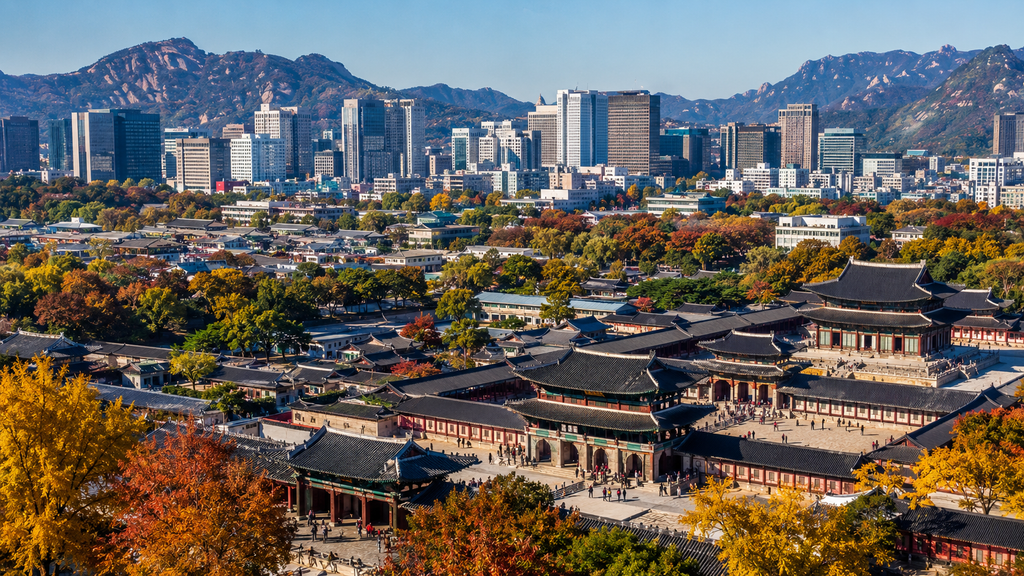
Before my first trip to South Korea, almost everything I wanted to see was in Seoul.
Gyeongbokgung Palace.
Bukchon Hanok Village.
Myeongdong.
N Seoul Tower.
Maybe a day trip outside the city if I had enough time.
It seemed reasonable.
Then I started looking beyond Seoul.
There were beaches in Busan.
Volcanic landscapes on Jeju Island.
Ancient royal history in Gyeongju.
Mountain trails in Seoraksan.
Traditional hanok neighborhoods in Jeonju.
Fortress walls in Suwon.
And small towns where Korea felt completely different from the neon streets I had originally imagined.
That was when planning became difficult.
South Korea is not enormous, but there is much more variety than its size suggests.
A high-speed train can take you from the skyscrapers of Seoul toward historic cities in only a few hours.
Travel farther and the scenery changes again.
Mountains.
Coastlines.
Islands.
Traditional villages.
Fishing ports.
Temples.
Modern cities.
If you are visiting South Korea for the first time, you probably cannot see everything.
I would not try.
Instead, I would choose a few places that show different sides of the country.
These are the ten destinations I would put highest on that list.
1. Seoul – The Best Place to Begin
If this is your first trip to South Korea, I would begin in Seoul.
Not because Seoul represents the entire country.
It doesn’t.
But nowhere else gives you such an immediate introduction to the contrast that makes traveling in Korea so interesting.
One moment you are standing inside a royal palace.
Twenty minutes later you are surrounded by enormous digital screens, cafés, underground shopping centers and some of the busiest streets in Asia.
Then you turn into a smaller neighborhood and suddenly find hanok houses, tiny restaurants and quiet alleyways.
Seoul changes quickly.
That is what I liked about it.
Start With Gyeongbokgung Palace
Gyeongbokgung was one of the places that made Korean history feel less abstract to me.
The palace was originally established during the Joseon Dynasty, and today its large courtyards, gates and traditional buildings create one of Seoul’s most recognizable historical landscapes.
I would go in the morning.
Not only because the light is pleasant.
Seoul gets busy.
Starting early gives you a little more space before large groups arrive.
If you rent a hanbok, you will see plenty of other visitors doing the same.
It can look touristy.
But walking through a royal palace surrounded by people wearing traditional Korean clothing also gives the place an unusual energy.
Walk Toward Bukchon and Insadong
After the palace, I would continue toward Bukchon Hanok Village and Insadong.
Bukchon is beautiful, but it is important to remember that parts of the neighborhood remain residential.
People actually live there.
Keep your voice down.
Do not block entrances.
Do not treat someone’s doorway as a photography studio.
Insadong feels more commercial, but I enjoyed wandering through the smaller streets, looking at crafts, tea shops and restaurants.
This is an easy part of Seoul to explore without constantly checking a list.
Just walk.
Then See Modern Seoul
The mistake I would avoid is spending the entire visit chasing traditional Korea.
Modern Seoul is equally important.
Go to Hongdae in the evening.
Walk through Myeongdong.
Explore Seongsu.
Sit beside the Han River.
Take the subway during rush hour and realize just how enormous the city really is.
If you want a panoramic view, N Seoul Tower is one of the classic options.
But some of my favorite Seoul moments happened at street level.
A late-night convenience store.
A tiny barbecue restaurant.
People rushing toward the subway.
Coffee after walking far more than I had planned.
Seoul deserves at least three full days.
Four or five is better if your schedule allows it.
2. Busan – Where the City Meets the Sea
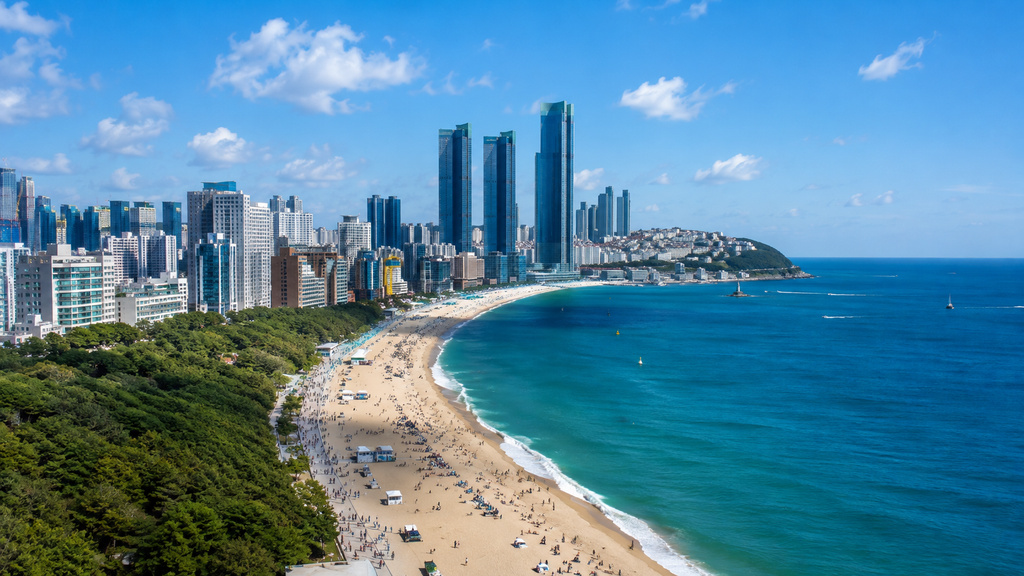
Busan surprised me because it did not feel like Seoul with beaches added.
It had its own personality.
The city stretches between mountains and the sea, so the landscape constantly appears between buildings.
You can spend the morning in a market, the afternoon beside the water and the evening looking across an illuminated skyline.
That combination made Busan one of the places I would happily revisit.
Haeundae Is Famous for a Reason
Haeundae Beach is probably Busan’s most recognizable beach.
It is highly developed.
There are hotels.
Restaurants.
Tall buildings.
A broad stretch of sand.
If you are expecting an isolated tropical beach, this is not it.
But that is not why I would visit.
Haeundae is interesting because the beach is integrated into a major city.
You can walk barefoot along the water and then be back among cafés and high-rises minutes later.
Don’t Stop at Haeundae
Busan has much more to offer.
Gamcheon Culture Village gives you colorful hillside streets and views across tightly packed neighborhoods.
Jagalchi and the surrounding market areas reveal the city’s relationship with seafood.
Taejongdae offers a much more natural coastal landscape.
And temples such as Haedong Yonggungsa create a very different experience from the urban center.
I would give Busan at least two days.
Three if you enjoy seafood and coastal walks.
Take the KTX Instead of Flying From Seoul
One of the pleasures of traveling in South Korea is the railway system.
For Seoul to Busan, high-speed rail makes the journey straightforward.
You leave one enormous city.
Watch the landscape move past the window.
Then arrive in another.
For me, that feels much more connected to the journey than repeatedly going through airports.
3. Jeju Island – South Korea’s Great Island Escape
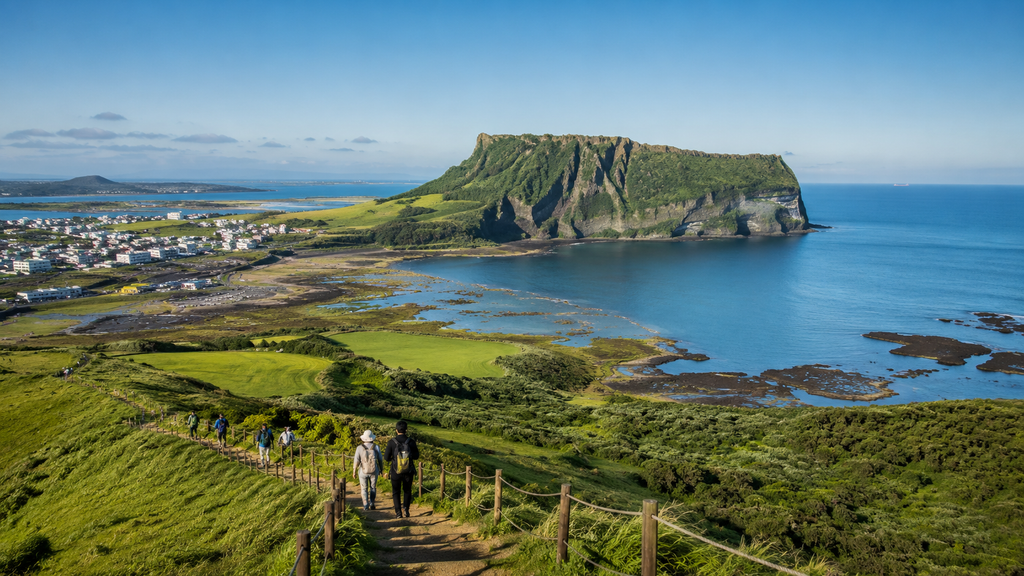
Jeju was the destination that looked least like the Korea I had imagined before traveling.
The island is volcanic.
The roads pass through countryside.
Black rock meets the sea.
Waterfalls cut through green landscapes.
Hallasan rises from the center of the island.
It feels different.
Slower.
More open.
And much more dependent on nature.
Don’t Visit Jeju Only for Beaches
Jeju has beaches, but I would not plan the island as a conventional beach holiday.
The landscape is the real attraction.
One of the most memorable places is Seongsan Ilchulbong, the volcanic tuff cone on the eastern side of the island.
If the weather is good, climbing to the viewpoint gives you a broad look across the coast.
Hallasan National Park offers an entirely different experience.
Hiking conditions depend heavily on season, weather and the route you choose, so I would check current requirements before attempting a serious trail.
The Coast Is Best Explored Slowly
I liked the idea of driving around Jeju more than trying to complete a long list of attractions.
Stop when the coast looks interesting.
Find a café.
Walk near the water.
Try local food.
Jeju’s famous haenyeo, or female divers, are also an important part of the island’s cultural identity.
The more I learned about them, the more Jeju felt like a place with its own history rather than simply Korea’s holiday island.
Give Jeju Enough Time
I would not fly to Jeju for one rushed day.
Three days would be my minimum.
Four or five would be better.
Distances can be deceptive, and public transportation may require more planning than in Seoul.
If you drive, make sure your license and rental requirements are in order before the trip.
Jeju rewards travelers who leave empty space in the itinerary.
4. Gyeongju – The Place That Changed How I Saw Korean History
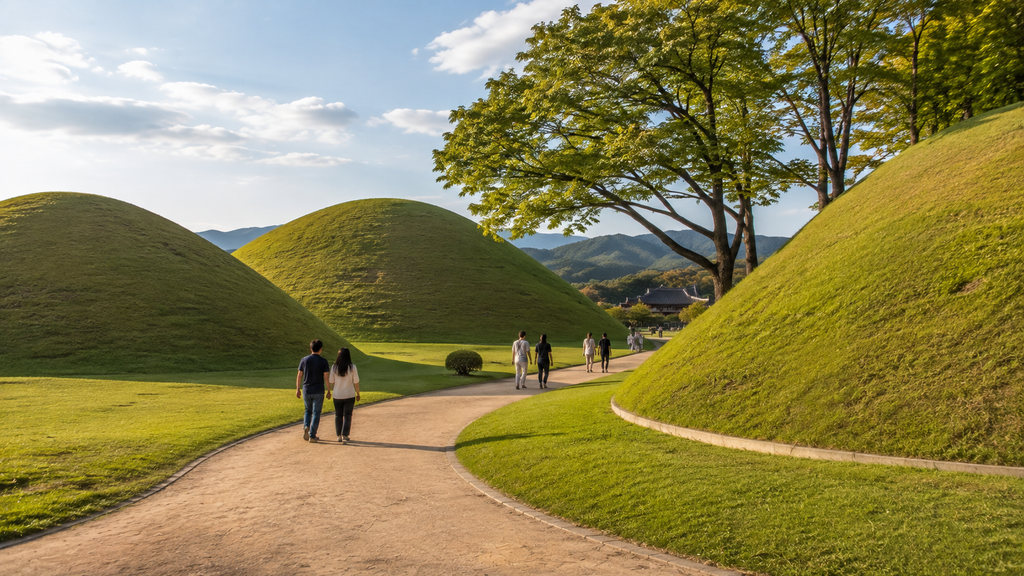
If Seoul introduced me to the Joseon Dynasty, Gyeongju took me much farther back.
For centuries, Gyeongju was the capital of the ancient Silla Kingdom.
The city still carries traces of that history everywhere.
Royal tombs rise like enormous grassy hills.
Historic structures appear between modern streets.
Buddhist heritage sites sit outside the center.
At times, Gyeongju feels less like a city containing historical attractions and more like an archaeological landscape where a modern city grew around the past.
The Royal Tombs Are Surprisingly Beautiful
I did not expect burial mounds to become one of my favorite parts of Gyeongju.
But the landscape around Daereungwon is remarkably peaceful.
The enormous green mounds have simple shapes.
There is nothing visually complicated about them.
That simplicity makes them impressive.
Walking between them gave me a stronger sense of the age of the city than reading dates ever could.
Stay Until Evening
Donggung Palace and Wolji Pond are particularly atmospheric later in the day.
As the light fades and reflections appear across the water, the setting changes completely.
I would not rush back to Seoul immediately after sightseeing.
Spend a night.
Walk around.
Eat dinner.
See Gyeongju after the day-trip crowds begin disappearing.
Bulguksa Is Worth Leaving the Center For
Bulguksa Temple is another reason I would allow enough time in Gyeongju.
The temple is one of Korea’s major Buddhist heritage sites and provides another connection to the Silla period.
Combined with nearby historical sites, it makes Gyeongju one of the best destinations for anyone interested in Korean history.
I would plan at least two days.
5. Seoraksan National Park – Korea Beyond Its Cities
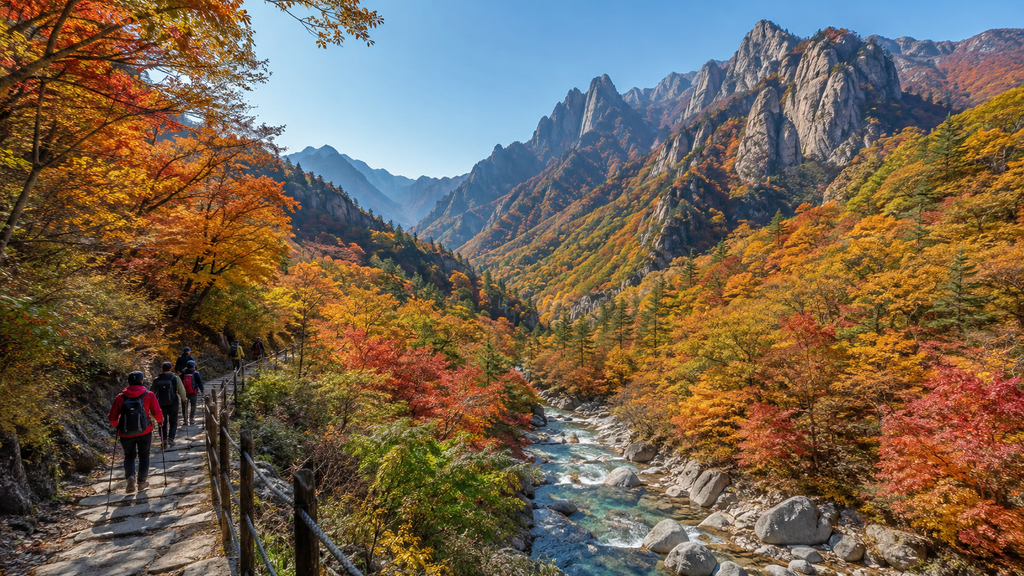
After Seoul and Busan, I wanted space.
Seoraksan provided it.
The mountains rise dramatically above the surrounding landscape, and the experience changes enormously with the season.
Autumn is famous.
The forests turn red, orange and yellow.
That also means many other people have exactly the same idea.
If you visit during peak foliage, expect crowds.
You Don’t Need to Be a Serious Hiker
One thing I liked about Seoraksan is that the park is not only for experienced mountain hikers.
There are different routes and ways to experience the scenery.
Some trails are relatively approachable.
Others require considerably more preparation.
There are temples and scenic areas closer to the main access points as well.
I would choose a route based on my actual fitness level rather than picking the trail with the most spectacular photograph.
Mountains are not a good place for ego.
Stay in Sokcho
Sokcho makes a convenient base for visiting Seoraksan.
It also adds another experience to the trip.
The city sits on Korea’s east coast and is known for seafood and its markets.
After a day of hiking, walking through a market looking for dinner felt exactly right.
Mountain in the morning.
Seafood in the evening.
That is a very good travel day.
Autumn Is Beautiful, but Every Season Is Different
Seoraksan is famous for autumn foliage, but I would not assume that is the only time worth visiting.
Spring greenery, summer landscapes and snowy winter scenery create completely different experiences.
Weather and trail conditions matter.
Always check current park information before heading into the mountains.
6. Jeonju – Come for the Hanok, Stay for the Food

Jeonju entered my itinerary because of Jeonju Hanok Village.
Food became an equally important reason to remember it.
The city is closely associated with bibimbap, but reducing Jeonju to one dish would be a mistake.
This is one of the destinations where traditional architecture and food culture work particularly well together.
Spend the Morning in Jeonju Hanok Village
Hundreds of traditional-style hanok buildings create a very different atmosphere from modern Seoul.
There are guesthouses.
Restaurants.
Tea houses.
Craft shops.
Cultural experiences.
Yes, parts are tourist-oriented.
That does not automatically make them uninteresting.
I would arrive earlier in the morning when the streets are quieter.
Walk first.
Take photographs.
Then stop for food.
Try Sleeping in a Hanok
If you have never stayed in a traditional Korean-style property, Jeonju is a good place to try.
Do not expect it to feel exactly like a conventional hotel.
That is part of the point.
Sleeping arrangements, room design and facilities can vary significantly.
Read the accommodation description carefully.
For one night, I found the idea much more interesting than returning immediately to a generic hotel room.
Come Hungry
Jeonju is not where I would begin a diet.
Bibimbap is the obvious dish to try.
But I would also explore markets, small restaurants and snacks rather than concentrating on one famous meal.
Food is one of the easiest ways to understand why regional travel matters in Korea.
The country does not taste identical everywhere.
Jeonju makes that very clear.
7. Gangneung – Coffee, Beaches and the East Coast
Gangneung is one of those places I would choose when the itinerary starts feeling too intense.
After several days of palaces, museums, markets and city streets, walking beside the East Sea feels wonderfully simple.
Gangneung combines beaches with cafés and access to the landscapes of Gangwon Province.
The Beach Feels Different From Busan
Busan’s famous beaches are part of a huge metropolitan environment.
Gangneung can feel calmer.
Walk along the coast.
Get coffee.
Sit down.
Do absolutely nothing for an hour.
Not every day of a trip needs to contain a UNESCO site.
Sometimes the destination earns its place because it allows you to stop.
Coffee Is Part of the Experience
Gangneung has developed a strong coffee culture, and the coastal café areas are a popular part of visiting.
I initially thought coffee beside the beach sounded like something I could do anywhere.
Then I realized that was exactly why I liked it.
Travel does not always need to be exotic.
Sitting beside the Korean east coast with a hot coffee while watching waves can be enough.
Gangneung Works Well With a Gangwon Trip
If you have more time, Gangneung can be combined with other destinations in Gangwon Province rather than treated as an isolated stop.
This is where I would start thinking regionally instead of returning to Seoul after every excursion.
South Korea becomes much more interesting once Seoul stops being the center of every travel day.
8. Suwon – The Easy Historical Escape From Seoul
Suwon is the place I would recommend to travelers who want to leave Seoul but do not have enough time for a major multi-day journey.
The main reason is Hwaseong Fortress.
The fortress walls stretch through the city and provide a very different historical experience from Seoul’s palaces.
Walk the Fortress Instead of Just Photographing It
I would wear comfortable shoes.
Hwaseong is best understood by walking.
You move along walls.
Pass gates.
Climb sections of higher ground.
Look across modern Suwon.
That contrast is what makes the experience interesting.
Historic fortifications exist inside a modern Korean city rather than separated from it.
It Makes an Easy Day Trip
Suwon is close enough to Seoul that you do not necessarily need to change hotels.
That matters on a short trip.
I dislike spending half a holiday checking in and out of accommodation.
A day trip gives you a different environment while keeping logistics simple.
If your South Korea itinerary is only five or six days, Suwon is one of the places I would consider before adding another distant city.
9. Andong – For a Deeper Look at Traditional Korea
Andong appealed to me for a different reason.
It felt less about spectacular modern attractions and more about preserving traditions.
The best-known destination in the area is Hahoe Folk Village.
The village sits in a landscape shaped by the Nakdong River and has preserved traditional architecture and cultural heritage.
Hahoe Is Not Just a Collection of Old Houses
Traditional villages can sometimes feel like open-air museums.
Hahoe is more complicated.
Its architecture, Confucian traditions and surrounding landscape are all part of its significance.
Walking through slowly made much more sense than rushing between photo spots.
This is where I would read a little history before arriving.
Context improves the visit enormously.
The Mask Tradition Adds Another Layer
Andong is also associated with traditional mask culture and performances.
That gave me another reminder that Korean heritage is not limited to buildings.
Music.
Dance.
Ritual.
Crafts.
Food.
Family traditions.
They all tell different parts of the story.
Andong Requires More Effort
This is not the destination I would recommend to someone with only four days in Korea.
For a first short trip, Seoul and one other major destination make more sense.
But with ten days or two weeks, Andong becomes much more attractive.
The extra effort is exactly what allows the experience to feel different.
10. Nami Island – An Easy Escape Into Nature
Nami Island is probably the most tourist-oriented destination on this list.
I would still include it.
Why?
Because not every worthwhile destination needs to be undiscovered.
Nami became internationally famous partly through Korean television, particularly Winter Sonata, and its tree-lined paths remain its signature image.
The island changes dramatically with the seasons.
Autumn Is the Classic Experience
Rows of trees turning yellow and orange create the postcard version of Nami Island.
It is beautiful.
It is also popular.
If you want quiet photographs during peak season, arrive early and manage expectations.
You are not discovering a secret island.
Winter Creates a Completely Different Mood
Snow changes everything.
Bare trees.
White paths.
Cold air.
The landscape becomes minimalist.
If your South Korea trip happens during winter, I would not automatically remove Nami Island from the itinerary.
Just dress properly.
Korean winter can be seriously cold.
Is Nami Island Worth It?
That depends on your trip.
If you have only three days in South Korea, I would stay in Seoul.
If you have a week and want an easy nature-focused day outside the capital, it can work well.
If you are already visiting Seoraksan and several rural destinations, Nami may feel less essential.
This is why “best places” lists should never become mandatory checklists.
Which Places Would I Choose for a 7-Day South Korea Trip?
Seven days disappear quickly.
I would not attempt all ten destinations.
For a first trip, I would probably choose:
Day 1–3: Seoul
Explore Gyeongbokgung, Bukchon, Insadong, modern neighborhoods and the Han River.
Day 4: Suwon or Nami Island
Choose history if Hwaseong Fortress interests you.
Choose nature and an easier sightseeing day if Nami Island appeals more.
Day 5–7: Busan
Take the high-speed train south and spend the final part of the trip exploring beaches, markets, coastal scenery and seafood.
That gives you two major cities plus one day trip without turning the entire week into transportation.
What About a 10-Day Trip?
Ten days opens more possibilities.
I would choose:
Seoul – 3 days
Gyeongju – 2 days
Busan – 2 days
Jeju – 3 days
That is already a substantial trip.
You experience the capital.
Ancient Korean history.
A major coastal city.
And Korea’s most famous island.
I would resist adding more.
A destination you actually experience is worth more than three places you only see through a train window.
And If I Had Two Weeks?
This is where I would start adding places such as Seoraksan, Jeonju or Andong.
Two weeks gives you enough time to understand that South Korea is not just Seoul plus day trips.
You can move through different regions.
Eat regional food.
Stay overnight in smaller cities.
Spend time in the mountains.
See both coasts.
That is when the geography of the country starts making sense.
The Best Time to Visit South Korea Depends on What You Want
I would not choose one universal “best month.”
Spring is famous for blossoms and comfortable sightseeing conditions, although popular blossom locations can become extremely busy.
Summer is hot, humid and affected by seasonal rain, but it is also a period for beaches and a different style of travel.
Autumn may be my favorite for a broad sightseeing trip.
Temperatures can be comfortable and mountain foliage can be spectacular.
Winter is cold.
Sometimes very cold.
But snow changes palaces, mountains and traditional villages completely.
It also opens the door to winter sports.
Instead of asking only “When is Korea best?”, I would ask:
What do I want to do there?
Getting Around South Korea Was Easier Than I Expected
Transportation is one of the country’s great advantages for travelers.
Seoul’s subway system takes some time to understand because it is enormous, but once I became comfortable with it, moving around the city was straightforward.
Between major cities, trains make routes such as Seoul–Busan particularly convenient.
Buses become useful for places not directly connected by high-speed rail.
Jeju is the exception where I would plan transportation more carefully.
The island is large enough that getting from one attraction to another can consume more time than expected.
Do not build an itinerary based only on distances on a map.
Don’t Spend the Entire Trip in Seoul
I understand why people do.
Seoul could easily fill a week.
There is always another neighborhood.
Another market.
Another palace.
Another café.
Another restaurant.
But leaving the capital changed my understanding of South Korea.
Busan showed me the country’s coastal urban life.
Gyeongju gave me historical context.
Jeju changed the landscape completely.
Seoraksan reminded me how mountainous Korea is.
Jeonju connected architecture with food.
Andong revealed traditions I had barely encountered in Seoul.
Seoul is an excellent introduction.
It should not necessarily be the entire story.
Don’t Try to See Everything Either
The opposite mistake is just as easy.
Seoul.
Busan.
Jeju.
Gyeongju.
Jeonju.
Sokcho.
Gangneung.
All in seven days.
Technically possible?
Perhaps.
Enjoyable?
I doubt it.
Every time you change cities, you lose time.
Packing.
Checking out.
Getting to the station.
Waiting.
Traveling.
Finding the next hotel.
Checking in.
Repeat that every day and your South Korea trip becomes a tour of transportation infrastructure.
Choose fewer places.
Stay longer.
Which Destination Was My Favorite?
This is difficult because the places are so different.
For energy and variety:
Seoul.
For history:
Gyeongju.
For sea and city life:
Busan.
For nature:
Jeju or Seoraksan.
For food and traditional atmosphere:
Jeonju.
For an easy day outside Seoul:
Suwon.
That is why I would not rank the ten destinations from “best” to “worst.”
The better question is what kind of Korea you want to experience.
My Ideal First South Korea Trip
If I could plan my first trip again with around ten days, I would keep it simple.
I would arrive in Seoul.
Spend enough time there that I did not feel rushed.
Then take the train to Gyeongju.
Stay overnight instead of treating it as another quick stop.
Continue to Busan.
Eat seafood.
Walk beside the coast.
Then fly to Jeju for the final few days.
That itinerary would show four very different sides of South Korea without trying to collect destinations.
If I had more time, I would add the mountains.
Then smaller cities.
Then places I had never heard about before researching the trip.
That is usually how travel works.
The more you see, the longer your list becomes.
Final Thoughts
Before visiting South Korea, Seoul occupied almost my entire mental picture of the country.
Skyscrapers.
Palaces.
K-pop.
Subways.
Shopping streets.
Korean barbecue.
Then the country became larger.
There was Busan with mountains dropping toward the sea.
Jeju with black volcanic rock and open coastal roads.
Gyeongju with ancient royal tombs rising from green fields.
Seoraksan with mountain trails disappearing into autumn forests.
Jeonju with hanok roofs and tables full of food.
Suwon with fortress walls overlooking a modern city.
Andong with traditions that felt far removed from Seoul’s enormous digital screens.
That variety is what I would want a first-time visitor to experience.
You do not need to see all ten places.
In fact, I would recommend that you don’t.
Choose three.
Maybe four.
Give each one enough time.
Take the train.
Walk without a destination occasionally.
Eat whatever the region is known for.
Stay overnight somewhere you originally thought would only be a day trip.
South Korea is easy to move through quickly.
The challenge is remembering to slow down.
Because the places I remember best are rarely the ones where I arrived, took a photograph and immediately left.
They are the places where I stayed long enough for the destination to become more than another name on the itinerary.