

Kraków is one of Europe’s most captivating travel destinations, welcoming millions of visitors every year with its remarkably preserved medieval architecture, royal heritage, vibrant cultural scene, and welcoming atmosphere. As Poland’s former capital, the city offers a fascinating blend of history and modern life, where Gothic churches, Renaissance palaces, lively market squares, and charming cafés create an unforgettable experience for travelers of every age.
Whether you’re planning your first visit to Poland or returning to explore more of Central Europe, Kraków provides countless opportunities to discover UNESCO World Heritage Sites, world-class museums, traditional Polish cuisine, and picturesque streets filled with centuries of history. The city’s compact layout makes it easy to explore on foot, allowing visitors to move comfortably between its most famous attractions while enjoying the unique atmosphere that has made Kraków one of Europe’s most beloved cities.
Beyond its architectural beauty, Kraków is also an excellent destination for food lovers, photographers, and history enthusiasts. Visitors can admire magnificent castles overlooking the Vistula River, stroll through one of Europe’s largest medieval market squares, explore the historic Jewish Quarter, or take memorable day trips to internationally significant sites such as the Wieliczka Salt Mine. Every neighborhood offers a different perspective on the city’s rich cultural heritage.
Thanks to its excellent public transportation, wide range of accommodation, and affordable prices compared with many Western European destinations, Kraków is suitable for both short city breaks and longer holidays. Whether you visit during the colorful spring, the lively summer festival season, the golden days of autumn, or the magical Christmas markets in winter, the city offers memorable experiences throughout the year.
This guide introduces the best places to visit in Kraków in 2026, together with practical travel advice to help you plan an enjoyable, comfortable, and unforgettable journey
Why Visit Kraków in 2026?
Kraków continues to rank among Europe’s finest city destinations because it successfully combines centuries of history with a vibrant modern lifestyle. Unlike many large capitals where attractions are spread across different districts, most of Kraków’s iconic landmarks are located within walking distance of one another, making sightseeing both convenient and enjoyable.
The city appeals to travelers interested in architecture, history, art, photography, gastronomy, and local culture. From magnificent royal castles and Gothic cathedrals to bustling cafés, peaceful riverside walks, and fascinating museums, Kraków offers an impressive variety of experiences that suit every travel style.
Another advantage is its excellent value for money. Hotels, restaurants, museums, and public transportation are generally more affordable than in many other European destinations, allowing visitors to enjoy a high-quality holiday without stretching their budget. At the same time, the city maintains excellent tourist infrastructure, making independent travel easy even for first-time visitors to Poland.
No matter the season, Kraków impresses with its beautiful streets, welcoming atmosphere, rich cultural heritage, and unforgettable historical landmarks, making it one of the best places to visit in Europe in 2026.
1. Wawel Royal Castle
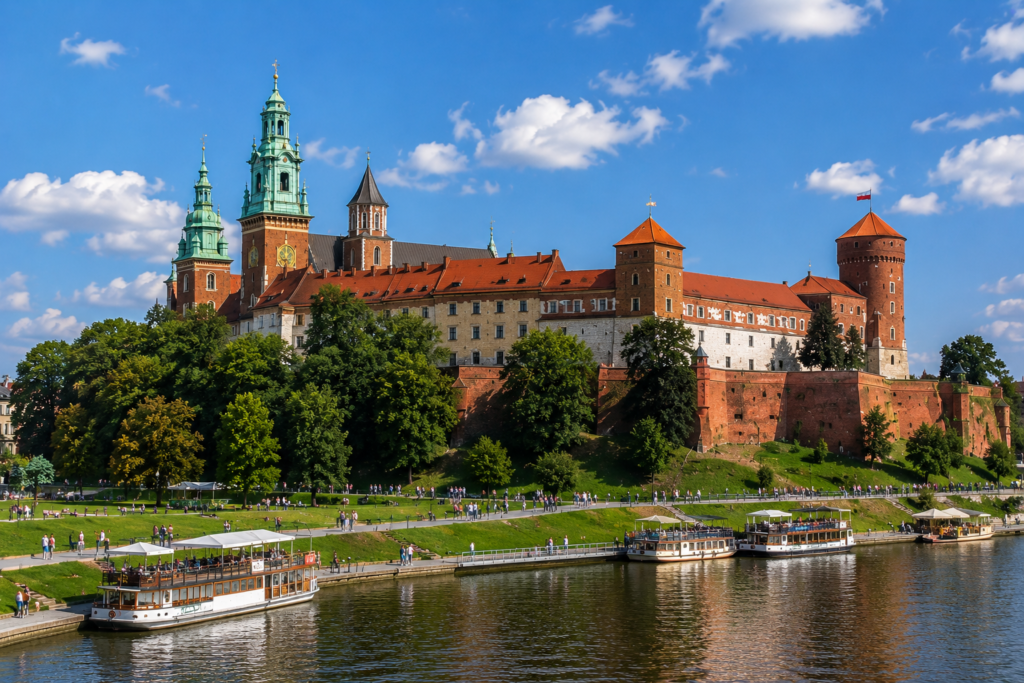
Perched on Wawel Hill overlooking the Vistula River, Wawel Royal Castle is the most famous landmark in Kraków and one of Poland’s greatest national treasures. For centuries, it served as the residence of Polish kings and queens, playing a central role in the country’s political, cultural, and religious history. Today, the castle remains one of the city’s most visited attractions and an essential stop for anyone exploring Kraków.
Visitors can wander through beautifully restored royal apartments, elegant ceremonial halls, impressive courtyards, and museum collections filled with priceless paintings, tapestries, historic weapons, and royal artifacts. Each section of the castle reflects a different period of Polish history, allowing visitors to better understand the country’s royal legacy while admiring outstanding Renaissance architecture.
Standing beside the castle, Wawel Cathedral is equally impressive. The cathedral has hosted royal coronations, weddings, and state ceremonies for hundreds of years, while its crypts contain the tombs of many of Poland’s kings, queens, military leaders, and national heroes. Climbing the cathedral tower rewards visitors with panoramic views across Kraków’s Old Town and the surrounding countryside.
Before leaving Wawel Hill, don’t miss the famous Dragon’s Den beneath the castle. According to local legend, a fearsome dragon once lived inside the cave until it was defeated by a clever shoemaker. Today, a dragon statue near the river occasionally breathes real fire, delighting both children and adults while adding another fascinating story to Kraków’s rich heritage.
2. Main Market Square (Rynek Główny)
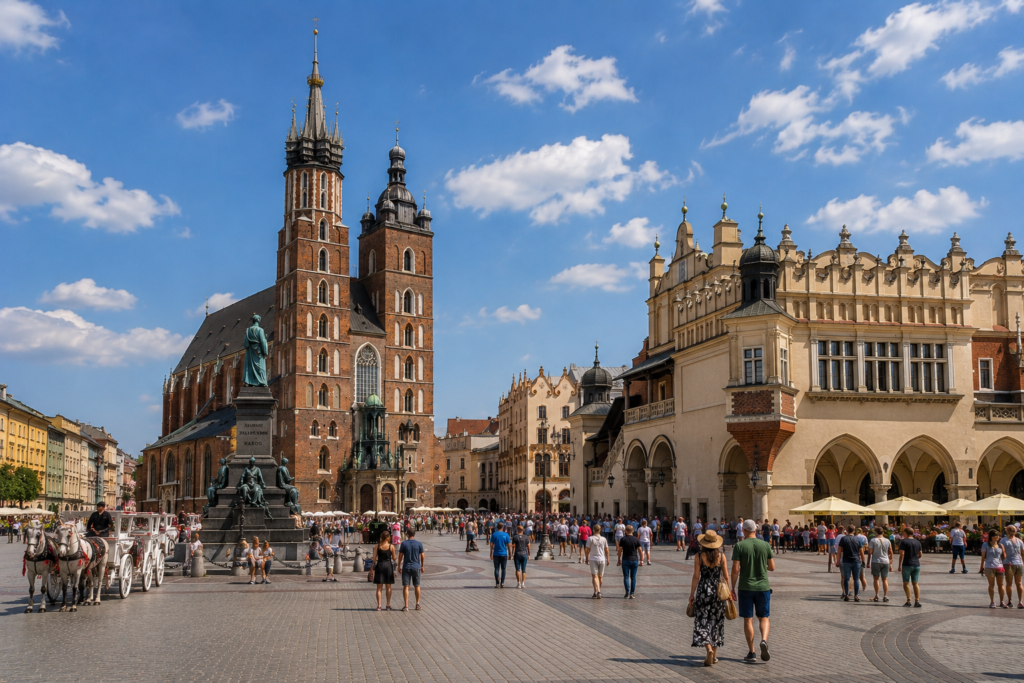
Located at the heart of the Old Town, Rynek Główny is Europe’s largest medieval market square and one of Kraków’s most vibrant public spaces. Surrounded by elegant townhouses, historic churches, restaurants, cafés, and museums, the square has served as the city’s commercial and social center for more than seven centuries.
Throughout the day, the square is filled with street musicians, artists, horse-drawn carriages, and visitors enjoying the lively atmosphere. During the warmer months, outdoor cafés spill onto the surrounding streets, creating the perfect setting to relax with traditional Polish cuisine while watching daily life unfold. In winter, the area transforms into one of Poland’s most beautiful Christmas markets, attracting visitors from across Europe.
Standing in the middle of the square is the magnificent Cloth Hall, a Renaissance landmark that once welcomed merchants from across the continent. Today, visitors can browse stalls selling amber jewelry, handmade crafts, ceramics, traditional souvenirs, and locally produced artwork while admiring one of Kraków’s most recognizable historic buildings.
Whether you’re beginning your sightseeing, enjoying lunch, or simply taking photographs of the surrounding architecture, the Main Market Square perfectly captures the unique atmosphere that makes Kraków one of Europe’s most memorable destinations.
3. St. Mary’s Basilica

Standing proudly on the northeastern corner of the Main Market Square, St. Mary’s Basilica is one of Kraków’s most recognizable landmarks and an enduring symbol of the city’s rich history. Its two uneven Gothic towers have watched over the Old Town for centuries, becoming one of the first sights visitors notice when arriving in the historic center.
The church was originally built in the 13th century before being rebuilt in the Gothic style after suffering damage during Mongol invasions. Today, it is admired not only for its impressive exterior but also for its magnificent interior. Visitors are welcomed by colorful vaulted ceilings, intricate stained-glass windows, and the world-famous wooden altarpiece created by the German sculptor Veit Stoss. This masterpiece, carved over more than a decade, is considered one of the finest examples of Gothic woodcarving in Europe.
Every hour, the sound of the Hejnał Mariacki echoes across the Main Market Square from the tallest tower. The trumpet melody ends abruptly to commemorate the legendary watchman who was struck by an arrow while sounding the alarm during a medieval invasion. This tradition has continued for centuries and remains one of Kraków’s most treasured customs.
Visitors can also climb the tower during guided tours for breathtaking panoramic views across the Old Town. From the top, the red rooftops of Kraków, the Cloth Hall, Wawel Castle, and countless church spires create one of the city’s most memorable landscapes.
4. Cloth Hall (Sukiennice)

Located at the very center of the Main Market Square, the Cloth Hall has served as Kraków’s commercial heart for more than 700 years. During the Middle Ages, merchants from across Europe gathered here to trade silk, spices, leather, and textiles, helping Kraków become one of the continent’s most important trading cities.
Today, the historic arcade is home to dozens of small stalls selling authentic Polish souvenirs, amber jewelry, handmade crafts, embroidered textiles, ceramics, and traditional artwork. Whether you’re looking for a meaningful gift or simply browsing local products, the Cloth Hall offers an enjoyable shopping experience in one of Europe’s most beautiful historic buildings.
The upper floor houses the Gallery of 19th-Century Polish Art, where visitors can admire paintings and sculptures created by some of Poland’s greatest artists. The museum provides an excellent opportunity to learn more about the country’s artistic heritage while escaping the lively atmosphere of the square below.
After exploring the building, many visitors choose to enjoy a coffee or traditional Polish dessert at one of the surrounding cafés. Sitting outside while watching street performers, horse-drawn carriages, and everyday life unfold in the Main Market Square is one of the simplest yet most enjoyable experiences in Kraków.
5. Kazimierz District
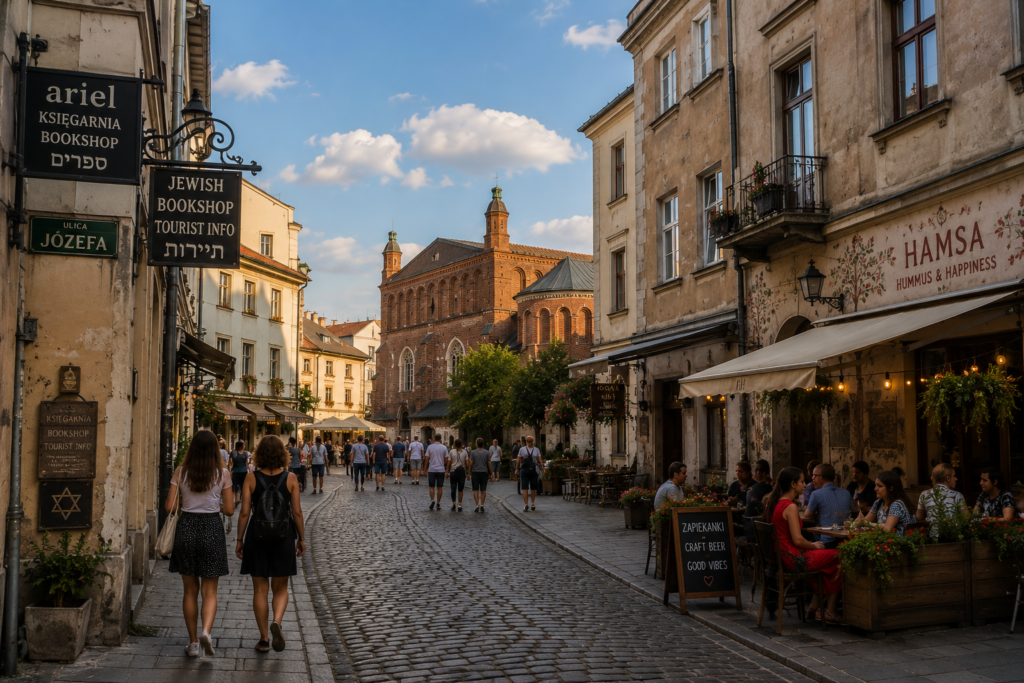
South of the Old Town lies Kazimierz, one of Kraków’s most fascinating neighborhoods and a place where history, culture, and creativity come together. Once an independent town and later the center of Jewish life in Poland, Kazimierz has become one of the city’s most vibrant districts while preserving its unique historical identity.
Walking through its narrow streets, visitors will discover beautifully restored synagogues, independent bookstores, art galleries, cozy cafés, antique shops, and hidden courtyards that reveal the neighborhood’s rich past. Every corner tells a story, making Kazimierz one of the most rewarding places to explore at a slower pace.
The district gained worldwide recognition after several scenes from Schindler’s List were filmed here. Today, museums and memorials help visitors better understand the history of Kraków’s Jewish community before and during the Second World War. These important sites encourage reflection while celebrating the cultural contributions that shaped the neighborhood for centuries.
As evening falls, Kazimierz transforms into one of Kraków’s liveliest entertainment areas. Stylish restaurants, wine bars, craft beer pubs, and live music venues attract both locals and tourists, creating an atmosphere that perfectly blends history with contemporary city life.
6. Oskar Schindler’s Enamel Factory

Located across the Vistula River in the Podgórze district, Oskar Schindler’s Enamel Factory is one of the most meaningful museums in Poland. Rather than focusing solely on Oskar Schindler himself, the museum tells the story of Kraków during the German occupation through personal testimonies, historical photographs, reconstructed streets, and interactive exhibitions.
Visitors move through immersive displays that recreate daily life during one of the darkest periods in the city’s history. Original documents, multimedia presentations, and authentic artifacts help explain how ordinary citizens lived under occupation while highlighting stories of courage, sacrifice, and survival.
Although the museum is deeply moving, it is also one of the most educational attractions in Kraków. Visitors leave with a greater understanding of the city’s history and a deeper appreciation for the resilience of its people. Because admission is limited, booking tickets several days in advance is strongly recommended, especially during the busy tourist season.
7. Kraków Barbican and St. Florian’s Gate
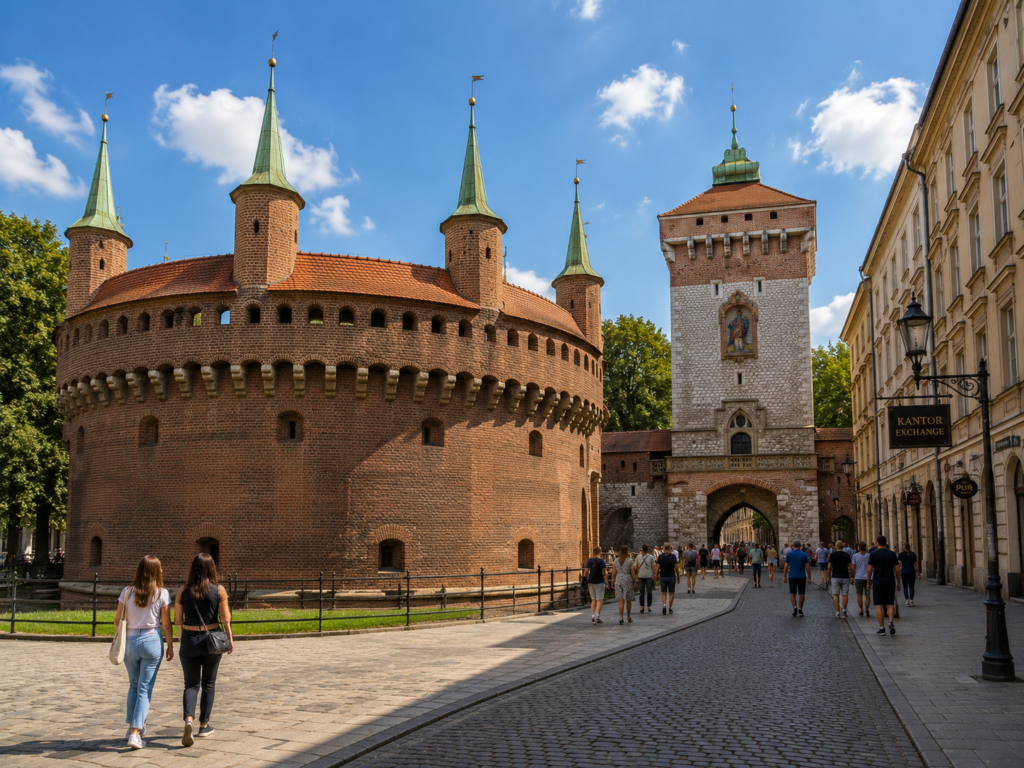
The Kraków Barbican and St. Florian’s Gate are among the few remaining sections of the city’s original medieval fortifications. Built in the late 15th century, these impressive defensive structures once protected Kraków from invading armies and served as the main entrance to the royal city. Today, they remain some of the best-preserved examples of medieval military architecture in Europe.
The circular Barbican immediately captures attention with its thick brick walls, defensive towers, and narrow windows designed for archers. Walking through the fortress offers visitors a glimpse into what life was like when Kraków was surrounded by protective walls and moats. Informational displays inside the Barbican explain its military significance and the role it played in defending the city for centuries.
Just beyond the Barbican stands St. Florian’s Gate, one of Kraków’s most iconic landmarks. Throughout history, kings, foreign ambassadors, and distinguished guests entered the city through this impressive Gothic gateway. Today, the street leading from the gate toward the Main Market Square is lined with local artists displaying paintings, sketches, and photography, creating one of the most charming open-air galleries in the city.
Early morning and late afternoon are the best times to visit, when softer sunlight highlights the beautiful red-brick architecture and fewer crowds allow for excellent photographs.
8. Planty Park
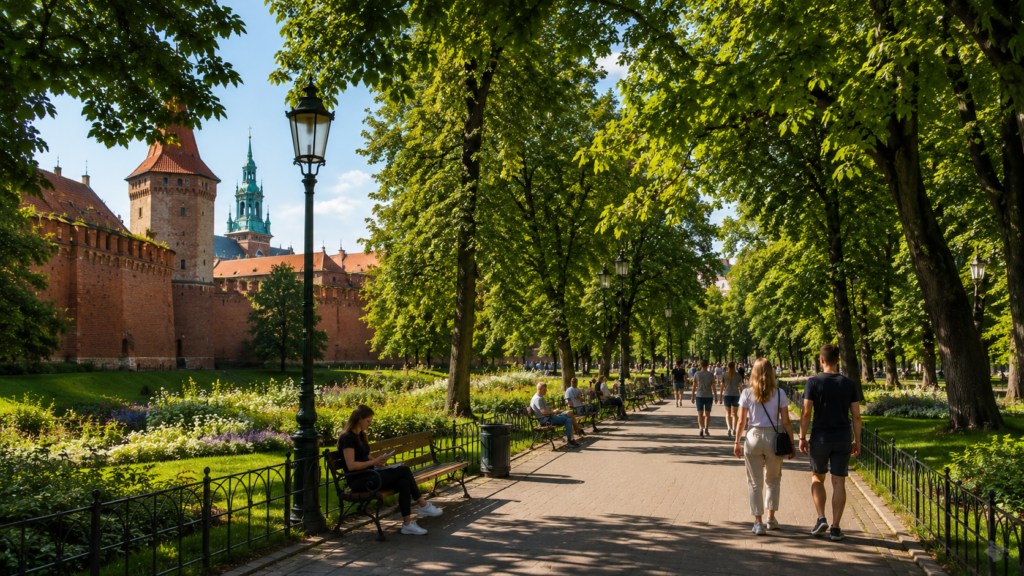
Encircling the entire Old Town, Planty Park offers a peaceful escape from the bustling streets of central Kraków. Created in the early nineteenth century after the medieval city walls were dismantled, the park now forms a green belt surrounding the historic center and is one of the city’s favorite places to relax.
Wide tree-lined paths, colorful flower gardens, elegant fountains, and shaded benches create a calm atmosphere that contrasts beautifully with the busy Main Market Square just a few minutes away. Whether you are enjoying a leisurely morning walk, reading a book beneath the trees, or simply resting between sightseeing stops, Planty Park provides a welcome break from the crowds.
Throughout the year, the park changes with the seasons. Spring brings blooming flowers and fresh greenery, while autumn transforms the landscape into brilliant shades of gold and orange. During winter, snow-covered pathways create a magical atmosphere that perfectly complements Kraków’s historic surroundings.
Because Planty Park connects many of the city’s major attractions, visitors naturally pass through it several times during their stay. Instead of rushing from one landmark to another, taking a slower walk through the park allows you to experience a quieter and more local side of Kraków.
9. Vistula River Boulevards

Stretching alongside Poland’s longest river, the Vistula Boulevards have become one of Kraków’s most popular recreational areas. The riverside promenade offers spectacular views of Wawel Castle rising above the riverbanks while providing plenty of space for walking, jogging, cycling, and relaxing.
During the warmer months, locals and visitors gather here to enjoy outdoor cafés, riverside restaurants, sightseeing cruises, and open-air events. The atmosphere is lively without feeling crowded, making it an excellent place to escape the busy streets of the Old Town while still remaining close to the city’s major attractions.
One of the highlights of visiting the boulevards is watching the sunset. As the evening light reflects across the Vistula River and illuminates Wawel Castle, the scenery becomes one of the most photographed views in Kraków. Many visitors choose to end their day here before returning to the Old Town for dinner.
If you’re looking for a more active experience, bicycle rentals and river cruises are widely available along the promenade. These activities offer a different perspective of the city and are especially enjoyable during the spring and summer months.
10. Wieliczka Salt Mine
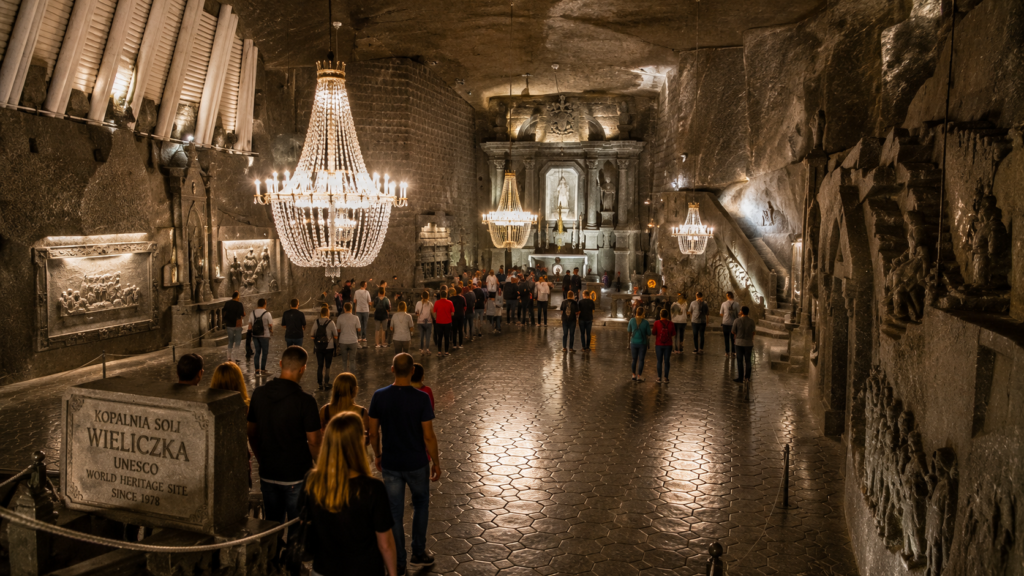
Located just 15 kilometers southeast of Kraków, the Wieliczka Salt Mine is one of Poland’s most extraordinary attractions and an easy day trip from the city. Recognized as a UNESCO World Heritage Site, the mine has been operating since the 13th century and continues to amaze visitors with its incredible underground world.
The guided tour takes visitors hundreds of meters below ground through a network of tunnels, chambers, underground lakes, and salt-carved sculptures. The highlight is undoubtedly the breathtaking Chapel of St. Kinga, where everything from the chandeliers to the altar has been carved entirely from rock salt. It is one of the most remarkable underground chapels anywhere in the world.
In addition to its artistic beauty, the mine tells the story of centuries of Polish mining history. Interactive exhibitions explain how salt was extracted, transported, and traded, giving visitors a fascinating insight into one of Europe’s oldest industries. The cool underground temperature also makes the mine a pleasant destination throughout the year.
A visit to the Wieliczka Salt Mine typically takes around three to four hours, including transportation from Kraków. Booking tickets in advance is highly recommended, especially during the peak tourist season, as daily visitor numbers are limited. For many travelers, this unforgettable underground experience becomes one of the highlights of their trip to Poland.
Best Time to Visit Kraków
Kraków is a year-round destination, with each season offering a different perspective on the city’s historic streets and cultural attractions. Choosing the best time to visit depends on your travel preferences, whether you enjoy warm weather, seasonal festivals, colorful scenery, or festive holiday markets.
Spring, from March to May, is one of the most pleasant times to explore the city. Parks and gardens begin to bloom, outdoor cafés reopen, and temperatures are comfortable for sightseeing. Visitor numbers are lower than in summer, allowing you to enjoy major attractions with shorter queues while experiencing Kraków at a relaxed pace.
Summer, from June to August, is the busiest tourist season. Long daylight hours make it ideal for walking through the Old Town, enjoying riverside cafés, and attending concerts and cultural festivals. Although popular attractions can become crowded, the city’s lively atmosphere and numerous outdoor events make summer an exciting time to visit.
Autumn, especially September and October, is another excellent season. Cooler temperatures, colorful foliage, and fewer tourists create ideal conditions for exploring Kraków’s historic neighborhoods. Many travelers consider early autumn the perfect balance between pleasant weather and manageable crowds.
Winter transforms Kraków into a magical destination, particularly during December when the Christmas Market fills the Main Market Square with festive lights, wooden stalls, seasonal decorations, and traditional Polish food. Snow occasionally blankets the city’s medieval streets, creating unforgettable scenery. While temperatures can fall below freezing, the festive atmosphere makes winter one of the most charming times to experience Kraków.
Local Food to Try
Kraków is one of the best places in Poland to experience authentic local cuisine. From traditional family-run restaurants to lively market stalls and modern cafés, the city offers a wide variety of dishes that reflect centuries of Polish culinary traditions.
One of the first foods visitors should try is Pierogi, Poland’s famous dumplings. Filled with ingredients such as potatoes, cheese, meat, mushrooms, or seasonal fruits, they are served either boiled or lightly fried and can be found in restaurants throughout the city.
Another local favorite is Obwarzanek Krakowski, a ring-shaped bread sprinkled with sesame or poppy seeds. Often compared to a bagel, it has been sold on Kraków’s streets for hundreds of years and remains one of the city’s most iconic snacks. Vendors can be found throughout the Old Town, making it an easy treat while sightseeing.
For a heartier meal, Żurek is a traditional sour rye soup typically served with sausage, egg, and potatoes. Rich in flavor and especially comforting during colder months, it is a staple of Polish cuisine and commonly found in traditional restaurants.
Meat lovers should also try Kiełbasa, Poland’s famous smoked sausage, which is often grilled and served with mustard, fresh bread, and pickles. In the evenings, locals often gather near the Vistula River to enjoy freshly grilled kiełbasa from popular food stalls.
To finish your meal, sample Sernik, a creamy Polish cheesecake made with traditional twaróg cheese, or enjoy a slice of Szarlotka, Poland’s classic apple pie, often served warm with whipped cream or vanilla ice cream.
Transportation
Getting around Kraków is simple thanks to its compact city center and efficient public transportation system. Most of the major attractions within the Old Town can easily be reached on foot, allowing visitors to enjoy the city’s beautiful architecture while walking between landmarks.
For destinations outside the historic center, Kraków operates an extensive network of trams and buses that connect residential neighborhoods, museums, shopping districts, and transportation hubs. Tickets can be purchased from ticket machines at many stops, vending machines inside selected vehicles, or through mobile ticketing apps. Visitors staying for several days may find 24-hour or 72-hour travel passes to be the most convenient option.
Taxis and ride-hailing services such as Uber and Bolt are widely available and generally affordable compared with many Western European cities. They are particularly useful for traveling to the airport, train station, or attractions located farther from the Old Town.
Kraków John Paul II International Airport is located approximately 15 kilometers west of the city center. Regular trains connect the airport with Kraków Główny Railway Station in around 20 minutes, while airport buses and taxis provide additional transportation options.
For visitors planning day trips to destinations such as Wieliczka Salt Mine or Auschwitz-Birkenau Memorial, trains, regional buses, and organized guided tours are all readily available from the city center, making Kraków an excellent base for exploring southern Poland.
Accommodation
Kraków offers an excellent range of accommodation options for every budget, from luxury hotels overlooking the Main Market Square to affordable hostels and modern apartments in quieter neighborhoods. Thanks to the city’s compact layout, many visitors choose to stay within or close to the Old Town, allowing them to reach most attractions on foot.
For first-time visitors, the Old Town is the most convenient area to stay. Hotels here place you just minutes away from landmarks such as Wawel Royal Castle, St. Mary’s Basilica, and the Cloth Hall. Although prices are generally higher than in other parts of the city, the central location and historic atmosphere make it a worthwhile choice.
Travelers looking for a more local experience often prefer the Kazimierz District. This vibrant neighborhood is known for its boutique hotels, stylish apartments, independent cafés, and lively nightlife. Staying in Kazimierz allows visitors to experience a different side of Kraków while remaining within walking distance of the Old Town.
Budget-conscious travelers will find numerous hostels, guesthouses, and affordable hotels near Kraków Główny Railway Station and surrounding districts. These accommodations provide excellent transport connections while keeping accommodation costs lower than those in the city center.
Regardless of where you choose to stay, booking several months in advance is highly recommended if you plan to visit during the summer season or the Christmas Market, when accommodation fills up quickly.
Practical Travel Tips
For the latest visitor information, attraction opening hours, city maps, and upcoming events, visit the official Kraków tourism website: https://krakow.travel/en
Book popular attractions in advance
Some of Kraków’s most popular attractions, including Wawel Royal Castle, Oskar Schindler’s Enamel Factory, and the Wieliczka Salt Mine, often sell out during the high season. Reserving tickets online before your trip can save both time and disappointment.
Wear comfortable walking shoe
The historic center is best explored on foot, and many streets are covered with traditional cobblestones. Comfortable footwear will make sightseeing much more enjoyable, especially if you plan to spend an entire day exploring the Old Town and Kazimierz.
Carry cash for small purchases
Although credit cards are accepted almost everywhere, some market stalls, small cafés, and souvenir shops may prefer cash. Having a small amount of Polish złoty on hand is always useful.
Respect religious sites
Many churches in Kraków remain active places of worship. Visitors should dress respectfully, keep noise to a minimum, and avoid using flash photography where it is prohibited.
Start sightseeing early
Major attractions become significantly busier from late morning onward, particularly during the summer months. Beginning your day early allows you to enjoy quieter streets, shorter queues, and better opportunities for photography.
Use public transportation when needed
While most attractions are within walking distance, Kraków’s tram network provides a quick and inexpensive way to reach destinations outside the city center, including museums and residential neighborhoods.
FAQ
How many days do you need in Kraków?
Three days is ideal for most visitors. This allows enough time to explore the Old Town, Wawel Royal Castle, Kazimierz, St. Mary’s Basilica, and Oskar Schindler’s Enamel Factory while also taking a day trip to the Wieliczka Salt Mine. Travelers interested in museums or nearby historical sites may wish to stay for four or five days.
Is Kraków expensive?
Compared with many major European cities, Kraków is considered an affordable destination. Accommodation, public transportation, and dining are generally reasonably priced, making the city an excellent choice for both budget travelers and those seeking a more luxurious experience.
What is the best month to visit Kraków?
May, June, September, and early October are often considered the best months to visit. During these periods, the weather is pleasant, attractions are fully open, and visitor numbers are generally lower than during the peak summer season.
Is Kraków safe for tourists?
Yes. Kraków is widely regarded as one of the safest cities in Poland for tourists. As with any popular destination, visitors should remain aware of their belongings in crowded areas, particularly around the Main Market Square and public transportation.
Final Thoughts
Kraków is a city where medieval architecture, royal history, vibrant culture, and warm hospitality come together to create one of the most rewarding travel experiences in Europe. Whether you’re exploring magnificent castles, wandering through centuries-old streets, or sampling authentic Polish cuisine, every corner of the city offers something memorable.
Before your trip, be sure to check the latest travel information, opening hours, and seasonal events on the official Kraków tourism website at https://krakow.travel/en to make the most of your visit.
If you’re planning to discover more of Central Europe, don’t miss our guides to Best Places to Visit in Prague in 2026 and Best Places to Visit in Paris in 2026, where you’ll find more unforgettable destinations filled with history, stunning architecture, and rich cultural experiences.