
Introduction
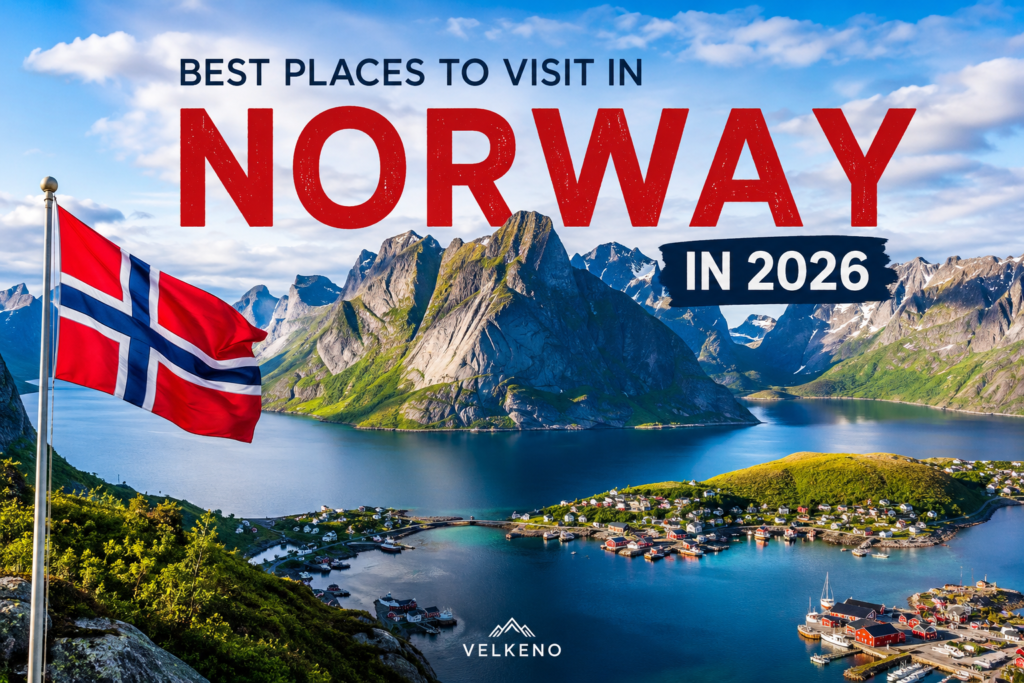
Norway is one of Europe’s most breathtaking travel destinations, where dramatic fjords, towering mountains, charming coastal towns, and vibrant cities create unforgettable experiences throughout the year. Whether you’re hiking to spectacular viewpoints, cruising through UNESCO-listed fjords, chasing the Northern Lights above the Arctic Circle, or exploring colorful fishing villages, Norway offers natural beauty unlike anywhere else in the world.
In 2026, Norway continues to attract travelers looking for outdoor adventures, sustainable tourism, and authentic Nordic culture. Excellent transportation, high safety standards, and pristine landscapes make it an ideal destination for solo travelers, couples, and families alike. From the cosmopolitan streets of Oslo to the remote Arctic islands of Lofoten, every region has its own unique character.
This guide explores the best places to visit in Norway in 2026, helping you discover iconic attractions, hidden gems, local experiences, and practical travel tips for planning an unforgettable Norwegian adventure.
Why Visit Norway in 2026?
Norway combines spectacular natural scenery with modern cities, rich Viking history, and exceptional quality of life. Travelers can enjoy peaceful forests, glacier-covered mountains, deep blue fjords, and picturesque villages—all within a country known for excellent infrastructure and environmental conservation.
One of Norway’s greatest advantages is its incredible seasonal diversity. Summer brings the Midnight Sun, allowing visitors to hike and explore almost around the clock. Autumn paints the valleys in vibrant colors, winter transforms the country into a snowy paradise perfect for skiing and Northern Lights hunting, while spring fills waterfalls and fjords with melting glacier water.
Norway is also among Europe’s safest destinations. English is widely spoken, public transportation is reliable, and outdoor activities are well organized. Whether you enjoy scenic road trips, photography, wildlife watching, kayaking, or cultural sightseeing, Norway offers experiences suitable for every travel style.
Top Attractions
1. Geirangerfjord
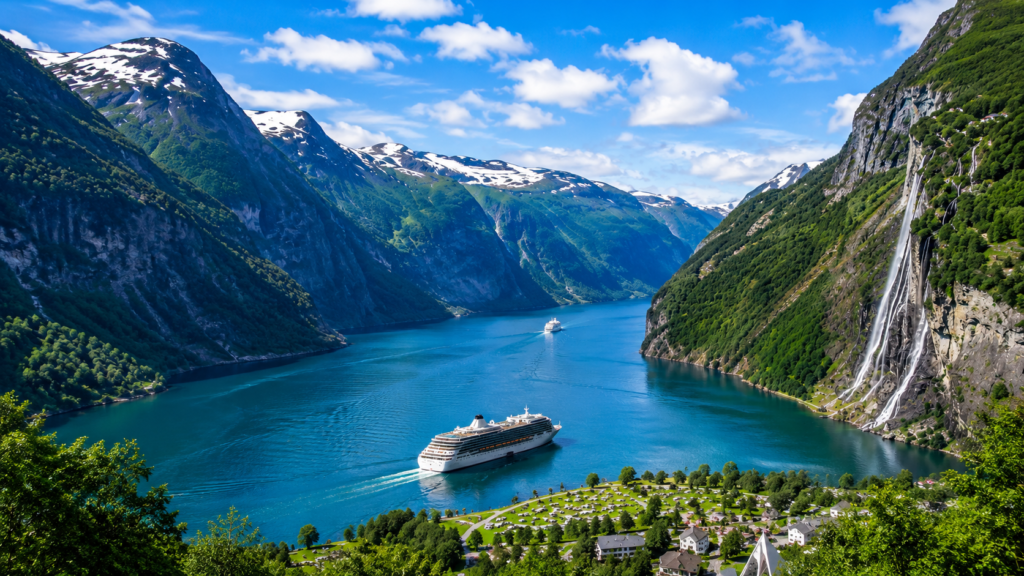
Geirangerfjord is Norway’s most famous fjord and one of the country’s most spectacular natural wonders. Recognized as a UNESCO World Heritage Site, it attracts visitors from around the world with its steep mountain walls, emerald waters, and dramatic waterfalls.
Cruising through the fjord is the best way to experience its breathtaking scenery. Massive cliffs rise almost vertically from the water while famous waterfalls such as the Seven Sisters, Suitor, and Bridal Veil cascade down the mountainsides. During summer, cruise ships, ferries, and sightseeing boats allow travelers to admire the landscape from different perspectives.
Several viewpoints provide unforgettable panoramic views. Ørnesvingen (Eagle Road) offers one of the most iconic photo spots, while Dalsnibba Skywalk provides sweeping vistas from over 1,400 meters above sea level. Hiking trails around the fjord reward adventurous visitors with peaceful scenery away from the crowds.
The surrounding village of Geiranger offers cozy hotels, traditional restaurants, museums, and outdoor activities including kayaking and guided mountain hikes, making it an excellent base for exploring western Norway.
2. Oslo
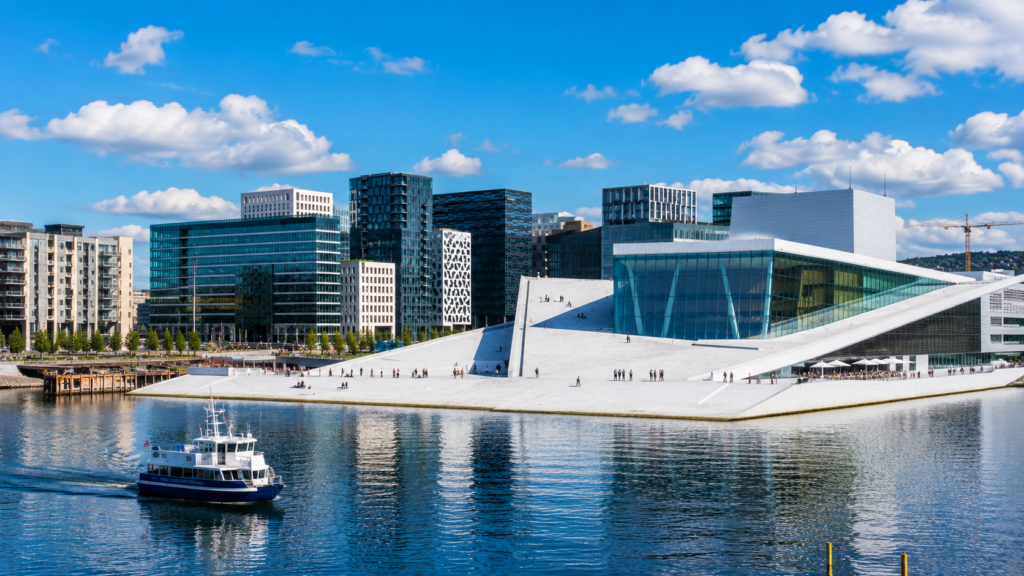
Norway’s capital perfectly combines modern Scandinavian design with rich history and easy access to nature. Oslo has become one of Europe’s most attractive city destinations thanks to its museums, architecture, waterfront developments, and vibrant food scene.
The Oslo Opera House is one of the city’s most recognizable landmarks. Visitors can walk directly onto its sloping marble roof for panoramic views across the Oslofjord. Nearby, the modern MUNCH Museum showcases the works of Edvard Munch, including multiple versions of The Scream.
History lovers should explore Akershus Fortress, the Royal Palace, and the Norwegian Folk Museum, while art enthusiasts will enjoy the Vigeland Sculpture Park, home to more than 200 sculptures by Gustav Vigeland.
Oslo’s neighborhoods are equally appealing. Aker Brygge and Tjuvholmen offer stylish restaurants, waterfront promenades, galleries, and shopping. Despite being a capital city, Oslo is surrounded by forests, lakes, and hiking trails, allowing visitors to combine urban exploration with outdoor recreation in a single day.
3. Lofoten Islands
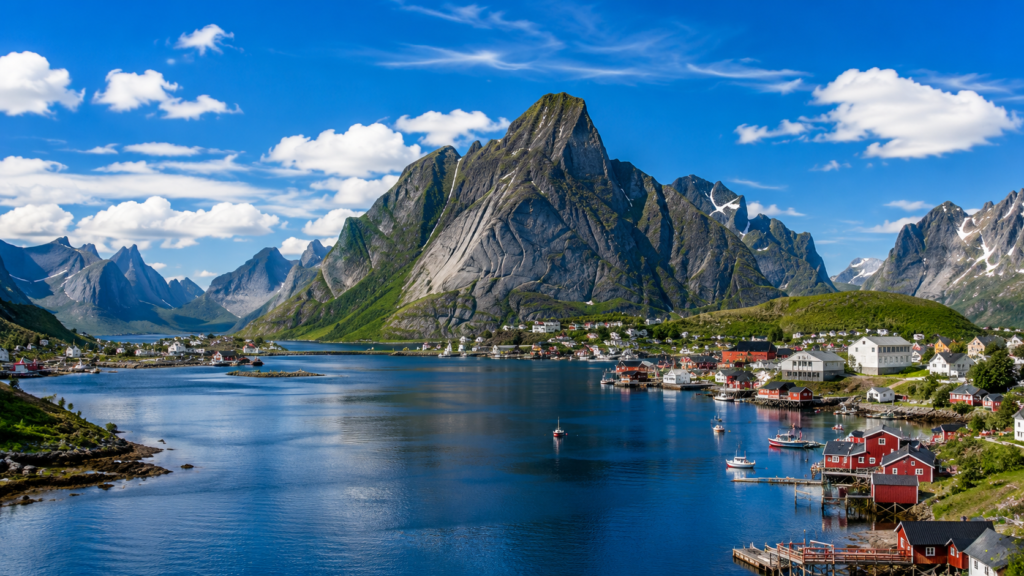
The Lofoten Islands are among the most photogenic destinations in Europe. Located above the Arctic Circle, this island chain features dramatic mountains rising directly from the sea, white-sand beaches, colorful fishing villages, and crystal-clear water.
Villages such as Reine, Hamnøy, and Nusfjord are famous for their traditional red fishermen’s cabins known as rorbuer. Many have been converted into comfortable accommodations while preserving their historic character. Walking through these villages offers a glimpse into Norway’s centuries-old fishing culture.
Outdoor enthusiasts can enjoy hiking, kayaking, whale watching, fishing, and scenic road trips. Popular hikes include Reinebringen, Ryten, and Offersøykammen, all providing unforgettable panoramic views over the islands.
During winter, Lofoten becomes one of Norway’s best places to witness the Northern Lights, while summer offers the magical Midnight Sun, allowing visitors to explore under continuous daylight.
4. Bergen
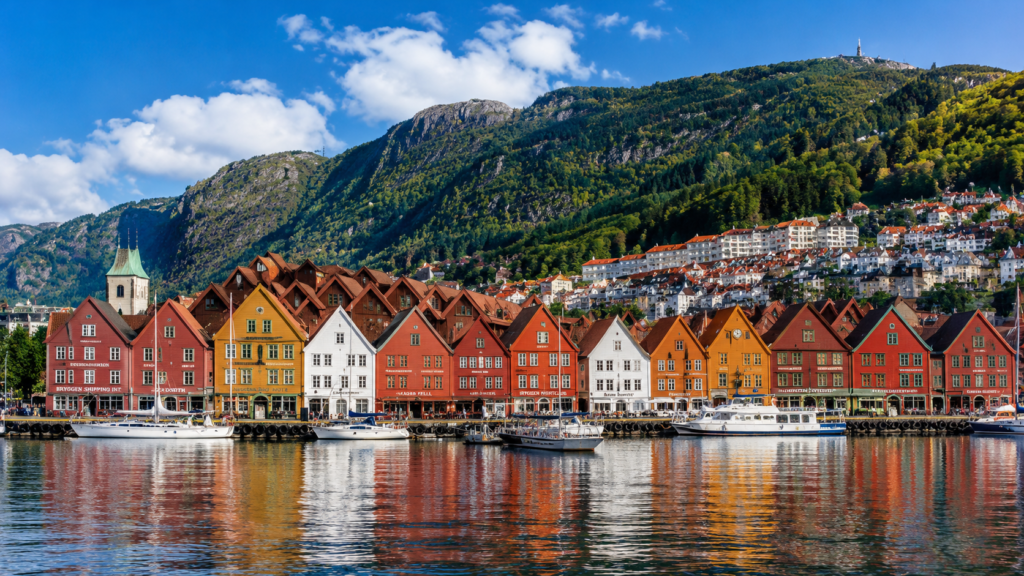
Often called the Gateway to the Fjords, Bergen is Norway’s second-largest city and one of its most charming destinations. Surrounded by mountains and water, Bergen combines colorful historic architecture with a lively cultural atmosphere.
Bryggen Wharf, a UNESCO World Heritage Site, is the city’s most iconic landmark. Its colorful wooden merchant houses date back to the Hanseatic trading era and now house museums, shops, cafés, and artisan workshops.
The Fløibanen Funicular transports visitors to Mount Fløyen within minutes, offering panoramic views over Bergen, nearby islands, and surrounding mountains. Numerous hiking trails begin from the summit, ranging from easy walks to more challenging routes.
Bergen is also famous for its seafood market, where visitors can sample fresh salmon, king crab, shrimp, and traditional Norwegian specialties while experiencing the city’s lively waterfront atmosphere.
5. Trolltunga
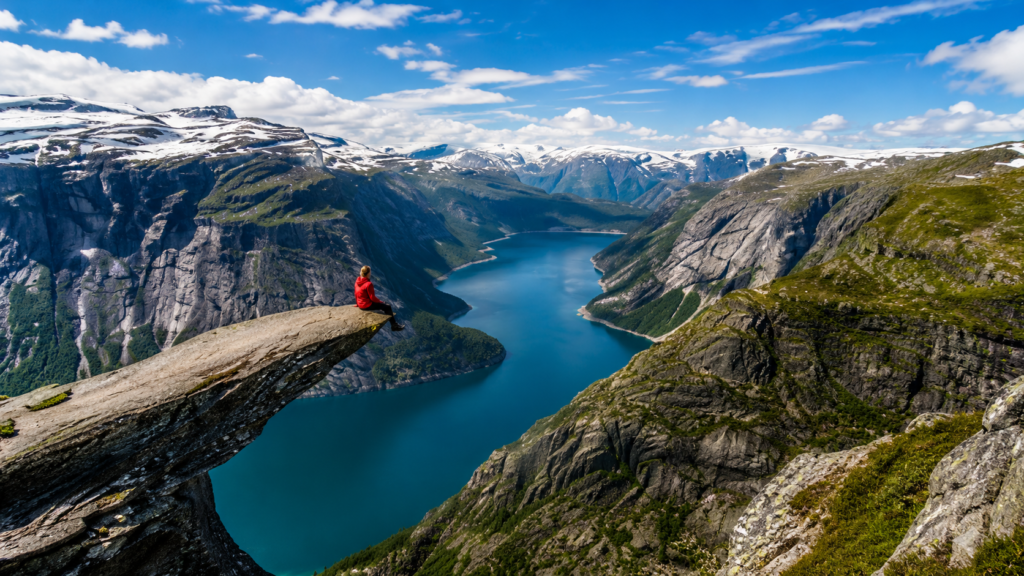
Trolltunga, meaning “The Troll’s Tongue,” is one of Norway’s most iconic hiking destinations. The spectacular rock formation extends horizontally about 700 meters above Lake Ringedalsvatnet, creating one of the most photographed viewpoints in Scandinavia.
The hike is challenging but highly rewarding. Covering approximately 27 kilometers round trip, it requires good physical fitness and proper preparation. Along the route, hikers pass alpine lakes, snow-covered peaks, rocky plateaus, and breathtaking mountain scenery that changes dramatically with the seasons.
Reaching Trolltunga offers an unforgettable sense of achievement. Standing on the narrow rock ledge while overlooking the vast Norwegian wilderness has become a bucket-list experience for outdoor enthusiasts worldwide.
Visitors should always check weather conditions before starting the hike and consider joining a guided tour during early spring or autumn when trail conditions can be more demanding.
6. Tromsø
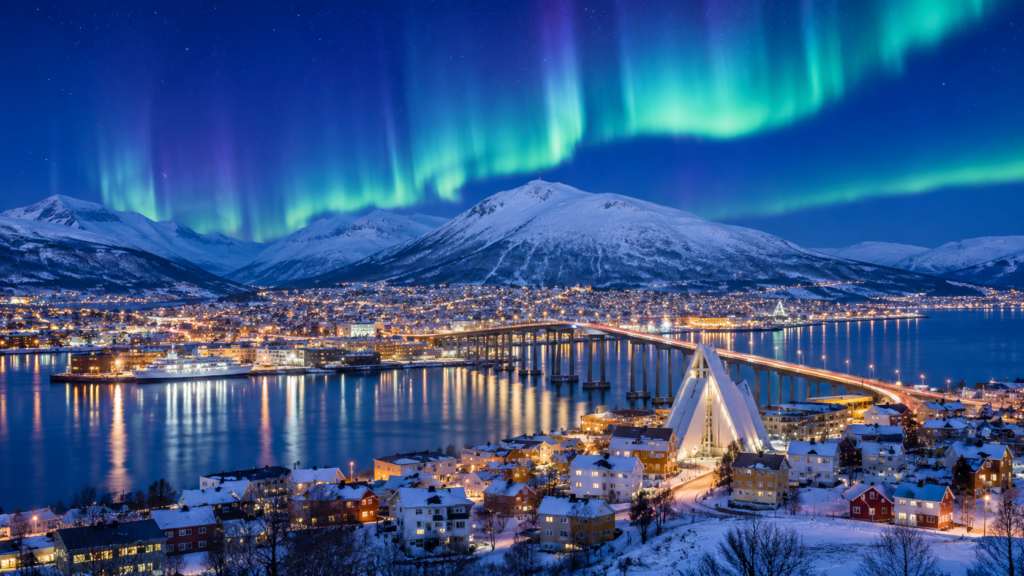
Located over 350 kilometers north of the Arctic Circle, Tromsø is one of the world’s best destinations for experiencing the Northern Lights. Despite its northern location, the city offers excellent infrastructure, vibrant nightlife, and a rich cultural scene throughout the year.
Between September and March, travelers from around the world visit Tromsø hoping to witness the spectacular Aurora Borealis dancing across the Arctic sky. Numerous guided tours take visitors away from city lights to maximize viewing opportunities.
Winter activities include dog sledding, snowmobiling, reindeer sledding, whale watching, and Sami cultural experiences. During summer, visitors can enjoy the Midnight Sun, hiking, fjord cruises, and kayaking beneath endless daylight.
The Arctic Cathedral, Polar Museum, and Fjellheisen Cable Car are among the city’s most popular attractions, offering insight into Arctic history while providing magnificent panoramic views.
7. Ocean Road
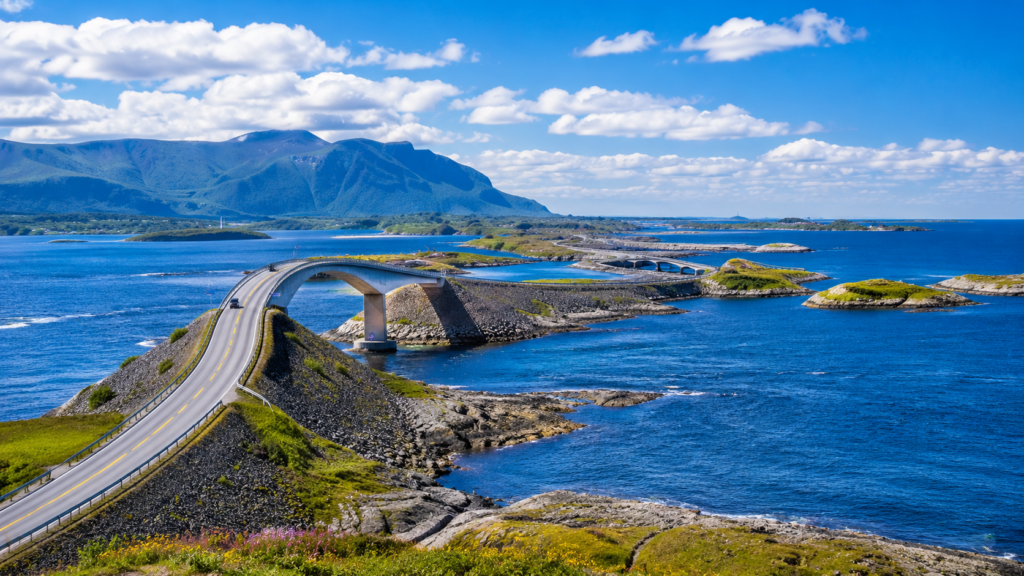
Often ranked among the world’s most scenic drives, the Atlantic Ocean Road stretches across small islands connected by elegant bridges that appear to float above the Norwegian Sea.
Although only about eight kilometers long, the route offers spectacular coastal scenery. Visitors frequently stop at designated viewpoints to photograph crashing waves, dramatic bridges, seabirds, and rugged coastlines.
Driving this route during changing weather conditions provides an entirely different experience each time. Calm summer evenings create peaceful reflections across the water, while winter storms demonstrate the incredible power of the Atlantic Ocean.
Nearby fishing villages, hiking trails, and coastal restaurants make the Atlantic Ocean Road an excellent destination for a full-day road trip through western Norway.
8. Preikestolen (Pulpit Rock)
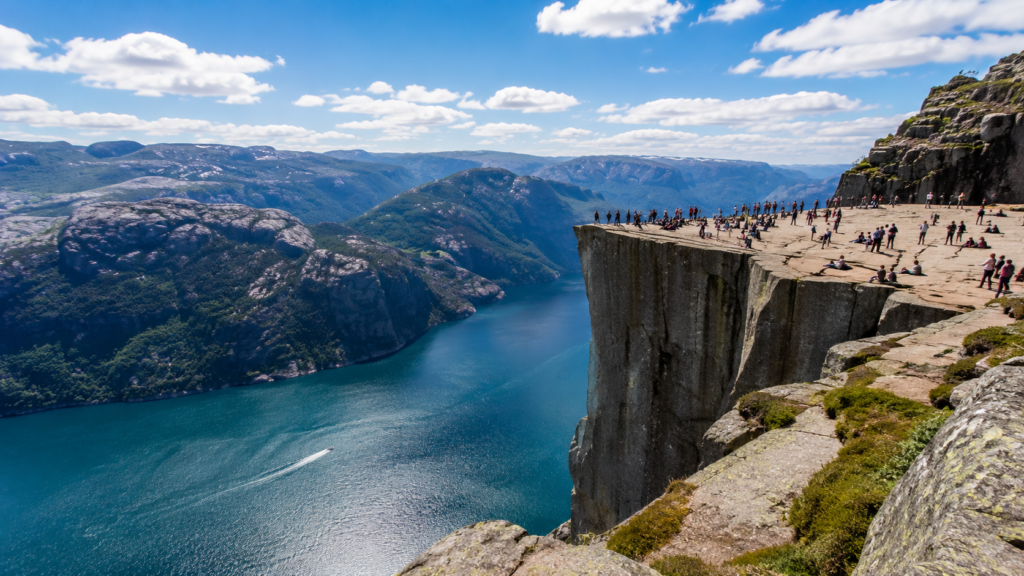
Preikestolen is one of Norway’s most famous natural landmarks. This enormous cliff rises approximately 604 meters above the Lysefjord, creating an almost perfectly flat platform overlooking the surrounding mountains.
The moderately challenging hike attracts hundreds of thousands of visitors each year. The trail passes beautiful forests, rocky terrain, and mountain lakes before reaching the dramatic viewpoint.
Standing on the edge of Preikestolen provides breathtaking panoramic views across the fjord below. The combination of towering cliffs, deep blue water, and endless mountain scenery makes it one of Norway’s most unforgettable experiences.
Early morning hikes are recommended during summer to avoid crowds and enjoy peaceful conditions with softer lighting for photography.
9. Sognefjord
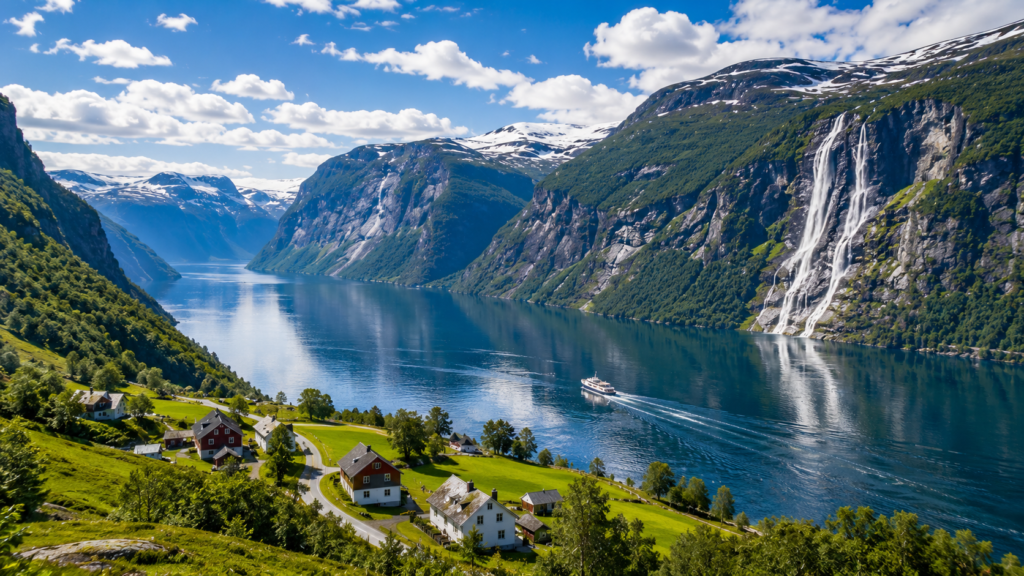
Known as the “King of the Fjords,” Sognefjord is Norway’s longest and deepest fjord, stretching more than 200 kilometers inland from the Atlantic coast.
The fjord is surrounded by picturesque villages, towering mountains, waterfalls, and fertile valleys filled with orchards. Scenic ferry cruises allow visitors to admire the magnificent landscape while traveling between charming communities.
Popular nearby attractions include the Nærøyfjord UNESCO World Heritage Site, Flåm Railway, Stegastein Viewpoint, and numerous glacier hiking opportunities.
Adventure seekers can enjoy kayaking, cycling, hiking, and boat tours, while those seeking relaxation will appreciate the peaceful atmosphere and spectacular scenery throughout the region.
10. Flam Railway (Flåmsbana)
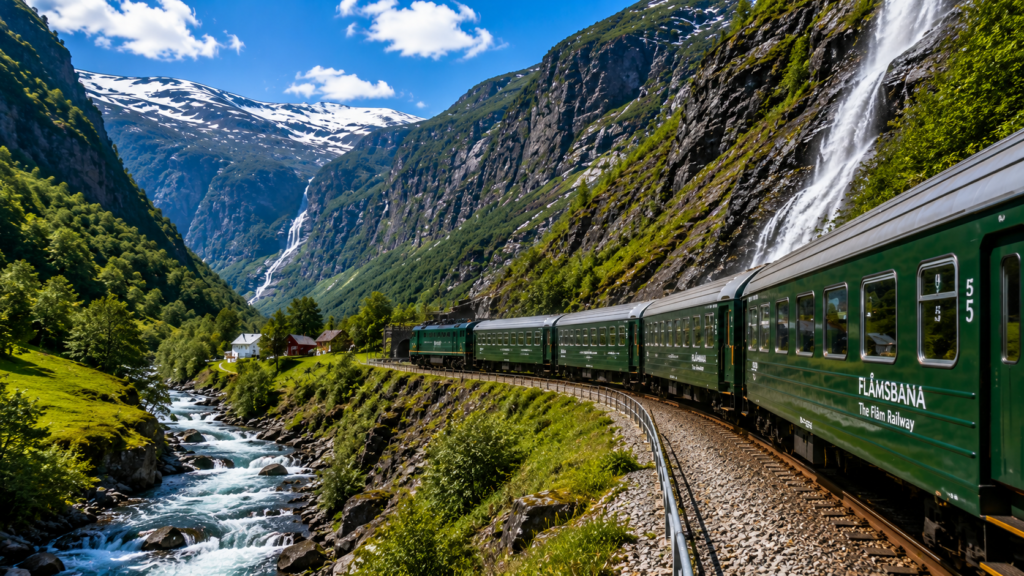
The Flåm Railway is widely considered one of the world’s most beautiful train journeys. Running between Myrdal and the small village of Flåm, the railway descends through steep mountain valleys, waterfalls, tunnels, and picturesque countryside.
During the one-hour journey, passengers witness some of Norway’s most spectacular landscapes. Massive waterfalls, snow-covered peaks, deep ravines, and traditional farms appear outside the train windows almost continuously.
One highlight of the journey is Kjosfossen Waterfall, where the train makes a brief stop, allowing passengers to admire the powerful cascade and capture photographs.
Combining the Flåm Railway with a fjord cruise creates one of Norway’s classic travel experiences and remains a favorite itinerary for first-time visitors.
Best Time to Visit Norway
The ideal time to visit Norway depends on the experiences you seek.
Summer, from June to August, offers mild temperatures, long daylight hours, and excellent conditions for hiking, fjord cruises, scenic road trips, and outdoor adventures. This is also the season of the Midnight Sun in northern Norway.
Autumn, from September to October, brings colorful forests, fewer tourists, and excellent opportunities for photography while the Northern Lights begin to appear in Arctic regions.
Winter transforms Norway into a snowy wonderland. From November through March, visitors can enjoy skiing, snowboarding, dog sledding, snowmobiling, and spectacular Aurora Borealis displays.
Spring offers melting waterfalls, blooming landscapes, and quieter attractions, making it an attractive option for travelers seeking lower crowds while enjoying pleasant weather.
Local Food to Try
Norwegian cuisine emphasizes fresh seafood, locally sourced ingredients, and traditional Nordic recipes.
Popular dishes include smoked salmon, Arctic char, king crab, cod, fish soup, and shrimp harvested from Norway’s clean coastal waters.
Meat lovers should try Fårikål, Norway’s national dish consisting of slow-cooked lamb and cabbage, as well as Kjøttkaker, traditional Norwegian meatballs served with potatoes and gravy.
For dessert, sample Kanelboller (cinnamon buns), Lefse, cloudberries with cream, and locally produced brown cheese known as Brunost, one of Norway’s most distinctive culinary specialties.
Transportation
Norway has one of Europe’s most efficient transportation systems.
Domestic flights connect major cities and northern destinations quickly, while the country’s extensive railway network offers scenic journeys between Oslo, Bergen, Trondheim, and other regions.
Rental cars provide the greatest flexibility for exploring fjords, mountain roads, and remote villages. Norway’s highways are well maintained, although many scenic routes include tunnels, bridges, and ferry crossings.
Public ferries are an essential part of traveling through western Norway, connecting islands and fjord communities while offering spectacular sightseeing opportunities.
For visitors remaining within cities, buses, trams, ferries, and metro systems provide reliable and environmentally friendly transportation options.
Accommodation
Norway offers a wide variety of accommodation options suitable for every budget and travel style. Whether you’re looking for luxury hotels in major cities, traditional mountain lodges, cozy cabins, or unique Arctic experiences, you’ll find comfortable places to stay throughout the country.
Luxury travelers will enjoy five-star hotels in Oslo, Bergen, and Tromsø, many featuring modern Scandinavian design, spa facilities, fine dining, and stunning waterfront views. International hotel chains operate alongside elegant boutique hotels that provide personalized service and easy access to major attractions.
Mid-range travelers can choose from comfortable city hotels, guesthouses, apartments, and family-run inns that offer excellent value. Many accommodations include breakfast, making it easier to start the day before heading out to explore.
For visitors seeking memorable experiences, Norway offers traditional rorbuer (converted fishermen’s cabins) in the Lofoten Islands, mountain lodges near hiking trails, glass igloos for viewing the Northern Lights, and countryside cabins surrounded by forests and lakes. Booking accommodations several months in advance is highly recommended during the busy summer season and throughout the Northern Lights period.
Practical Travel Tips
Before traveling to Norway, it’s helpful to prepare for the country’s climate, transportation system, and outdoor lifestyle.
The official currency is the Norwegian Krone (NOK). Credit and debit cards are accepted almost everywhere, including restaurants, public transportation, museums, and small shops. Many businesses operate almost entirely cash-free.
English is widely spoken, making communication easy for international visitors. Although learning a few basic Norwegian phrases is appreciated, most locals communicate fluently in English.
Weather conditions can change rapidly, especially in mountainous regions. Travelers should always carry waterproof clothing, warm layers, and comfortable hiking shoes regardless of the season.
Outdoor activities are an essential part of Norwegian culture. Respect marked hiking trails, follow local safety advice, and check weather forecasts before beginning mountain hikes or fjord excursions.
Norway has one of the world’s highest costs of living. Planning your budget in advance, booking accommodations early, and purchasing transportation tickets ahead of time can significantly reduce travel expenses.
For official travel information, attractions, regional guides, and itinerary planning, visit: https://www.visitnorway.com
Frequently Asked Questions
Is Norway expensive to visit?
Yes. Norway is one of Europe’s more expensive destinations, but careful planning, early bookings, and public transportation can help travelers manage costs effectively.
When is the best time to see the Northern Lights?
The best period is from late September through March, especially in Tromsø, Alta, Senja, and the Lofoten Islands where dark Arctic skies provide ideal viewing conditions.
Do I need a car in Norway?
Not necessarily. Major cities are well connected by trains, buses, ferries, and domestic flights. However, renting a car provides greater flexibility for exploring fjords, scenic mountain roads, and remote villages.
Is Norway safe for tourists?
Yes. Norway consistently ranks among the safest countries in the world. Crime rates are low, public transportation is reliable, and outdoor recreation is well organized. Standard travel precautions are generally sufficient.
How many days should I spend in Norway?
A minimum of seven to ten days is recommended for first-time visitors. Two weeks allows travelers to experience Oslo, Bergen, the fjords, Lofoten, and northern Norway at a more relaxed pace.
Final Thoughts
Norway is a destination where breathtaking natural landscapes meet modern Scandinavian culture. From magnificent UNESCO-listed fjords and dramatic mountain peaks to vibrant cities and peaceful fishing villages, every region offers unforgettable experiences throughout the year.
Whether you’re cruising through Geirangerfjord, hiking to Trolltunga, riding the famous Flåm Railway, exploring colorful Bergen, or watching the Northern Lights above the Arctic Circle, Norway rewards travelers with spectacular scenery and remarkable adventures.
If you’re planning a Nordic vacation in 2026, Norway deserves a place at the top of your travel list. With excellent infrastructure, welcoming locals, and countless opportunities for outdoor exploration, it’s a country that leaves lasting memories long after your journey ends.