
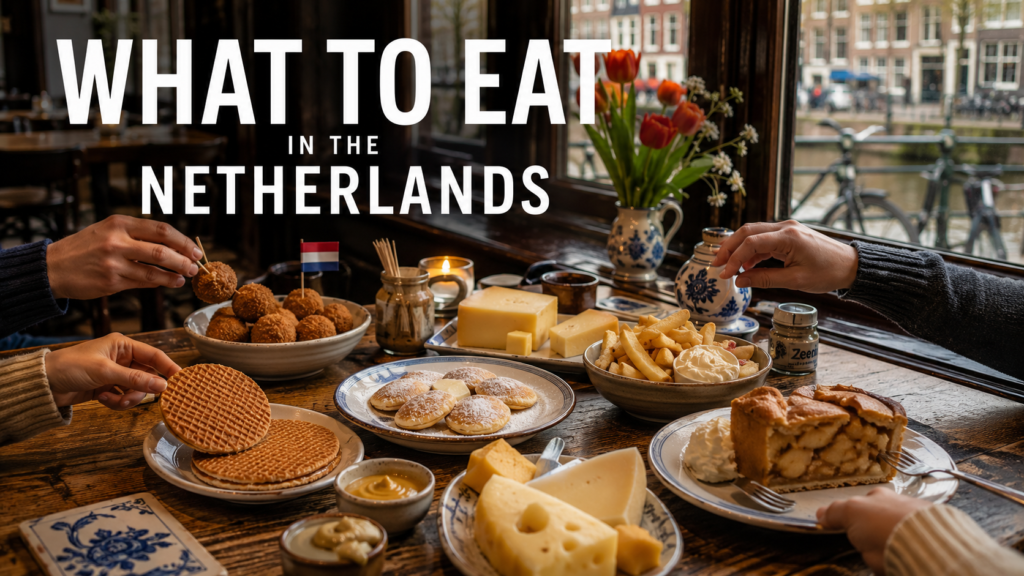
For many first-time visitors, Dutch food is not the main reason for planning a trip to the Netherlands.
The country is far better known for Amsterdam’s canals, cycling culture, tulip fields, and historic windmills than for its national cuisine.
That reputation, however, is only part of the story.
Dutch food reflects a practical way of life shaped by agriculture, fishing, dairy farming, and centuries of maritime trade. Many traditional dishes are simple rather than elaborate, focusing on quality local ingredients instead of complex preparation.
Some foods are perfect for a quick snack while exploring city streets. Others are comforting meals traditionally enjoyed during the colder months. A few are specialties that visitors often hesitate to try until they discover they have become local favorites for generations.
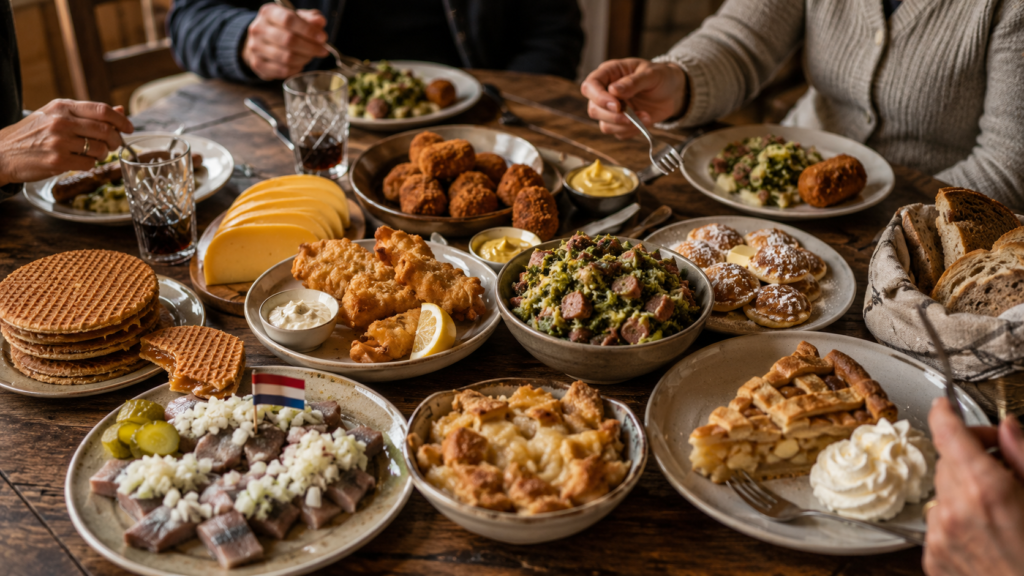
This guide introduces fifteen traditional Dutch foods worth trying during your trip, explains where you are most likely to find them, and highlights regional specialties that make eating your way across the Netherlands surprisingly rewarding.
Dutch Food Is More Than Cheese and Stroopwafels
Many travelers arrive expecting Dutch cuisine to consist mainly of cheese and stroopwafels.
While both deserve their popularity, they represent only a small part of what locals actually eat.
Neighborhood cafés, bakeries, fish stands, weekend markets, and traditional snack bars all offer foods that rarely appear on international restaurant menus.
The Netherlands also has strong regional food traditions.
Coastal towns naturally specialize in seafood, southern cities are known for distinctive pastries, while colder northern regions have long favored hearty soups and filling comfort foods.
The easiest way to experience Dutch cuisine is not by booking expensive restaurants.
Instead, combine market snacks, local cafés, bakeries, and a few traditional restaurants throughout your trip.
1. Stroopwafel
No list of Dutch food is complete without stroopwafels.
This traditional treat consists of two thin waffle layers held together by a rich caramel syrup filling. Fresh stroopwafels are soft, slightly chewy, and noticeably different from the packaged versions found in supermarkets around the world.
Markets in Amsterdam, Rotterdam, Utrecht, and many other Dutch cities are among the best places to try one freshly made.
2. Bitterballen
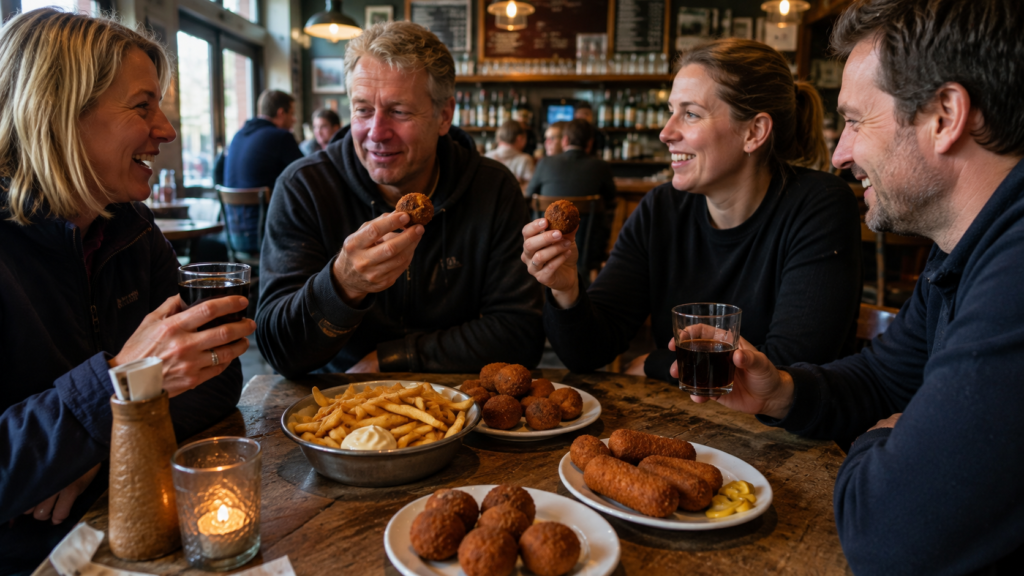
Bitterballen are one of the Netherlands’ most popular savory snacks.
Each small ball has a crispy breadcrumb coating surrounding a creamy beef ragout filling. They are typically served hot with mustard for dipping.
Locals often enjoy bitterballen while relaxing at cafés or neighborhood bars, making them one of the easiest traditional foods for visitors to experience.
3. Poffertjes
Poffertjes are small, fluffy Dutch pancakes made from yeast and buckwheat flour.
They are traditionally served warm with butter and a generous dusting of powdered sugar, although some cafés also offer fruit, chocolate, or syrup.
You will often find poffertjes at street markets, seasonal festivals, and pancake restaurants throughout the country.
4. Dutch Cheese
The Netherlands has earned an international reputation for cheese production.
Gouda and Edam are the most recognizable varieties, but many local producers create aged cheeses with richer flavors that rarely leave the country.
Cheese markets in places such as Alkmaar, Gouda, and Edam provide visitors with an opportunity to sample different styles while learning about one of the Netherlands’ oldest food traditions.
5. Haring
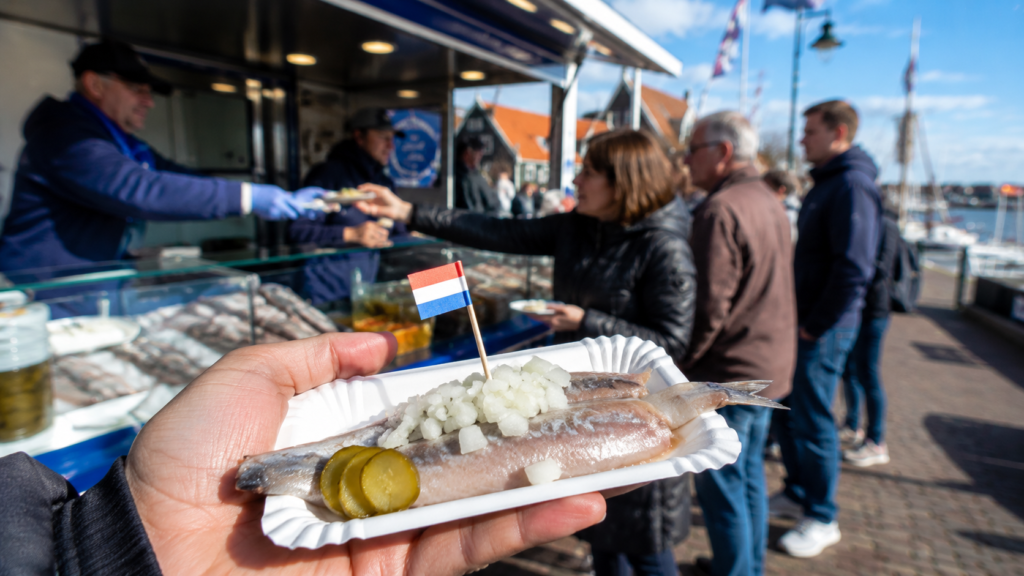
Trying raw herring is often considered a rite of passage for adventurous visitors.
Known simply as haring, the fish is usually served with chopped onions and pickles.
Some locals eat it by holding the fish by the tail, while others prefer it sliced into smaller pieces.
Fresh fish stands in Amsterdam, Rotterdam, and other coastal cities are the best places to experience this uniquely Dutch specialty.
6. Kibbeling
Even travelers who are unsure about raw herring often enjoy kibbeling.
These bite-sized pieces of white fish are lightly battered, deep fried until golden, and commonly served with garlic or tartar sauce.
Fresh kibbeling is widely available from seafood stalls near harbors and local markets, making it an easy snack while exploring Dutch cities.
7. Erwtensoep
Erwtensoep, often called Dutch pea soup, is one of the country’s classic winter dishes.
Made with split peas, vegetables, and smoked sausage, it is thick enough that locals sometimes joke a spoon should stand upright in the bowl.
Although mainly associated with colder weather, it remains one of the most traditional comfort foods in Dutch cuisine.
8. Stamppot
Stamppot is a hearty meal created by mashing potatoes together with vegetables such as kale, carrots, or sauerkraut.
It is usually served alongside smoked sausage or other meats.
The dish reflects the practical, filling style of traditional Dutch home cooking rather than restaurant cuisine.
9. Patat met Mayonaise
French fries hold a special place in Dutch street food culture.
Rather than ketchup, locals often prefer serving fries with creamy Dutch mayonnaise.
Many snack bars also offer additional sauces and toppings, making this one of the country’s most popular quick meals.
Freshly cooked fries from independent snack stands are often considered better than international fast-food chains.
10. Kroket
The Dutch kroket shares similarities with bitterballen but comes in a larger cylindrical shape.
Filled with meat ragout and coated in breadcrumbs before frying, it is commonly eaten as a snack or inside a bread roll known as a broodje kroket.
You will find kroketten almost everywhere, from cafés to railway stations and traditional snack bars.
11. Oliebollen
Oliebollen are deep-fried dough balls traditionally enjoyed during the New Year season.
Often compared with doughnuts, they are usually dusted with powdered sugar and may contain raisins or currants.
If you visit during winter, temporary oliebollen stalls become a familiar sight throughout Dutch towns and cities.
12. Appeltaart
Dutch apple pie differs noticeably from many other versions around the world.
It features a thick buttery crust filled with generous pieces of apple, cinnamon, and sometimes raisins.
Served with whipped cream alongside coffee, appeltaart is one of the country’s favorite café desserts.
13. Bossche Bol
The Bossche Bol comes from the southern city of ‘s-Hertogenbosch.
It consists of a large cream-filled pastry covered entirely in rich dark chocolate.
Although available elsewhere, trying one in its hometown remains the classic experience.
14. Uitsmijter
Uitsmijter is a simple open-faced meal commonly eaten for breakfast or lunch.
Slices of bread are topped with ham, cheese, and one or more fried eggs.
Its simplicity reflects the practical style of everyday Dutch cooking and makes it an easy option in cafés across the country.
15. Hagelslag
Many visitors are surprised to discover that chocolate sprinkles are considered a perfectly normal breakfast in the Netherlands.
Known as hagelslag, they are scattered generously over buttered bread and enjoyed by both children and adults.
Although simple, this everyday breakfast tradition is one of the country’s most recognizable food habits.
What Should You Eat in Different Parts of the Netherlands?
One of the best ways to experience Dutch cuisine is to let your itinerary influence what you eat.
Amsterdam is an excellent place to try stroopwafels, bitterballen, poffertjes, and traditional Dutch apple pie, thanks to its wide variety of cafés, bakeries, and food markets.
If your journey includes the western coast, look for fresh seafood such as haring and kibbeling, both of which are closely connected with the country’s long maritime tradition.
Alkmaar, Gouda, and Edam are well known for their cheese markets, making them ideal destinations for tasting different varieties of authentic Dutch cheese while learning about local production.
Travel south to ‘s-Hertogenbosch and you should not miss the famous Bossche Bol, one of the Netherlands’ best-loved pastries.
During winter, nearly every city and town offers oliebollen from seasonal street stalls, while colder months are also the best time to enjoy hearty dishes such as erwtensoep and stamppot.
Rather than trying to find every dish in Amsterdam, allow each destination to introduce its own local specialties.
Dutch Dining Tips for First-Time Visitors
Dutch restaurants are generally more relaxed than visitors sometimes expect.
Lunch is often lighter than in southern Europe, with sandwiches, soups, or simple café meals remaining popular among locals.
Dinner usually begins earlier than in countries such as Spain or Italy, and many kitchens close earlier in the evening than first-time visitors anticipate.
Reservations are recommended for popular restaurants, particularly on weekends in Amsterdam and Rotterdam.
When visiting local cafés or markets, don’t hesitate to try freshly prepared snacks instead of looking only for full restaurant meals.
Some of the most memorable Dutch food experiences come from neighborhood bakeries, fish stands, cheese shops, and traditional snack bars rather than expensive dining establishments.
Finally, remember that Dutch cuisine celebrates simplicity.
Fresh ingredients, generous portions, and practical everyday cooking are often more important than elaborate presentation.
Final Thoughts
Dutch food may not enjoy the same international reputation as the cuisines of France, Italy, or Spain, but that is exactly why many visitors are pleasantly surprised.
From freshly made stroopwafels and crispy bitterballen to raw herring, creamy cheeses, hearty winter stews, and traditional pastries, the Netherlands offers far more variety than many travelers expect before arriving.
The best approach is not to treat Dutch food as a checklist.
Instead, allow your itinerary, the seasons, and the places you visit to shape what you eat along the way.
Stop at a local market, order something you’ve never heard of, spend an afternoon in a neighborhood café, and don’t be afraid to try a regional specialty simply because it looks unfamiliar.
Those small discoveries often become some of the most memorable parts of traveling through the Netherlands.