
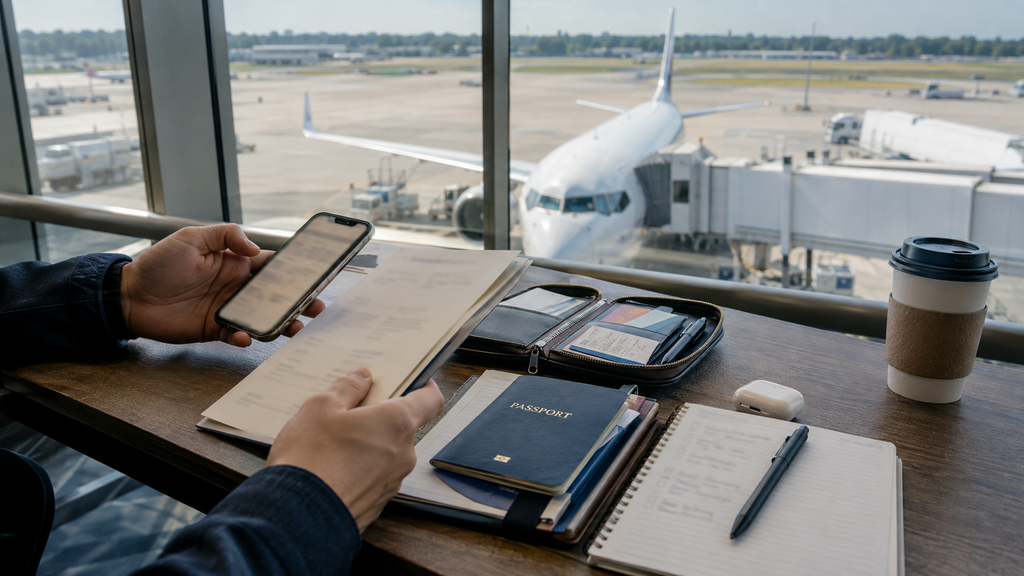
Planning a trip to Singapore is usually straightforward.
Flights are easy to find from many major cities. Changi Airport is one of the best-connected airports in Asia. Once you arrive, the MRT makes getting around surprisingly simple.
The part that can become confusing is what happens before the flight.
Do I need a visa?
Is the SG Arrival Card the same thing as a visa?
How long should my passport be valid?
Can I apply for a Singapore visa myself?
How early should I apply?
And if I already have a visa, does that automatically mean I can enter Singapore?
These questions sound simple, but Singapore’s entry system becomes much easier to understand once you separate three different things:
- Your passport and basic entry requirements.
- A Singapore entry visa, if your nationality or travel document requires one.
- The SG Arrival Card that travelers may need to submit before arrival.
They are not interchangeable.
For my own trip, this is exactly how I would approach the process: first check whether my passport requires a visa, prepare the visa application if necessary, then deal with the SG Arrival Card shortly before departure.
Here is how the process works.
First: A Singapore Visa and Permission to Enter Are Not the Same Thing
This is probably the most important thing to understand before applying.
A Singapore entry visa allows a visa-required traveler to travel to Singapore and seek entry.
It does not guarantee admission.
The final decision is made during immigration clearance when you arrive.
This distinction is easy to miss because travelers often think of a visa as permission to stay in a country for a fixed number of days.
Singapore treats the concepts separately.
Your visa may have its own validity period.
Your actual permitted stay is determined when you enter Singapore.
So do not look at the expiry date of a visa and assume that it automatically tells you how long you can remain in the country.
Step 1: Check Whether You Actually Need a Singapore Visa
Do this before preparing documents.
Singapore does not require every visitor to obtain an entry visa before traveling.
Whether you need one depends primarily on the passport or travel document you hold.
Singapore’s Immigration & Checkpoints Authority maintains an official list of travel documents that require an entry visa.
That should be your starting point.
Do not rely on a five-year-old blog post.
Do not rely on a screenshot someone uploaded to a Facebook group.
Do not assume the rules that applied to your friend also apply to you.
Visa policies can change.
Check your own passport against the current official Singapore requirements.
If your travel document is on Singapore’s visa-required list, you will need to obtain the appropriate entry visa before traveling unless a specific exemption or transit arrangement applies to your circumstances.
If your travel document is not on the list, that does not mean you can arrive without thinking about anything else.
You still need to satisfy Singapore’s general entry requirements.
Passport Validity Matters
Before worrying about application forms, look at your passport.
For short-term foreign visitors, Singapore generally requires a passport or travel document with at least six months of validity.
I would check this early.
Not the night before the flight.
If your passport is approaching the six-month threshold, deal with the issue before booking non-refundable parts of the trip.
A visa application cannot compensate for an unsuitable travel document.
Your passport is the foundation of the entire journey.
Your Passport Should Be in Good Condition
Validity is not the only thing I would think about.
A damaged passport can create unnecessary problems during international travel.
Check the biodata page.
Check whether the passport has significant water damage, tears or other serious physical problems.
Make sure the personal information is correct.
If you recently renewed your passport, make sure bookings and visa documents use the correct passport details.
A surprisingly large number of travel problems begin with tiny inconsistencies.
Step 2: Understand Which Visa Category Applies to You
For ordinary tourism, the relevant process is generally an entry visa for a social visit.
Business visitors may have different supporting circumstances.
This article focuses primarily on short visits such as tourism and similar temporary travel.
If you intend to work, study, move to Singapore, join family for a long-term stay or undertake another activity requiring a specific immigration pass, a normal short-term entry visa is not the entire process.
That distinction is important.
A tourist visa is not permission to work.
A short visit is not the same thing as residency.
If your purpose goes beyond tourism or a normal short business/social visit, check the specific Singapore immigration or work-pass rules that apply to your situation.
Step 3: Prepare the Visa Application Documents
The exact supporting documents can vary depending on the travel document you hold and your individual circumstances.
For visa-required applicants, Singapore commonly asks for core documents such as a completed visa application form, a recent passport-sized color photograph and a copy of the passport biodata page.
Depending on the application route and nationality, a Letter of Introduction may also be relevant.
Additional supporting documents can be requested.
This is why I would never prepare a Singapore visa application using a generic checklist from another country.
Open the official Singapore visa information for your specific travel document and follow that checklist.
Form 14A
One document visa applicants are likely to encounter is Form 14A.
This is the visa application form used for relevant entry visa applications.
The information you provide needs to be accurate.
That sounds obvious, but this is not the place to guess.
Check passport numbers carefully.
Check your name.
Check dates.
Check nationality.
Check your intended travel information.
If a question does not make sense, find the official guidance rather than inventing an answer.
A visa application is administrative paperwork.
Accuracy matters more than speed.
Your Passport Photograph
Singapore also specifies requirements for visa photographs.
Use a recent photograph that meets the current official specifications.
Do not assume that any old passport-style photo sitting on your computer will work.
Photo requirements exist because the image is part of an immigration process, not a social-media profile.
If you are using a professional photo service, tell them the photograph is for a Singapore visa application and verify the current ICA specifications yourself.
Passport Biodata Page
You will generally need a copy of the biodata page of your passport or travel document.
Make sure the copy is clear.
The photograph, passport number, name, nationality, date of birth and other details should be readable.
Again, check that the passport will satisfy Singapore’s validity requirements for the planned trip.
What Is Form V39A?
Some visa applicants will also encounter Form V39A, the Letter of Introduction for Visa Application.
This is one of the parts of the process that can confuse first-time applicants.
Depending on the relevant visa requirements, the Letter of Introduction may be issued by an eligible local contact in Singapore.
The requirements for the local contact are specific, so do not simply ask any acquaintance in Singapore to sign something without checking whether they qualify.
If you cannot obtain an appropriate Letter of Introduction from a local contact, other arrangements may apply depending on the application and Singapore mission involved.
This is an area where I would follow the instructions for my specific nationality rather than generalizing.
What If I Do Not Know Anyone in Singapore?
Not knowing someone in Singapore does not necessarily mean you cannot apply.
Applicants without an appropriate local contact may be able to submit through an authorized visa agent appointed by a Singapore Overseas Mission or through the relevant Singapore Overseas Mission, depending on the applicable procedure.
This is important because Singapore’s application process is not always the same as countries where every tourist simply creates an online account and submits everything independently.
Your application route can depend on your circumstances.
Find the Singapore Overseas Mission responsible for your location and check its current instructions.
Do Not Send a Visa Application to an Immigration Counter in Singapore
A tourist should not plan to arrive in Singapore first and then solve the visa requirement at an immigration counter.
If you require an entry visa, deal with it before traveling.
Singapore’s immigration authority does not treat the airport immigration counter as a visa application office.
This sounds obvious, but it is worth emphasizing.
Visa-required means before travel.
Applying Through a Local Contact
Where applicable, an eligible local contact in Singapore may be able to submit the visa application electronically.
There are requirements governing who can act as the local contact.
For social visits, this generally involves an eligible Singapore citizen or permanent resident meeting the applicable conditions.
Business applications can involve different requirements related to a Singapore-registered business.
If you have a genuine eligible contact, this route can be convenient.
But do not invent a local contact.
Do not pay an unknown person online to pretend to know you.
Immigration paperwork is not an area where creative shortcuts are worth the risk.
Applying Through an Authorized Visa Agent
For many international travelers who require visas and do not have a suitable local contact, an authorized visa agent may be the practical route.
The important word is authorized.
Search for the Singapore Overseas Mission responsible for your country or region and use the agent information provided through official channels.
Do not assume the first website appearing in a search result is an official Singapore visa service.
Visa-related search results attract third-party services, and some charge considerably more than the underlying government fee.
Some may be legitimate service companies.
Others may not be something I would trust with my passport details.
Start with Singapore’s official sources and work outward from there.
Applying Through a Singapore Overseas Mission
Depending on your location and circumstances, an application may also be handled through the nearest appropriate Singapore Overseas Mission.
Procedures can vary by mission.
This is why a single global step-by-step guide cannot replace the instructions for your country.
The core immigration rules come from Singapore.
The practical submission method may be explained by the embassy, high commission or consulate responsible for where you are applying.
Check both.
How Early Should You Apply?
I would not apply six months before a normal short trip unless the official procedure specifically required that timing.
Singapore advises relevant visa applicants to apply relatively close to their intended arrival.
For visa categories where ICA advises applying within 30 days before arrival, that gives you a useful planning window.
At the same time, I would not leave the application until the last possible moment.
Flights get expensive.
Documents can be missing.
An application can require additional review.
Public holidays can interrupt working days.
If you know you require a visa, prepare your documents in advance so you are ready when the appropriate application window arrives.
How Long Does a Singapore Visa Take?
Singapore’s official processing information for many standard entry visa applications indicates processing within several working days, excluding the day of submission.
But that is not a guarantee that every application will be completed in exactly the same amount of time.
Some cases take longer.
Additional documents may be requested.
Individual circumstances differ.
An authorized agent or overseas mission may also have its own administrative handling time around the government processing period.
This is why I would never book my entire trip around the assumption that a visa must appear exactly three days after submission.
Treat the standard processing time as guidance, not a promise.
Singapore Visa Fee
Singapore charges a non-refundable processing fee for relevant entry visa applications.
The government fee is separate from any additional service or administrative fee that an authorized visa agent or overseas mission may charge.
That distinction matters.
You may see a total price significantly higher than the official visa processing fee and wonder why.
Ask what the amount includes.
Government processing fee.
Agent service fee.
Document handling.
Other legitimate administrative costs where applicable.
Know what you are paying for.
And remember that a processing fee is normally not refunded simply because an application is unsuccessful.
Do Not Choose an Agent Only Because It Is Cheapest
Visa applications involve sensitive personal information.
Your full name.
Passport.
Date of birth.
Travel details.
Possibly financial or employment documents depending on what is requested.
I would rather use an authorized and verifiable application channel than save a small amount of money by sending all of that information to an unknown website.
Start from the Singapore government’s official information.
If it directs applicants in your country to particular authorized agents, use that information.
Additional Documents May Be Requested
One reason generic visa checklists can be misleading is that immigration authorities can request additional supporting information.
Your basic application may be complete and still require more documentation.
That does not automatically mean something is wrong.
Applications are assessed individually.
If additional information is requested, respond accurately and through the proper channel.
Do not alter documents.
Do not submit fabricated hotel reservations.
Do not create fake employment letters.
Do not manipulate bank documents.
A visa is not worth creating a much larger immigration problem.
Should I Book Flights Before the Visa Is Approved?
This is one of those questions without a perfect universal answer.
Some applications or agents may ask for travel-related information.
At the same time, buying expensive non-refundable travel arrangements before knowing whether you can travel creates financial risk.
My approach is conservative.
Where possible, I prefer flexible or refundable arrangements until important immigration requirements are settled.
If a specific visa checklist asks for flight or accommodation documentation, follow the actual requirement.
But do not spend thousands simply because you think a visa officer will be more impressed by a non-refundable booking.
Accommodation Details Should Make Sense
Whether or not hotel confirmation is specifically requested for your application, you should know where you plan to stay.
Singapore immigration may ask visitors about their trip.
Having a real itinerary makes answering simple.
Hotel name.
Address.
Length of stay.
Return or onward travel plans.
You do not need to memorize a twenty-page itinerary.
You should understand your own trip.
A Visa Is Not the SG Arrival Card
This causes enough confusion that it deserves a separate section.
The SG Arrival Card is not a Singapore visa.
Submitting an SG Arrival Card does not replace a visa if your passport requires one.
And obtaining a visa does not automatically remove your SG Arrival Card obligation if the arrival-card requirement applies to you.
Think of them as separate stages.
Visa:
Permission for a visa-required traveler to travel to Singapore and seek entry.
SG Arrival Card:
Pre-arrival information submitted to Singapore before entering, subject to the current rules and exemptions.
Do not confuse the two.
When Do I Submit the SG Arrival Card?
For travelers required to submit it, the SG Arrival Card is completed shortly before arrival rather than weeks in advance.
Singapore currently allows submission within the three days before arrival, including the day of arrival.
That timing is useful.
Do not try to complete it months before the trip.
I would set myself a reminder a couple of days before the flight.
Complete it.
Double-check the details.
Then forget about it and pack.
The SG Arrival Card Is Free
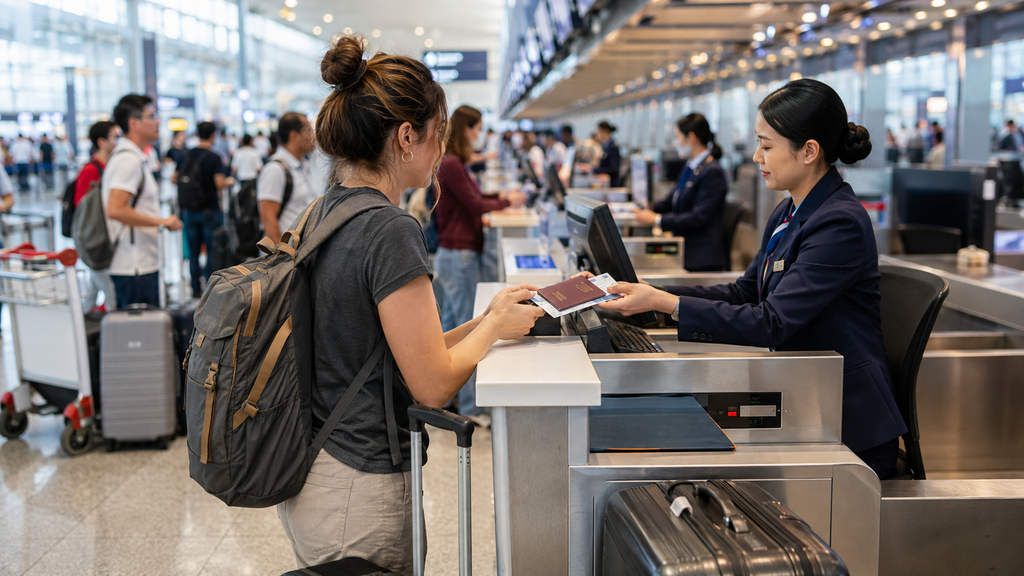
This is extremely important.
The official SG Arrival Card submission itself is free.
There are commercial websites that offer to submit arrival-card information on behalf of travelers and charge a fee.
That can make people believe Singapore charges for the card.
Use Singapore’s official ICA channel or official mobile application.
If a website is asking you to pay simply to submit the SG Arrival Card, stop and check where you are.
You may be using a commercial intermediary rather than the official government service.
Be Careful With Google Search Results
This advice applies to visas everywhere.
Typing something like “Singapore Arrival Card” into a search engine can produce advertisements and third-party services alongside official information.
The website may look professional.
It may use Singapore-related imagery.
It may have a form that looks governmental.
That does not make it an official government website.
When dealing with immigration, I prefer navigating directly to the official Singapore immigration authority.
A few extra seconds checking the domain can save money and protect personal information.
Who Is Exempt From the SG Arrival Card?
There are exemptions to the SG Arrival Card requirement.
For example, travelers who are only transiting through Singapore without seeking immigration clearance are treated differently from travelers entering Singapore.
Certain Singapore residents entering through specified land checkpoints also have different requirements.
These details can change.
Rather than memorizing an exemption list from an old article, check the current ICA instructions before travel.
For the typical international tourist flying into Changi and entering Singapore, I would expect to check and complete the SG Arrival Card requirement shortly before arrival.
Use a Real Email Address
This sounds trivial.
It is not.
Singapore uses electronic immigration records for foreign visitors, including the electronic Visit Pass system.
Your email address matters because important visit information can be delivered electronically.
Use an address you can actually access while traveling.
Do not type it quickly and assume you got it right.
Check it.
What Is the Singapore e-Pass?
Foreign visitors entering Singapore receive information about the Visit Pass granted to them electronically.
This is commonly referred to as the e-Pass.
Instead of assuming there will be a traditional passport stamp showing exactly when you must leave, pay attention to the electronic information you receive after immigration clearance.
The e-Pass indicates important details such as the period of stay granted and the last day you are allowed to remain.
Save it.
Screenshot it if useful.
Keep the email.
Do not assume your visa validity tells you your permitted departure date.
Visa Validity and Length of Stay Are Different
This is worth repeating because it is one of the easiest mistakes to make.
Imagine your visa remains valid for a particular period.
That does not necessarily mean you can enter Singapore and remain for that entire period.
The immigration permission granted at entry determines your authorized stay.
Look at the e-Pass.
That is the information that matters after you have entered.
If you are unsure about your permitted stay, verify it through ICA.
Do not guess.
What Happens When You Arrive at Changi Airport?
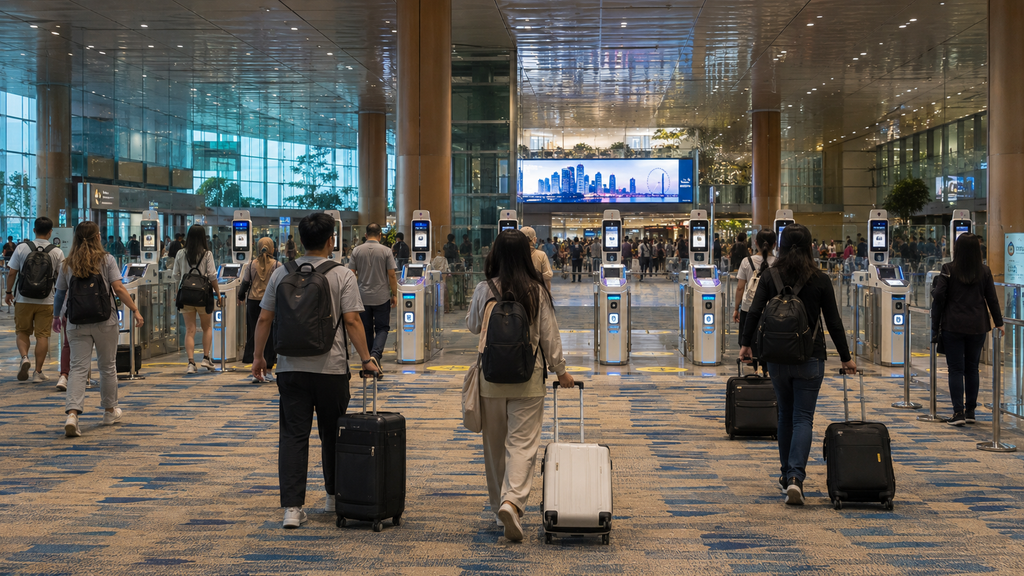
Assuming your travel documents are in order, arrival is usually quite organized.
Follow signs toward immigration.
Have your passport ready.
Make sure you have completed any required SG Arrival Card submission.
If you need a Singapore visa, make sure it has been approved before travel.
You may be able to use automated immigration clearance depending on current procedures and eligibility.
Follow the instructions at the checkpoint.
Singapore has expanded automated clearance considerably, but you should still be prepared to follow directions from immigration officers if necessary.
Technology makes the process efficient.
It does not remove immigration control.
Automated Immigration Does Not Mean Automatic Entry
This is another useful distinction.
Singapore uses sophisticated automated immigration technology.
A traveler may clear through an automated lane rather than speaking extensively with an officer.
That does not mean immigration requirements disappear.
The system is still conducting border clearance.
You still need the correct passport.
Visa where required.
SG Arrival Card where required.
And you still need to satisfy Singapore’s entry conditions.
The machine is a different interface for immigration.
It is not a way around immigration.
What Should I Have Ready at the Border?
I do not like approaching immigration while searching through fifteen folders on my phone.
I keep important travel information organized.
Passport.
Visa, if required.
Accommodation details.
Return or onward journey information.
Travel itinerary if useful.
Any supporting documents relevant to my particular circumstances.
You may not be asked to show all of these.
That is fine.
Preparation is about being able to answer clearly if you are asked.
Return or Onward Travel
Singapore’s general entry assessment can include whether a short-term visitor has appropriate onward travel arrangements.
For a normal tourist, your trip should make sense.
If you say you are visiting Singapore for four days, having onward or return travel consistent with that plan makes the situation straightforward.
Again, do not fabricate documents.
If your itinerary is unusual, be prepared to explain it honestly.
Proof You Can Support Your Trip
Visitors should also be able to support themselves during their stay.
Singapore is not a particularly cheap destination.
Accommodation alone can represent a substantial part of the budget.
You should have a realistic plan for paying for your trip.
Immigration authorities may consider a traveler’s circumstances as part of the entry decision.
There is no advantage in pretending your trip costs less than it actually does.
Plan a budget before you travel.
Yellow Fever Requirements Can Apply to Some Travelers
This is an entry issue that has nothing to do with whether you need a normal Singapore visa.
Travel history matters.
Singapore has health-related entry requirements concerning yellow fever for travelers arriving from or having recently been in relevant risk areas under specified circumstances.
If your journey involves a yellow-fever-risk country, check the current Singapore requirements well before departure.
Do not wait until check-in at the airport.
Health documentation is a separate layer of entry compliance.
Transit Through Singapore Can Be Different
Not every person landing at Changi is entering Singapore.
If you remain in transit and do not pass through Singapore immigration, different rules may apply.
But transit can become complicated if you need to collect luggage, change terminals in a way that requires immigration clearance, have separate tickets or intend to leave the airport.
Do not assume the word “transit” automatically exempts you from every entry requirement.
Check the practical details of your connection.
What About Singapore’s Visa-Free Transit Facility?
Singapore has a Visa-Free Transit Facility for certain eligible travelers under specific conditions.
This is not a universal visa waiver for anyone with a long layover.
Eligibility depends on factors such as nationality, travel documents, onward journey and other requirements.
If you normally require a Singapore visa and are considering entering Singapore during transit, read the current official VFTF rules carefully.
Do not build a stopover itinerary around an assumption.
Common Mistake 1: Thinking Everyone Needs a Visa
They do not.
Singapore’s visa requirement depends on the travel document you hold.
Check first.
Applying for something you do not need wastes time and can expose you to unnecessary third-party fees.
Common Mistake 2: Thinking the SG Arrival Card Is a Visa
It is not.
This is probably the most common source of confusion.
If you need a visa, get the visa.
Then deal separately with the SG Arrival Card requirement at the appropriate time.
Common Mistake 3: Paying for the SG Arrival Card
The official submission is free.
If you are being charged, verify whether you have entered a commercial service website.
Use official ICA channels whenever possible.
Common Mistake 4: Applying Too Late
A published standard processing time is not a guarantee.
Some applications take longer.
Prepare early enough that a delay does not destroy the entire trip.
Common Mistake 5: Assuming a Visa Guarantees Entry
It does not.
A Singapore visa allows you to travel to Singapore and seek entry.
The immigration decision happens at the checkpoint.
Common Mistake 6: Confusing Visa Validity With Permitted Stay
Your permitted stay is determined by the Visit Pass granted at entry.
Check your e-Pass after arrival.
Do not calculate your departure date solely from the visa.
Common Mistake 7: Using Unverified Visa Websites
This can cost more than money.
Visa applications contain valuable personal information.
Passport copies should not be uploaded casually to unknown websites.
Start from official Singapore government information.
Common Mistake 8: Giving Inconsistent Information
Your application should tell one coherent story.
Purpose of visit.
Dates.
Accommodation.
Employment information where requested.
Travel plans.
Passport details.
If one document says you arrive on one date and another says something completely different, expect questions.
Small genuine changes happen.
Careless contradictions are avoidable.
Common Mistake 9: Creating Fake Supporting Documents
Do not do this.
A visa rejection is inconvenient.
An immigration record involving fraudulent documents can be much more serious.
If you cannot provide a requested document, find out whether an acceptable alternative exists.
Never manufacture one.
Common Mistake 10: Forgetting to Check Requirements Again Before Flying
Even if your visa was approved weeks earlier, I would check current entry information shortly before departure.
Immigration rules can change.
Health requirements can change.
Arrival procedures can change.
A five-minute official check before the flight is worth doing.
A Simple Singapore Visa Timeline
If I required a Singapore visa, I would organize the process like this.
Several Months Before Travel
Check passport validity.
Determine whether my travel document requires a Singapore entry visa.
Research the correct application route for my country.
Avoid paying for anything unnecessary at this stage.
About One Month Before Travel
If the applicable ICA guidance advises applying within 30 days before arrival, prepare to submit during this period.
Make sure the application form, photograph, passport copy and any required supporting documents are ready.
Use an eligible local contact, authorized visa agent or appropriate Singapore Overseas Mission according to the procedure that applies to me.
After Submission
Monitor the application through the appropriate channel.
Respond promptly if additional documents are requested.
Do not assume approval until it is actually issued.
After Visa Approval
Check every detail.
Make sure the passport information is correct.
Save a copy of the electronic visa where applicable.
Keep it accessible during travel.
Within Three Days Before Arrival
Submit the SG Arrival Card if required.
Use the official Singapore ICA channel.
Do not pay for the official submission.
Provide an email address you can access.
Before Leaving for the Airport
Check that I have:
Passport.
Approved visa if required.
SG Arrival Card confirmation/details as appropriate.
Accommodation information.
Return or onward travel details.
Any additional documents relevant to my trip.
Then travel.
How Difficult Is a Singapore Tourist Visa?
I would not describe the process as something to fear.
But I also would not describe any visa as guaranteed.
For a genuine short-term traveler, the best approach is straightforward:
Understand the requirement.
Use the correct application channel.
Provide accurate information.
Submit the requested documents.
Allow enough processing time.
Do not create unnecessary complications.
Most of the anxiety surrounding visa applications comes from uncertainty.
Good preparation removes much of that uncertainty.
Do You Need an Agent?
If the official process for your location requires or directs you toward an authorized visa agent, then using the correct authorized channel makes sense.
What I would avoid is assuming that paying an unofficial “visa consultant” increases my chance of approval.
No private company can honestly guarantee that Singapore immigration will approve a visa.
An agent can help with submission.
They cannot replace the immigration authority.
Be skeptical of anyone promising guaranteed approval.
Can You Extend Your Stay After Entering Singapore?
Singapore has procedures through which eligible visitors may apply to extend a Short-Term Visit Pass.
But approval is not automatic.
I would never plan a trip around the assumption that an extension must be granted.
If you know how long you intend to stay, plan around the immigration permission you actually receive.
If circumstances later require an extension, check the current ICA procedure and eligibility.
Most importantly, apply before your authorized stay expires.
Never Overstay
This should not require much explanation.
Your e-Pass tells you the period of stay granted and the last day you are allowed to remain.
Respect it.
If you have a genuine reason to request an extension, use the official process before your permission expires.
Do not simply remain in Singapore and try to explain afterward.
Immigration rules are one part of travel where “I forgot” is not a useful strategy.
Is Singapore Entry Complicated for First-Time Travelers?
It can look complicated when every requirement is placed in one paragraph.
Break it apart and it becomes much easier.
Question 1: Is my passport valid for the trip?
Question 2: Does my travel document require a Singapore visa?
Question 3: If yes, what is the correct official application route?
Question 4: Have I completed the SG Arrival Card requirement at the correct time?
Question 5: Do I have sensible accommodation and onward travel plans?
That is much easier to manage.
What I Would Do Differently From Many First-Time Applicants
I would spend less time watching random visa videos and more time reading the official instructions for my passport.
Visa advice on social media often mixes several nationalities together.
Someone says:
“I entered Singapore without a visa.”
That information is meaningless until you know what passport they hold.
Another person says:
“My visa took longer.”
That may be true.
It does not tell you why.
Someone else says:
“You must pay for the Singapore Arrival Card.”
That is a warning sign.
Immigration is personal.
Use other travelers’ experiences for practical context.
Use the government for the actual rules.
Keep the Process Boring
This may be the best visa advice I can give.
A good visa application should be boring.
Real passport.
Real photograph.
Real trip.
Real hotel.
Real financial situation.
Accurate dates.
Accurate purpose.
Correct submission channel.
Nothing dramatic.
Nothing invented.
Nothing designed to make your application look more impressive than reality.
You are applying to visit Singapore.
You are not writing a movie script.
After Immigration, Check Your e-Pass
Once you successfully enter Singapore, do one final administrative thing.
Check the electronic Visit Pass information you receive.
Confirm the last day of your permitted stay.
Then save it somewhere accessible.
After that, stop thinking about immigration and enjoy Singapore.
Take the MRT.
Walk around Marina Bay.
Spend an evening beneath the Supertrees.
Eat at a hawker centre.
Explore Chinatown.
Visit Little India.
That is what all the paperwork was for.
Final Thoughts
Singapore’s visa process becomes much easier once you stop treating every pre-travel requirement as the same thing.
Your passport establishes your identity and eligibility to travel.
Your nationality or travel document determines whether you need an entry visa.
The visa, when required, gives you permission to travel to Singapore and seek entry.
The SG Arrival Card is a separate pre-arrival requirement for travelers to whom it applies.
And the final immigration decision is made when you enter Singapore.
Keep those stages separate and most of the confusion disappears.
My approach would be simple.
Check the official visa list first.
Make sure the passport has sufficient validity.
If a visa is required, follow the application instructions for that specific travel document.
Use an authorized submission route.
Prepare genuine documents.
Allow enough processing time.
Shortly before travel, complete the SG Arrival Card through the official free service if required.
At Changi, follow immigration instructions.
Then check the e-Pass you receive after entry so you know exactly how long you are allowed to stay.
Singapore is one of the easiest places in Asia to navigate once you arrive.
Getting there should not be unnecessarily complicated either.
Prepare carefully, use official information, and keep the paperwork as simple as possible.