
Switzerland is easy to admire as a traveler.

You step off a train in Lucerne and the lake is right there. You travel a little farther and suddenly the Alps fill the horizon. Villages look almost impossibly tidy, trains carry you deep into the mountains, and even ordinary journeys between cities can feel like sightseeing.
But after spending more time moving around Switzerland, something else started to stand out.
It was not the mountains.
It was not the chocolate.
It was not even how clean everything looked.
It was how easy many ordinary things seemed to be.
You arrive at a railway station and understand where to go. You walk through a residential neighborhood late in the day and it feels calm. Public spaces are maintained. Lakes and parks are not separated from everyday life. People finish work and within a surprisingly short time can be walking beside a river, cycling through the countryside or heading toward the mountains.
Switzerland is certainly not perfect.
It is expensive. Housing can be difficult. Rules are taken seriously. Moving here as a foreigner is very different from spending a week here on holiday.
But I began to understand why Switzerland is so often associated with a high quality of life.
The impressive part is not simply that Switzerland is beautiful.
The impressive part is that so much of daily life seems designed to work.
The Difference Between Visiting Switzerland and Imagining Living Here
As a tourist, Switzerland can sometimes feel almost too perfect.
You see Lake Lucerne on a sunny morning.
You walk through Bern’s old streets.
You take a train into Lauterbrunnen Valley.
You sit beside Lake Zurich while people swim after work.
It is easy to think:
I could live here.
Of course, living somewhere is very different from visiting.
A traveler notices mountain views.
A resident notices rent.
A traveler enjoys an efficient train.
A resident thinks about commuting every morning.
A traveler spends twenty or thirty francs on lunch and tells themselves they are on holiday.
A resident has to think about doing that repeatedly.
That distinction matters.
So when I say Switzerland feels like one of the best places to live, I do not mean that life here is an endless Alpine holiday.
What impressed me was something more practical.
The systems surrounding everyday life often seem to reduce unnecessary stress.
And that matters much more over several years than having a beautiful mountain outside your hotel window.
Public Transport Changes Everyday Life
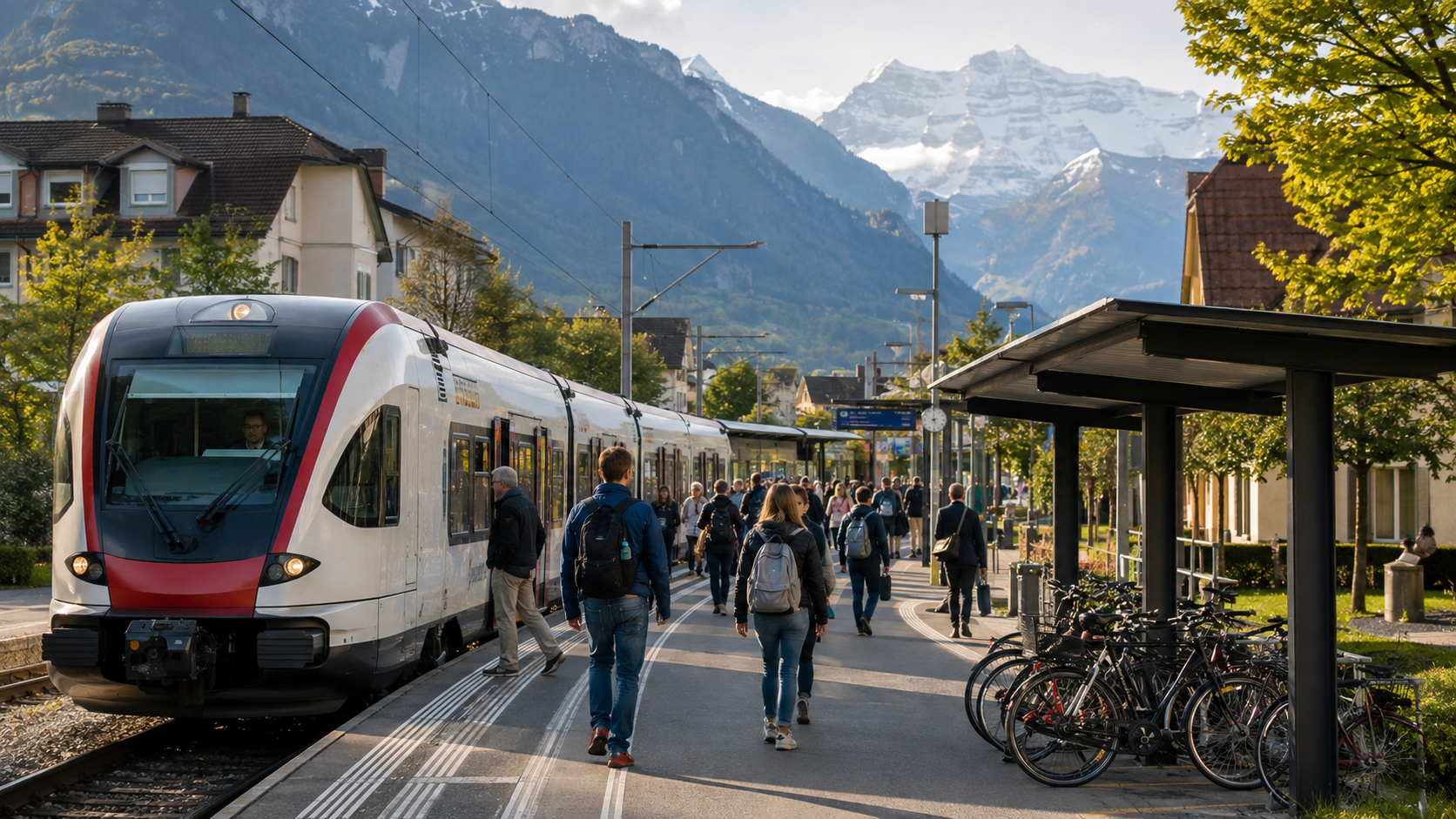
If I had to choose one thing that most affected my impression of Switzerland, it would probably be public transportation.
Not because Swiss trains are famous.
Because of what a good transport system allows people to do.
In many places, not owning a car dramatically limits where you can live, work or spend your free time.
In much of Switzerland, that limitation can be considerably smaller.
Trains connect major cities.
Regional services reach smaller communities.
Buses continue where railways stop.
Trams move through cities.
Mountain railways, funiculars and cable cars extend the network into places where normal roads become impractical.
The result is not simply convenient tourism.
It affects everyday life.
You can live in one place and work in another without automatically depending on a car.
Young people have more independence.
Older people are less isolated if they no longer drive.
Visitors can move around without learning unfamiliar roads.
And cities do not have to organize every aspect of daily life around parking.
After several days of using Swiss trains, I stopped thinking about transportation very much.
That may be the greatest compliment you can give a transport system.
It became ordinary.
A Train Being on Time Is Not the Whole Story
Switzerland has a reputation for punctuality, but focusing only on whether a train arrives at exactly the scheduled minute misses the larger point.
The impressive part is integration.
You arrive at a station.
Your connecting train is nearby.
A bus may be waiting outside.
At a lake, a boat can become part of the same journey.
In the mountains, you may transfer from a normal railway to a mountain train and then to a cable car.
As a visitor, this makes travel enjoyable.
As a resident, imagine what it means when you repeat those journeys every week.
Reliable infrastructure gives people back time.
You spend less energy solving transportation problems.
That is a quality-of-life benefit that is difficult to photograph but easy to appreciate once you experience it.
Swiss Cities Rarely Feel Overwhelming
Zurich is Switzerland’s largest city, yet it does not feel enormous in the way many international financial centers do.
You can walk from busy shopping streets toward the lake relatively quickly.
Trams move constantly through the city.
Residential neighborhoods appear not far from commercial districts.
The mountains are visible in the distance when conditions are clear.
Bern feels even more relaxed.
The historic center sits inside a bend of the Aare River, and much of the city feels manageable on foot.
Lucerne has tourists, particularly around the old town and waterfront, but the scale still feels human.
This was another thing I appreciated.
Swiss cities offer many advantages of urban life without always making you feel trapped inside endless urban development.
Nature remains close.
Nature Is Not Something You Save for a Holiday
This may be one of Switzerland’s greatest advantages.
In many countries, reaching spectacular nature requires planning a trip.
You pack the car.
Drive several hours.
Book accommodation.
Spend the weekend there.
In Switzerland, mountains, lakes, forests and hiking trails are often integrated into normal life.
From Zurich, you can leave the city and reach outdoor areas quickly.
From Lucerne, mountains and lake excursions begin almost at the edge of town.
In Interlaken, the Alps surround daily life.
In smaller communities, hiking trails can begin close to residential streets.
That changes your relationship with nature.
It is no longer something you experience once or twice a year.
It can become part of an ordinary Saturday.
I Started Noticing What People Did After Work
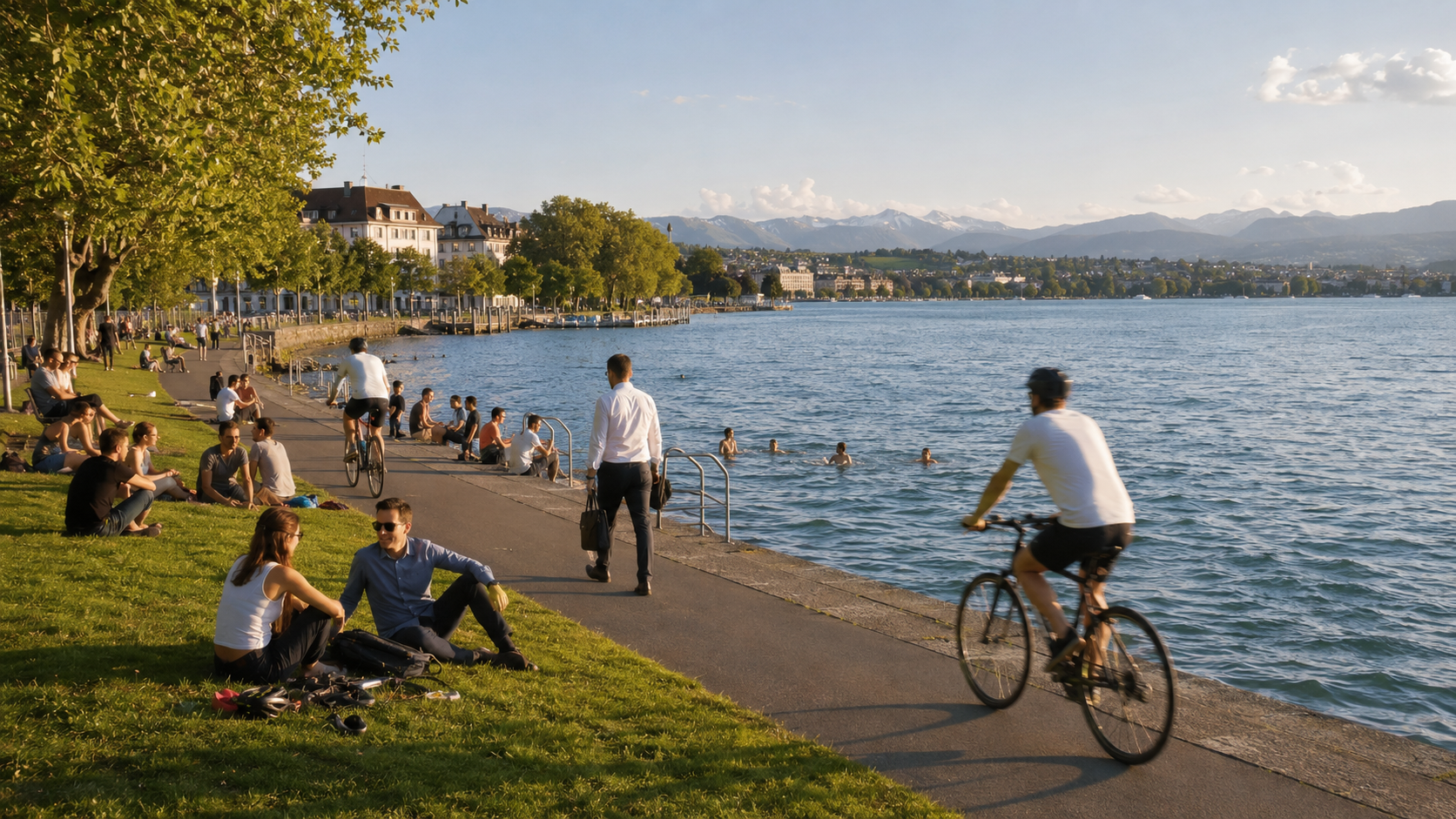
One afternoon beside Lake Zurich, I noticed something that would have been easy to ignore.
People were arriving from work.
Some were still dressed for the office.
Then they changed, met friends, sat beside the lake or went swimming.
Nothing dramatic was happening.
That was precisely what made it interesting.
The waterfront was not being treated as a tourist attraction.
It was part of the city.
I saw similar patterns elsewhere.
Cycling.
Walking.
Running beside rivers.
Heading into the mountains on weekends.
Sitting outside when the weather was good.
Switzerland’s landscape obviously encourages an outdoor lifestyle, but good infrastructure makes that lifestyle easier to maintain.
There is a major difference between having beautiful nature somewhere nearby and being able to reach it conveniently.
Cleanliness Is Noticeable, but It Is More Than Appearance
People often describe Switzerland as clean.
That can sound superficial.
After all, a clean pavement does not automatically create a good life.
But what cleanliness often reflects is something broader: maintenance.
Train stations are maintained.
Public spaces are maintained.
Parks are maintained.
Roads and pedestrian areas generally feel cared for.
Waste systems are organized.
Buildings often appear well kept even when they are old.
The effect is subtle.
When public spaces are consistently looked after, people receive the message that those spaces matter.
You notice it most when you stop noticing it.
There is less broken infrastructure competing for your attention.
Water Is Everywhere
I did not expect water to contribute so much to the feeling of living in Switzerland.
The country is famous for mountains, but its lakes and rivers are equally important to daily life.
Lake Geneva.
Lake Zurich.
Lake Lucerne.
Lake Thun.
Lake Brienz.
The Aare.
The Rhine.
In many cities and towns, water is not hidden behind industrial development or inaccessible roads.
People walk beside it.
Swim in it.
Sit beside it.
Commute past it.
Have lunch near it.
In Bern, seeing people use the Aare as part of summer life completely changes the impression of the city.
In Zurich, the lake feels like an extension of the urban environment.
That access to water gives Swiss cities a quality that is difficult to reproduce artificially.
Safety Changes How a Place Feels
One of the strongest indicators of quality of life is not something you actively experience.
It is the absence of constant worry.
Walking around Swiss cities generally gave me a strong sense of order and personal security.
That does not mean crime does not exist.
Switzerland is a real country, not a theme park.
Normal precautions still matter, especially around busy tourist areas and transportation hubs.
But the overall feeling can be noticeably calm.
You see children using public transport.
People leave bicycles outside.
Residential streets can become extremely quiet at night.
Train stations remain functional rather than feeling like places you should immediately escape.
Safety changes how people use their surroundings.
When people feel comfortable walking, cycling and using public spaces, cities become more livable.
Children Seem to Have More Independence
This was another small observation that stayed with me.
Seeing school-age children traveling or walking without an adult nearby initially caught my attention.
Then I stopped noticing it.
A safe environment combined with reliable public transportation creates independence much earlier.
That matters for families.
Parents do not necessarily have to drive children everywhere.
Children gradually learn to navigate their own communities.
The benefit is not only convenience.
It changes how people interact with where they live.
A neighborhood becomes somewhere you can move through rather than somewhere you leave only inside a car.
Everything Has a Rule
There is another side to Swiss order.
Rules.
Switzerland can feel highly organized because people are expected to respect systems and social norms.
Waste disposal may follow specific procedures.
Apartment buildings can have expectations around noise.
Recycling can require more effort than visitors expect.
Parking rules matter.
Tickets matter.
Quiet hours matter.
Sunday has a different rhythm.
For someone arriving from a more informal culture, this can initially feel restrictive.
You cannot always simply decide that a rule is inconvenient and ignore it.
But eventually you see the trade-off.
The same culture that asks you to consider your neighbors also asks your neighbors to consider you.
Order is pleasant when everyone benefits from it.
It can be frustrating when you are the person who wants an exception.
Sundays Can Be a Shock
If you are accustomed to large cities where almost everything operates seven days a week, a Swiss Sunday can feel surprisingly quiet.
Many shops close.
Residential areas become even calmer.
The pace changes.
For a traveler who forgot to buy groceries, this can be annoying.
For someone living there, it can become part of the rhythm of the week.
Sunday feels different from Saturday.
People spend time outdoors.
Families meet.
Restaurants and leisure activities may still be available, but ordinary commercial life slows down.
Whether you love or hate this probably says something about the type of lifestyle you want.
Some people will find it peaceful.
Others will be searching desperately for an open supermarket.
Work Matters, but Life Outside Work Is Visible
Switzerland is highly productive and home to major international companies, financial institutions, pharmaceutical businesses, engineering firms and organizations.
Work is clearly important.
But what struck me was how visible life outside work remained.
People make use of evenings.
Weekends matter.
Outdoor activities are not reserved only for long holidays.
Cities are organized in ways that make leaving work and doing something else relatively easy.
Of course, work-life balance varies enormously by profession, employer and individual circumstances.
Someone working long hours in Zurich’s financial sector may experience Switzerland very differently from someone with a flexible schedule in a smaller city.
There is no single Swiss working life.
Still, the environment provides opportunities for balance.
Whether people can take advantage of them is another question.
Salaries Are High for a Reason
This is where the romantic idea of moving to Switzerland meets reality.
Swiss salaries can look extraordinary when converted into another currency.
Then you start paying Swiss expenses.
Rent.
Health insurance.
Groceries.
Restaurants.
Childcare.
Transportation.
Services.
A high salary does not automatically mean enormous disposable income.
This is one of the biggest mistakes outsiders can make when comparing life in Switzerland with life elsewhere.
Looking only at salary tells half the story.
You need to look at purchasing power and household expenses.
Someone earning what appears to be an exceptional salary may also be paying several times what you expect for ordinary services.
Switzerland pays Swiss wages because people face Swiss prices.
Housing May Be the First Reality Check
If I were seriously considering moving to Switzerland, housing would be one of the first things I researched.
Not mountain views.
Not skiing.
Rent.
In desirable cities and well-connected areas, housing can be expensive and competition can be significant.
Zurich and Geneva in particular are not places where I would casually arrive and assume I could find an affordable apartment exactly where I wanted.
Living farther from the center can help.
And because transportation is strong, that compromise may be easier than it would be elsewhere.
A twenty- or thirty-minute train commute can dramatically expand your housing options without necessarily making daily life unpleasant.
That is another example of transportation influencing quality of life.
Good trains make more places practical places to live.
Eating Out Quickly Reminds You Where You Are
The first few restaurant bills in Switzerland can be memorable.
Coffee.
Lunch.
Dinner.
Suddenly you become very interested in supermarkets.
Eating out is expensive compared with many countries.
That does not mean residents never go to restaurants.
It means expectations can be different.
Cooking at home becomes financially important.
Supermarkets play a larger role in everyday food habits.
A picnic beside a lake begins looking both beautiful and economically sensible.
As a traveler, I learned quickly that I did not need every meal to become a restaurant experience.
As a resident, that calculation would become even more important.
Healthcare Is Excellent, but It Is Not Simply “Free”
Switzerland is known for high-quality healthcare.
That reputation contributes significantly to its appeal as a place to live.
But foreigners should understand that the system comes with responsibilities and costs.
Health insurance is mandatory for residents under the Swiss system, and individuals generally need to arrange appropriate coverage.
Premiums can represent a meaningful household expense.
There are also deductibles and other costs depending on the insurance arrangement.
This is important because people sometimes hear “excellent Swiss healthcare” and imagine a system where everything simply happens without financial consideration.
The reality is more complicated.
Quality is high.
Access is strong.
But households need to budget for it.
Education Adds to the Long-Term Appeal
For families thinking beyond a short stay, education becomes part of the quality-of-life discussion.
Switzerland has a strong education system and a particularly interesting approach to vocational training.
University is not treated as the only respectable path toward a successful career.
Apprenticeships and vocational routes connect education directly with employment in ways that visitors may not immediately notice.
That creates different opportunities for young people.
The country is also home to internationally respected universities and research institutions.
For international families, however, language becomes an important consideration.
Which part of Switzerland you live in can affect which language your children encounter in school and daily life.
That leads to another thing that makes Switzerland unusual.
Switzerland Feels Like Several Countries Sharing One Border
Travel from Zurich to Geneva and the change is obvious.
Language changes.
Architecture shifts.
Food changes.
The rhythm of the streets feels slightly different.
Travel south toward Ticino and suddenly Italian becomes part of everyday life.
Switzerland has four national languages: German, French, Italian and Romansh.
For such a relatively small country, the cultural variation is remarkable.
Living here does not necessarily mean having one single “Swiss” experience.
Life in Zurich is different from Geneva.
Geneva is different from Lugano.
A mountain village in Graubünden is different again.
That diversity makes the country more interesting, but it also matters practically.
Language affects work.
Friendships.
School.
Administration.
Integration.
Choosing where to live in Switzerland is not simply choosing a city.
In some ways, you are also choosing a linguistic and cultural environment.
Language Matters More When You Live Here
As a tourist, English can take you surprisingly far in many parts of Switzerland.
That can create the impression that language will not matter if you move there.
Living somewhere changes the situation.
You need to communicate with neighbors.
Understand letters.
Deal with local administration.
Talk to service providers.
Build friendships.
Participate in community life.
English may be sufficient for some international workplaces, particularly in larger cities.
But learning the local language can dramatically change the quality of your experience.
And in German-speaking Switzerland, there is another layer.
Standard German and Swiss German are not exactly the same experience.
Even people who already speak German can need time to adjust to local dialects.
Integration requires more than having the correct residence permit.
Making Friends May Take Time
This is one of the less glamorous parts of moving to highly organized, affluent countries.
Daily life can work extremely well while social integration takes longer.
People already have families, childhood friends, work relationships and established routines.
A foreigner arriving in adulthood may need to make a deliberate effort to build a social circle.
International cities such as Zurich, Geneva and Basel have large expatriate and international communities, which can make meeting people easier.
But there is a difference between knowing other foreigners and feeling integrated into local life.
Language helps.
Joining clubs helps.
Sports help.
Regular activities help.
Time helps most of all.
Do not expect the country to provide instant friendships simply because the trains are efficient.
Privacy Is Part of the Culture
Something else I noticed was a strong sense of personal space.
People can be friendly without being immediately familiar.
Neighbors may respect one another without becoming close friends.
Public behavior can feel restrained compared with more expressive cultures.
Some people love this.
You can live your life without feeling constantly observed or interrupted.
Others may interpret the same behavior as coldness.
Neither interpretation is completely fair.
It is partly cultural expectation.
If you come from somewhere where neighbors frequently enter each other’s homes and strangers easily begin conversations, Switzerland may initially feel reserved.
Give it time before deciding that reserved means unfriendly.
Quality Often Appears in Boring Places
One of the strongest impressions I took from Switzerland came from places nobody puts on a postcard.
A railway underpass.
A public toilet.
A supermarket.
A residential street.
A bus stop.
A pedestrian crossing.
These things sound boring because they are boring.
But daily life is mostly made of boring things.
You do not stand beneath the Matterhorn every Tuesday morning.
You take the train to work.
You buy groceries.
You walk home.
You visit a doctor.
You take your children to school.
You deal with rubbish.
You pay bills.
A country becomes comfortable to live in when ordinary systems work consistently.
Switzerland’s real luxury may not be its five-star hotels.
It may be predictability.
You Can Leave the City Without Really Leaving Your Life
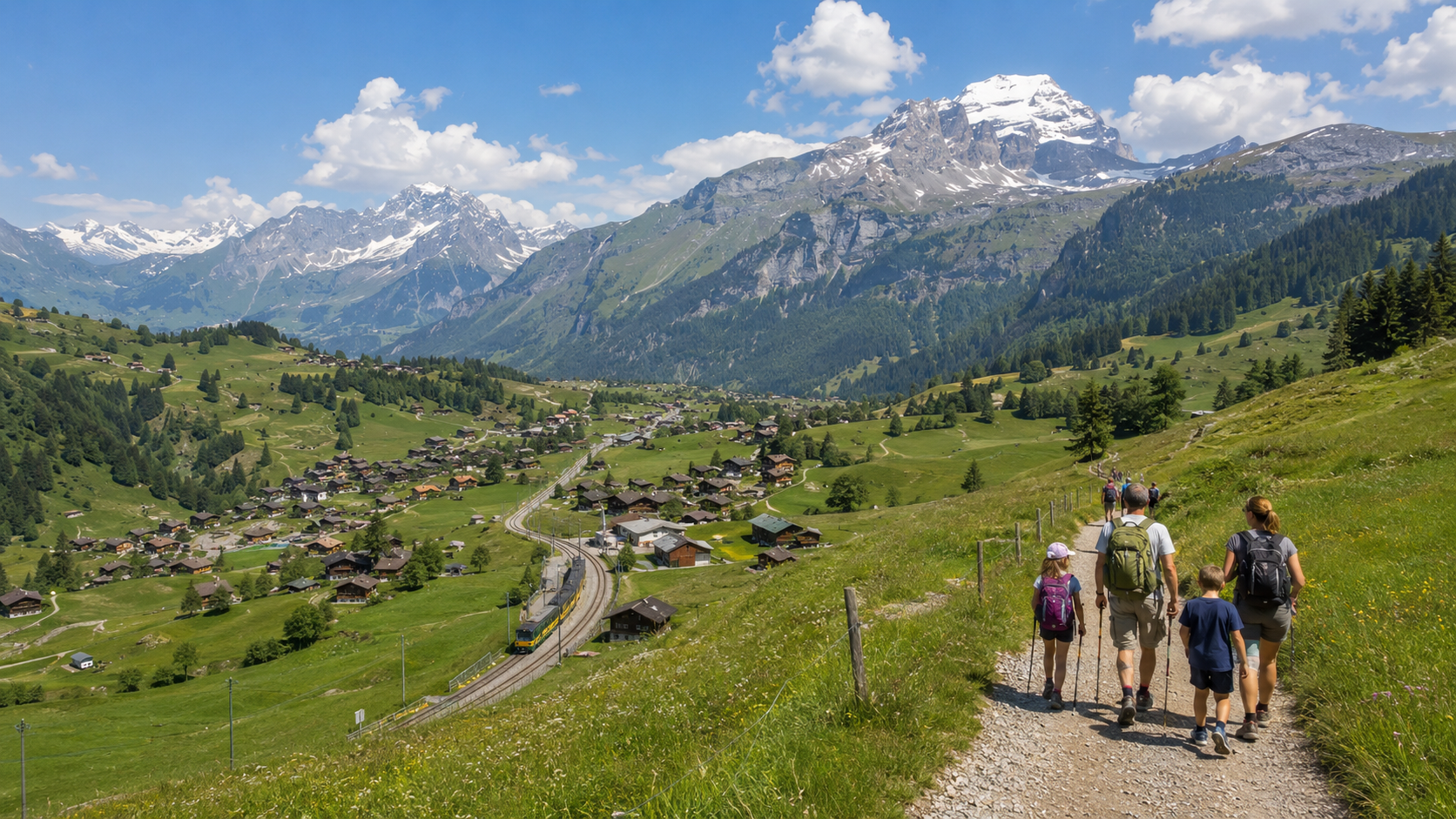
Imagine finishing work in Zurich on Friday.
You do not necessarily need to plan an elaborate weekend trip.
A train can take you toward Lucerne.
Or into the mountains.
Or to another lake.
In winter, skiing becomes accessible.
In summer, hiking becomes accessible.
The country’s compact size works in its favor.
You can experience noticeably different landscapes without traveling enormous distances.
This is particularly valuable for people who enjoy outdoor activities.
A mountain lifestyle does not necessarily require living in an isolated mountain village.
You can have an urban career and still use the Alps regularly.
That combination is relatively rare.
Switzerland Is Well Connected to the Rest of Europe
Another advantage becomes obvious when you look beyond the country’s borders.
France.
Germany.
Italy.
Austria.
Liechtenstein.
Switzerland sits in the middle of Western and Central Europe.
International rail connections and relatively short travel distances make neighboring countries accessible.
A long weekend can mean Italy.
France can be reached without boarding a plane.
Germany is close.
For someone who enjoys travel, this location is difficult to ignore.
Living in Switzerland gives you Switzerland during the week and a large part of Europe within reach when you have more time.
But Moving to Switzerland Is Not Automatically Easy
This needs to be said clearly.
Loving Switzerland as a traveler does not mean you can simply decide to live there permanently.
Residency and employment rules depend on nationality, employment situation and other circumstances.
Rules for citizens of EU/EFTA countries differ from those applying to many non-EU/EFTA nationals.
Work permits can be competitive and subject to restrictions.
Employers may have specific obligations depending on the applicant.
Anyone seriously considering relocation should check current requirements through official Swiss authorities rather than relying on travel blogs or social media.
A beautiful country can still have a complicated immigration system.
Switzerland Is Not Perfect
After all the praise, this section matters.
Switzerland has disadvantages.
Major disadvantages, depending on your priorities.
The cost of living is extremely high.
Housing can be difficult.
Health insurance is an additional household expense that newcomers need to understand.
Childcare can be expensive.
Restaurants and many personal services cost significantly more than visitors from other countries may expect.
Social life may feel reserved.
Integration takes effort.
Rules can feel restrictive.
Shops closing on Sundays can be inconvenient.
Language can create barriers.
And the calmness that one person finds peaceful may feel boring to someone else.
If your ideal life involves a city that operates loudly at 2 a.m., constant spontaneous social interaction and inexpensive eating out, Switzerland may not be your paradise.
Quality of life is personal.
Sometimes “Boring” Is a Compliment
This was something I thought about toward the end of the trip.
Switzerland can feel quiet.
Very quiet.
Especially outside the major cities.
At first, travelers may interpret this as a lack of excitement.
But imagine living somewhere for twenty years rather than visiting for four days.
Do you want every day to be exciting?
Or do you want the electricity to work, the street to feel safe, the train to arrive, the water to be clean, the school to function and the park to be maintained?
Excitement is wonderful on holiday.
Reliability becomes more valuable in ordinary life.
Switzerland sometimes feels boring because many problems that create daily drama elsewhere are less visible.
That is not the worst kind of boring.
The Alps Still Matter
After everything I have said about infrastructure and quality of life, I cannot pretend the scenery is irrelevant.
It matters.
Imagine seeing mountains during your commute.
Imagine taking your children hiking on weekends.
Imagine swimming in a lake after work during summer.
Imagine waking on Saturday morning, checking the weather and deciding to take a train into the Alps.
Beauty affects mood.
Access to outdoor space affects health.
Having nature nearby can change how you spend your free time.
Switzerland would still be highly functional without the Alps.
But it would not feel the same.
The extraordinary thing is the combination.
Infrastructure and nature exist side by side.
What Surprised Me Most
Before visiting, I thought Switzerland’s appeal would be obvious.
Mountains.
Lakes.
Chocolate.
Beautiful trains.
Historic towns.
Those things were exactly as expected.
What surprised me were the smaller observations.
Children traveling independently.
Office workers swimming in the lake.
People carrying hiking equipment onto ordinary trains.
Tiny villages connected by remarkably good public transport.
Clean drinking water.
Quiet residential streets only minutes from busy commercial centers.
The ability to move between completely different landscapes without spending half the day in traffic.
None of these moments was dramatic.
Together, they explained more about Switzerland than any mountain viewpoint.
Would I Want to Live in Switzerland?
This is a much harder question than asking whether I would visit again.
I would visit again without hesitation.
Living there requires a different calculation.
Could I afford the city I wanted?
Would my income match the cost of living?
What language would I need?
Could I obtain the appropriate residence and work permission?
Would I enjoy the quieter social environment?
How important is nightlife to me?
How much do I value access to nature?
Those questions matter more than whether I think Lucerne is beautiful.
But purely from the perspective of everyday quality, I understand the attraction.
Switzerland offers something many people spend their lives looking for.
Stability without complete isolation.
Cities without endless urban chaos.
Nature without having to abandon modern infrastructure.
Good salaries alongside strong public systems.
Safety without feeling completely disconnected from the rest of Europe.
That combination is powerful.
Who Would Probably Love Living Here?
Switzerland may particularly appeal to people who value organization, safety, outdoor activities and a predictable environment.
If hiking on Saturday sounds better than spending Saturday in a shopping mall, that helps.
If you enjoy public transport and would rather not depend on a car every day, even better.
If clean cities, quiet neighborhoods and reliable infrastructure matter more to you than cheap restaurants and nightlife, Switzerland begins looking very attractive.
Families may value safety, education and access to nature.
Professionals may be attracted by salaries and employment opportunities in particular industries.
Outdoor enthusiasts barely need convincing.
But there is no universally perfect country.
The lifestyle has to match the person.
Who Might Struggle?
Someone moving primarily because they saw beautiful Alpine videos online may receive a quick reality check.
If you hate rules, Switzerland may frustrate you.
If you expect inexpensive housing, it may frustrate you.
If eating out several times a week is essential to your lifestyle, your budget may notice.
If you need constant social energy and spontaneous interaction, some Swiss communities may initially feel too quiet.
And if you expect to live entirely in English forever without engaging with the local language, you may find yourself socially limited.
A country can rank highly on every international index and still be the wrong place for you.
That is why I would never describe Switzerland as “the best country in the world.”
There is no such thing.
But I would describe it as a country that has solved many everyday problems remarkably well.
Visit Before You Dream About Moving
If Switzerland is somewhere you genuinely imagine living, visit differently.
Do not spend the entire trip in luxury hotels beside famous lakes.
Stay in a normal neighborhood for a few days.
Go to a supermarket.
Use public transportation during commuting hours.
Walk around after dark.
Look at apartment prices.
Check health insurance costs.
Look at salaries in your profession.
Spend a Sunday there.
Visit when the weather is bad.
Try ordering something in the local language.
Ask yourself whether you still like the place when the mountains disappear behind rain.
That tells you much more than a perfect summer afternoon in Lauterbrunnen.
Final Thoughts
Switzerland is one of the most beautiful countries I have traveled through.
But beauty is not the main reason it feels so livable.
The mountains are spectacular.
The lakes are beautiful.
The villages deserve the photographs.
But eventually you stop photographing everything.
Then ordinary life becomes visible.
A train arrives.
A child walks home from school.
Someone cycles toward the station.
People finish work and sit beside a lake.
A supermarket closes and the neighborhood becomes quiet.
A family boards a train on Saturday morning carrying hiking boots and backpacks.
None of this belongs on a list of Switzerland’s top attractions.
That is exactly why it matters.
Living somewhere is mostly ordinary.
And Switzerland seems unusually good at making ordinary life comfortable.
It asks something in return.
You pay high prices.
You follow rules.
You adapt to a quieter rhythm.
You learn how the local system works.
If you are moving from abroad, you may need patience with language, permits and integration.
Switzerland does not offer a perfect life.
No country does.
What it offers is a combination that is surprisingly difficult to find: safety, infrastructure, strong public transportation, economic opportunity, clean surroundings and extraordinary access to nature within a relatively small country.
After traveling through Switzerland, I understood why so many people look at it and think:
I could live here.
Not because every day would feel like a holiday.
But because it seems like a place where an ordinary Tuesday could be pretty good.