
Introduction
Planning a trip to Denmark is exciting, but before booking flights or hotels, it’s important to understand the country’s visa requirements. Since Denmark is part of the Schengen Area, many travelers can enter without a visa for short stays, while others must apply for a Schengen visa before departure.
The application process is generally straightforward if you prepare the required documents correctly. However, missing paperwork, insufficient financial evidence, or applying too late can delay your plans or even result in a visa refusal.
This Denmark Visa Guide explains who needs a visa, what documents are required, how much the application costs, where to apply, and what to expect throughout the entire process. Whether you’re visiting Denmark for tourism, business, or to see family and friends, this guide will help you prepare with confidence.
Who Needs a Visa to Visit Denmark?
Denmark follows the common Schengen visa policy used by most European Union countries within the Schengen Area. Whether you need a visa depends entirely on your nationality and the purpose of your visit.
Citizens from many countries, including the United States, Canada, Australia, Japan, South Korea, Singapore, New Zealand, and several others, can travel to Denmark for short tourist stays without obtaining a visa beforehand. These travelers are generally allowed to remain in the Schengen Area for up to 90 days within any 180-day period.
Travelers from countries that require a Schengen visa must complete the visa application process before departure. They cannot board their flight without receiving visa approval unless another legal travel arrangement applies.
It’s also important to understand that visa-free entry does not guarantee admission into Denmark. Immigration officers at the border may still request supporting documents, including proof of accommodation, return tickets, travel insurance, or evidence of sufficient financial resources.
If you’re planning to visit multiple Schengen countries during one trip, Denmark should normally be your primary destination if you intend to spend the longest amount of time there. If your stay is divided equally between several countries, your application is generally submitted through the country you enter first.
Checking the latest visa policy before making travel arrangements is always recommended, as entry rules may change over time.
Types of Denmark Visas
The most common visa for international travelers is the Schengen Short-Stay Visa (Type C). This visa allows visitors to travel within all Schengen countries for tourism, business meetings, family visits, short educational programs, medical treatment, or cultural events.
For most tourists, the Type C visa is the only visa required. It normally allows stays of up to 90 days within a rolling 180-day period.
Depending on your travel history and application, authorities may issue either a single-entry visa, a double-entry visa, or a multiple-entry visa.
A single-entry visa permits one visit to the Schengen Area. Once you leave, the visa usually becomes invalid even if unused days remain.
A double-entry visa allows two separate entries before expiration.
A multiple-entry visa provides greater flexibility, allowing travelers to enter and leave the Schengen Area multiple times during the visa’s validity period while still respecting the 90-day rule.
Travelers planning to work, study long-term, or relocate to Denmark must apply for entirely different residence permits or long-stay visas, which follow separate application procedures.
Understanding which visa category matches your travel purpose is one of the most important steps before beginning the application.
Denmark Visa Requirements
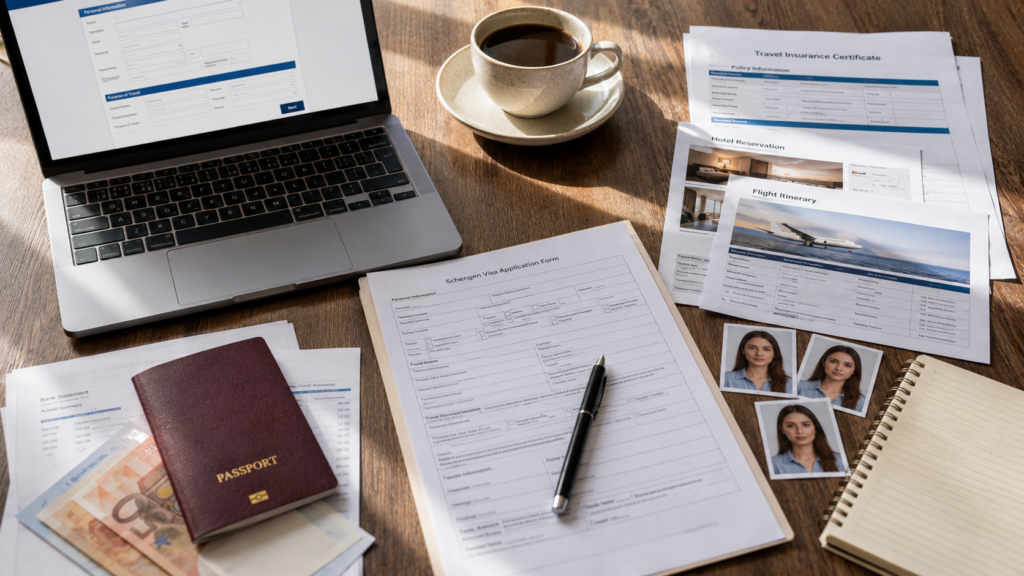
Preparing complete documentation greatly improves the likelihood of a successful application.
A valid passport is required for every applicant. In most cases, the passport must remain valid for at least three months beyond your planned departure from the Schengen Area and contain sufficient blank visa pages.
Applicants must complete the official Schengen visa application form accurately. Even small mistakes or inconsistent information can delay processing.
Recent biometric passport photographs that meet Schengen standards are also required.
Travel medical insurance is mandatory. The insurance policy should provide coverage throughout the entire Schengen Area and meet the minimum coverage requirements established by Schengen regulations.
Applicants usually need to submit proof of accommodation for every night of their trip. Hotel reservations, vacation rental confirmations, or invitation letters from hosts are commonly accepted depending on the purpose of travel.
Evidence of transportation plans is another important requirement. Flight reservations or travel itineraries demonstrate your intended travel schedule, although applicants are generally advised not to purchase non-refundable airline tickets before receiving visa approval.
Financial evidence must also be provided. Recent bank statements, salary slips, employment letters, tax records, or other financial documents help demonstrate that you can support yourself during your stay without relying on public assistance.
Applicants should also prepare a travel itinerary explaining the purpose of the visit, the cities they plan to explore, and the expected duration of their stay.
Submitting organized, complete, and truthful documentation significantly reduces the risk of delays or additional document requests from the visa officer.
How to Apply for a Denmark Visa
Applying for a Denmark visa is generally a straightforward process if you prepare your documents carefully and allow enough time before your departure. Although the exact procedure may vary slightly depending on your country of residence, the overall application process follows the same steps.
The first step is determining whether you need a visa. Travelers from visa-exempt countries can usually enter Denmark without applying for a Schengen visa, while others must complete the application before traveling.
Once you’ve confirmed that a visa is required, gather all supporting documents. Double-check that your passport is valid, your application form is complete, your travel insurance meets Schengen requirements, and your financial documents clearly demonstrate that you can support yourself during the trip.
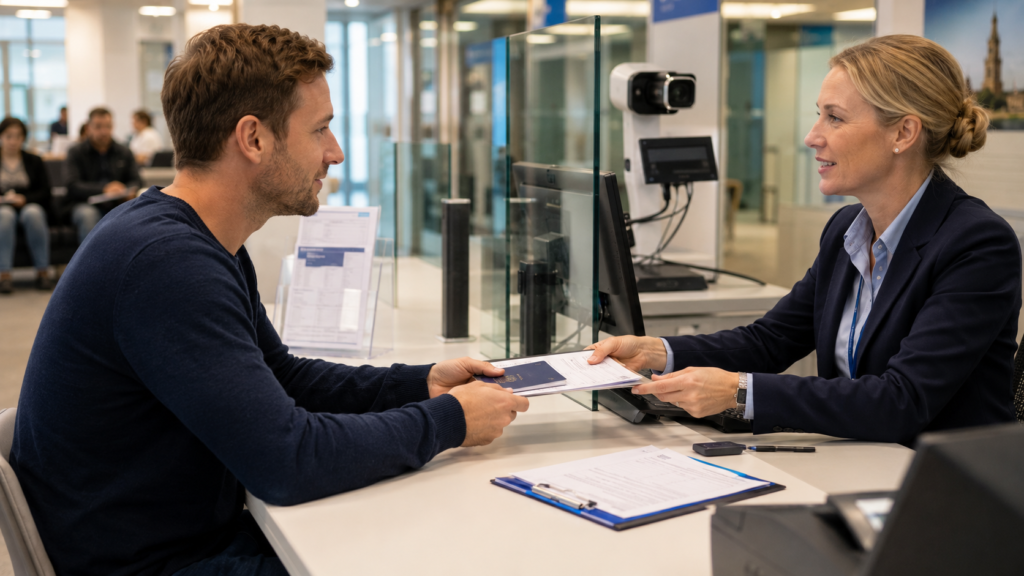
Most applicants must schedule an appointment through a Danish embassy, consulate, or an authorized Visa Application Centre (VAC). During the appointment, your documents will be reviewed, your biometric information—including fingerprints and a digital photograph—will be collected, and the visa application fee will be paid.
After submitting your application, it enters the processing stage. Immigration authorities may request additional documentation if necessary, so applicants should monitor their email regularly until a decision is made.
Once approved, your passport will be returned with the Schengen visa attached. Before traveling, carefully review the visa details, including the validity dates, number of entries, and the maximum length of stay allowed.
Applying at least one month before departure is generally recommended, particularly during busy travel seasons when processing times may be longer.
Denmark Visa Fees
The cost of a Denmark Schengen visa depends on the applicant’s age and, in some cases, specific agreements between Denmark and the applicant’s country of residence.
For most adult applicants, the standard Schengen visa fee is charged according to current European Union regulations. Reduced fees may apply to children within certain age groups, while younger children are often exempt from visa fees altogether.
Additional service charges may be collected by Visa Application Centres if your application is submitted through an external provider rather than directly through a Danish embassy or consulate.
Keep in mind that visa fees are generally non-refundable. Even if your application is refused, the fee paid for processing is usually not returned.
Applicants should also budget for additional expenses such as passport photographs, travel insurance, document translation if required, courier services, and transportation to the visa application center.
Checking the latest visa fee schedule before your appointment is recommended, as fees may occasionally be updated.
How Long Does Denmark Visa Processing Take?
Visa processing times vary depending on the season, your nationality, and the complexity of your application.
Under normal circumstances, many Schengen visa applications are processed within approximately 15 calendar days after all required documents have been received.
However, processing may take longer during the summer holiday season, Christmas period, or whenever Danish immigration authorities experience unusually high application volumes.
Applications requiring additional security checks or requests for supplementary documentation can also extend the overall processing time.
Because unexpected delays sometimes occur, travelers should avoid submitting applications at the last minute. Applying four to eight weeks before departure provides a comfortable margin while still allowing enough flexibility for travel planning.
It’s equally important not to book non-refundable flights or accommodation until your visa has been approved unless specifically required for your application.
Planning ahead remains one of the easiest ways to reduce unnecessary travel stress.
Common Reasons for Denmark Visa Refusal
Although many visa applications are approved, refusals do occur. Understanding the most common reasons can help applicants avoid unnecessary mistakes.
Incomplete documentation is one of the leading causes of refusal. Missing financial records, unsigned application forms, or incomplete travel itineraries often delay or negatively affect applications.
Insufficient financial evidence may also raise concerns. Applicants should clearly demonstrate that they have enough funds to cover accommodation, transportation, meals, and other travel expenses throughout their stay.
Travel insurance that fails to meet Schengen coverage requirements may result in additional document requests or refusal.
Inconsistent information between documents is another common problem. For example, hotel reservations, flight itineraries, employment letters, and travel dates should all match the information provided in the application form.
Immigration officers also evaluate whether applicants have strong reasons to return home after their trip. Stable employment, family commitments, business ownership, or ongoing education may strengthen an application by demonstrating clear ties to the applicant’s home country.
Providing accurate, honest, and complete information is always the best approach. Attempting to submit false documents or misleading information may lead not only to refusal but also to future travel restrictions.
Tips for a Successful Denmark Visa Application

Good preparation significantly improves your chances of receiving visa approval.
Start collecting documents well before your intended departure date. Waiting until the last minute often increases stress and makes it more difficult to correct missing paperwork.
Review every document carefully before attending your appointment. Ensure that names, passport numbers, travel dates, and reservation details remain consistent across all documents.
Maintain clear financial records. Recent bank statements showing stable income generally provide stronger evidence than sudden large deposits made immediately before applying.
Purchase travel insurance from a reputable provider that specifically meets Schengen visa requirements.
If you’re invited by family or friends, ensure that invitation letters contain complete and accurate information, including the host’s address and contact details where required.
Finally, answer all questions honestly during the application process. Providing truthful information builds credibility and reduces the likelihood of complications during visa assessment.
Frequently Asked Questions About Denmark Visas
Many travelers have similar questions before applying for a Denmark visa. Understanding the answers can help you prepare your application with greater confidence.
One of the most common questions is whether a Denmark visa allows travel to other European countries. The answer is yes. Since Denmark is part of the Schengen Area, a valid Schengen visa normally allows travelers to visit other participating Schengen countries during the visa’s validity period, provided they follow the visa conditions.
Another common question concerns the 90/180-day rule. This means eligible travelers can stay in the Schengen Area for a maximum of 90 days within any rolling 180-day period. Staying beyond the permitted period may result in fines, future visa difficulties, or entry bans.
Applicants also frequently ask whether confirmed flight tickets are required before receiving visa approval. In most cases, flight reservations or travel itineraries are sufficient. Purchasing expensive non-refundable airline tickets before receiving your visa is generally not recommended unless specifically requested by the visa authority.
Travelers often wonder whether previous international travel improves their chances of approval. While a positive travel history may strengthen an application, every visa request is assessed individually based on the documents submitted and the applicant’s overall circumstances.
If your visa application is refused, you will usually receive an explanation outlining the reasons for the decision. Depending on your situation, you may have the opportunity to appeal the decision or submit a new application after addressing the issues that caused the refusal.
Final Thoughts
Applying for a Denmark visa may seem complicated at first, but the process becomes much easier when you understand each requirement and prepare your documents carefully. Taking the time to organize your passport, financial records, travel insurance, accommodation details, and travel itinerary can significantly improve the quality of your application.
Submitting accurate information, attending your biometric appointment on time, and applying well before your planned departure are some of the most important steps toward a successful outcome. Even travelers who qualify for visa-free entry should remain familiar with Denmark’s current entry requirements before traveling.

Once your visa is approved, you can focus on planning the enjoyable part of your journey—discovering Denmark’s colorful cities, historic castles, beautiful coastlines, world-class museums, and welcoming Scandinavian culture.
Whether you’re visiting for a short holiday, a business trip, or to spend time with family and friends, careful preparation before departure will help ensure that your journey begins smoothly and confidently.