

Italy is one of those countries where ten days can feel both incredibly rewarding and far too short. Rome alone could fill an entire trip, while Florence, Tuscany, Venice, Milan, and the Italian lakes each deserve several days of their own. For a first visit, the key is not trying to see everything but choosing a route that combines Italy’s most memorable experiences without spending half the trip in transit.
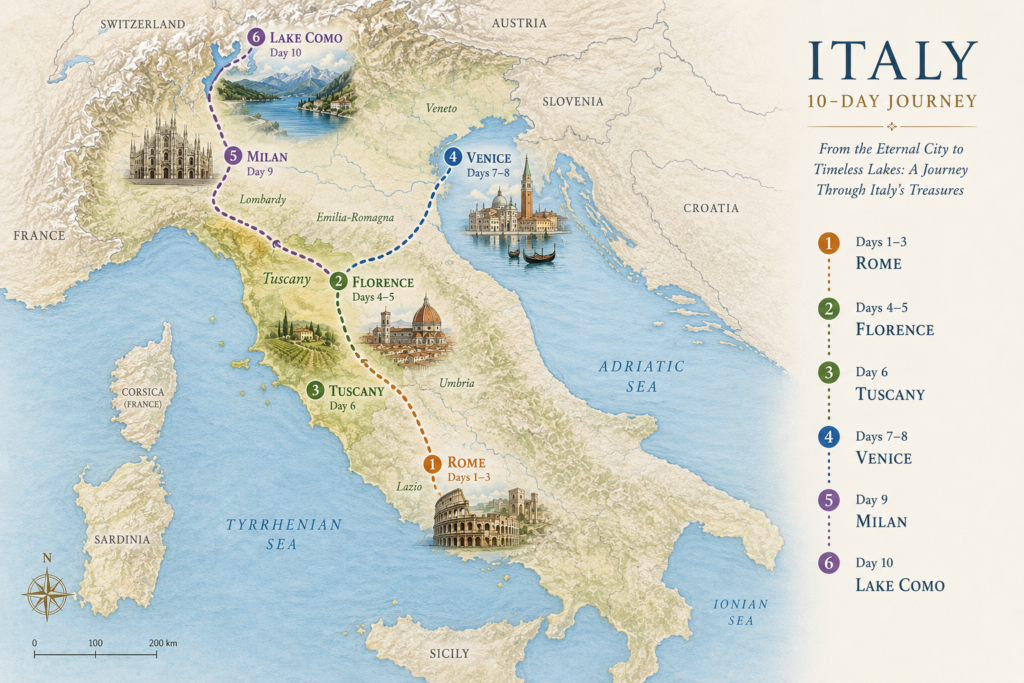
This 10-day Italy itinerary is designed specifically for first-time visitors. It begins among the ancient ruins and lively neighborhoods of Rome, continues through Renaissance Florence and the landscapes of Tuscany, then heads north to Venice before finishing in Milan with an optional visit to Lake Como.
The route works particularly well because most of the major journeys can be completed by train. There is no need to rent a car for the entire trip, hotels do not need to change every night, and each destination offers something noticeably different from the previous one.
You will experience ancient Roman landmarks, Renaissance art, Tuscan countryside, Venetian canals, northern Italian architecture, regional cuisine, and some of the most recognizable landscapes in Europe.
If you have never visited the country before, this itinerary provides a balanced introduction to Italy while leaving plenty of reasons to return.
Italy 10-Day Itinerary Overview
Here is the route covered in this itinerary:
Days 1–3: Rome – Ancient ruins, Vatican City, historic neighborhoods, fountains, piazzas, and Roman cuisine.
Days 4–5: Florence – Renaissance architecture, world-famous art, historic streets, viewpoints, and Tuscan food.
Day 6: Tuscany – A day trip into the Tuscan countryside, with options including Siena, San Gimignano, or the Chianti wine region.
Days 7–8: Venice – Canals, historic palaces, St. Mark’s Square, hidden streets, and the Venetian Lagoon.
Day 9: Milan – Gothic architecture, shopping districts, historic landmarks, and modern Italian city life.
Day 10: Lake Como or Milan – Take a day trip to Lake Como or spend additional time exploring Milan before departure.
This route follows a generally northward direction through Italy, which helps reduce unnecessary backtracking.
For the easiest journey, consider arriving at Rome Fiumicino Airport and departing from Milan Malpensa Airport. If your flights require a round trip through the same city, add enough time for the return journey when planning your final day.
Day 1: Arrive in Rome and Explore the Historic Center
Your first day in Italy should remain relatively flexible, particularly if you are arriving after a long international flight.
After reaching Rome and checking into your accommodation, spend the remainder of the day exploring the historic center on foot rather than scheduling several timed attractions.
Start around the Spanish Steps before walking toward the Trevi Fountain, one of Rome’s most recognizable landmarks. Continue through the narrow streets toward the Pantheon and Piazza Navona.
This route provides an excellent introduction to Rome because many famous landmarks are relatively close together, while the streets between them reveal churches, fountains, cafés, small restaurants, historic buildings, and everyday city life.
If you arrive early enough, continue toward Campo de’ Fiori or cross the Tiber River into Trastevere for dinner.
Trastevere is particularly atmospheric in the evening, when its narrow streets and small piazzas become filled with restaurants and people enjoying the neighborhood.
Avoid filling your arrival day with expensive reservations. Flight delays, airport transfers, jet lag, and hotel check-in can easily disrupt a tightly scheduled itinerary.
Day 1 highlights: Spanish Steps, Trevi Fountain, Pantheon, Piazza Navona, and Trastevere.
Recommended pace: Easy.
Where to stay: Centro Storico, Monti, Prati, or another neighborhood with convenient access to central Rome.
Day 2: Ancient Rome and the Colosseum

Dedicate your second day to ancient Rome.
Begin at the Colosseum, one of Italy’s most famous archaeological landmarks. Visiting early can help avoid some of the busiest periods and leaves the rest of the day available for exploring the surrounding ancient sites.
Continue into the Roman Forum, once the political, religious, and commercial center of ancient Rome. The archaeological area contains temples, basilicas, monuments, and ruins representing centuries of Roman history.
Next, explore Palatine Hill, traditionally associated with the origins of Rome and later home to imperial residences. Its elevated position also provides excellent views across the Roman Forum.
After leaving the archaeological area, walk toward Piazza Venezia and the Capitoline Hill. Depending on your energy level, continue into the historic center or spend the evening exploring Monti.
Monti is conveniently located near the Colosseum but has a more neighborhood-oriented atmosphere, with restaurants, cafés, small shops, and attractive streets.
Tickets and entry procedures for major archaeological attractions can change, so check the official attraction information before your visit and reserve timed entry when required.
Day 2 highlights: Colosseum, Roman Forum, Palatine Hill, Capitoline Hill, and Monti.
Recommended pace: Moderate to busy.
Good to know: Wear comfortable walking shoes and carry water, particularly during warmer months.
Day 3: Vatican City and More of Rome
Use your third day for Vatican City and the western side of central Rome.
Begin with the Vatican Museums, home to one of the world’s most significant collections of art and historical objects. The museum complex is enormous, so first-time visitors should avoid trying to see every gallery.
The Sistine Chapel is one of the major highlights and is normally reached toward the later stages of the museum route.
Continue to St. Peter’s Basilica and St. Peter’s Square. If access conditions and your schedule allow, climbing to the dome provides impressive views across Vatican City and Rome.
Allow much of the morning and potentially part of the afternoon for the Vatican area. Security lines, crowds, and the size of the museums mean visits often take longer than expected.
Later, cross back toward central Rome and use the evening for anything you missed on Day 1. You could return to the historic center, explore Trastevere more thoroughly, or simply enjoy a slower Italian dinner.
Three days will not cover everything in Rome, and that is intentional. Trying to fit every major museum, church, archaeological site, and neighborhood into a first visit can make the beginning of a 10-day itinerary unnecessarily exhausting.
Day 3 highlights: Vatican Museums, Sistine Chapel, St. Peter’s Basilica, St. Peter’s Square, and Trastevere.
Recommended pace: Moderate.
Book ahead: Vatican Museums and other attractions requiring timed admission.
Before Leaving Rome
Rome is the longest stop on this itinerary because the city contains an extraordinary concentration of major attractions. Three nights provide a useful introduction, although four or five nights would be better for travelers with more time.
On the morning of Day 4, take a high-speed train from Rome to Florence. The direct journey is relatively short, making rail considerably more convenient than flying between the two cities.
Try to choose accommodation in Florence where you can leave your luggage before check-in if you arrive early. This allows you to begin exploring without losing much of Day 4.
Day 4: Rome to Florence and Explore the Historic Center
Take a morning high-speed train from Rome to Florence. Traveling by train keeps this itinerary simple because both cities have centrally located railway stations, allowing you to avoid airport transfers and lengthy check-in procedures.
After arriving at Firenze Santa Maria Novella station, leave your luggage at your accommodation and begin exploring Florence on foot.
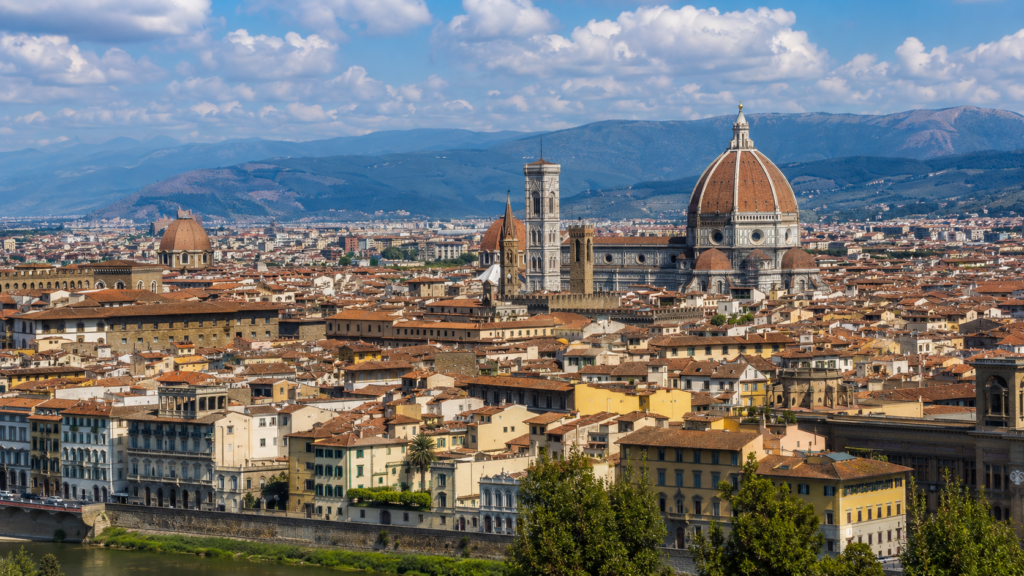
Start around Piazza del Duomo, the monumental heart of the city. Florence Cathedral, officially the Cathedral of Santa Maria del Fiore, dominates the square with its enormous Renaissance dome designed by Filippo Brunelleschi.
Beside the cathedral stand Giotto’s Bell Tower and the Baptistery of St. John, creating one of Italy’s most impressive architectural ensembles.
Continue toward Piazza della Signoria, where Palazzo Vecchio and an extraordinary collection of sculptures reflect Florence’s political and artistic history.
From here, walk toward the Arno River and cross Ponte Vecchio. The medieval bridge is one of Florence’s most recognizable landmarks and remains lined with traditional jewelry shops.
Spend the late afternoon exploring the Oltrarno district on the opposite side of the river. This part of Florence contains artisan workshops, restaurants, quieter streets, historic churches, and a more residential atmosphere.
Before sunset, consider walking to Piazzale Michelangelo. The elevated viewpoint provides one of the classic panoramas across Florence, with the cathedral dome, historic rooftops, church towers, and surrounding Tuscan hills visible in the distance.
Day 4 highlights: Florence Cathedral, Piazza del Duomo, Piazza della Signoria, Ponte Vecchio, Oltrarno, and Piazzale Michelangelo.
Recommended pace: Moderate.
Travel time: Rome to Florence is roughly 1.5 hours by the fastest direct high-speed trains, although schedules vary.
Where to stay: Historic Center, Santa Maria Novella, Santa Croce, or Oltrarno.
Day 5: Renaissance Florence
Dedicate your second day in Florence to the city’s extraordinary Renaissance art and architecture.
Begin with the Uffizi Gallery if Renaissance art is a priority. The museum contains works by some of the most important artists associated with Italian art history, including Botticelli, Leonardo da Vinci, Michelangelo, Raphael, and Caravaggio.
The Uffizi can become extremely busy, particularly during peak travel periods. Reserving admission in advance can save considerable time and make the day easier to organize.
Another major attraction is the Accademia Gallery, best known as the home of Michelangelo’s David. Travelers who want to visit both the Uffizi and Accademia should plan their admission times carefully rather than assuming they can simply arrive whenever convenient.
If you prefer architecture and city views to spending several hours inside museums, consider climbing Brunelleschi’s Dome or Giotto’s Bell Tower. Both require significant stair climbing but provide memorable perspectives over Florence.
Spend part of the afternoon wandering through the streets surrounding Santa Croce, Piazza della Repubblica, and the historic center. Florence rewards slower exploration because many interesting churches, shops, cafés, courtyards, and architectural details appear between the major attractions.
Food is another important part of the Florence experience. Traditional Tuscan cuisine emphasizes relatively simple ingredients, regional meats, bread, vegetables, cheeses, and local wines.
Travelers interested in Florentine steak may want to try bistecca alla Fiorentina, while ribollita and pappa al pomodoro provide examples of traditional Tuscan dishes with much simpler origins.
End the evening with a relaxed walk along the Arno River or return to Oltrarno for dinner.
Day 5 highlights: Uffizi Gallery, Accademia Gallery, Florence Cathedral, Santa Croce, Renaissance architecture, and Tuscan cuisine.
Recommended pace: Moderate to busy.
Book ahead: Uffizi Gallery, Accademia Gallery, and dome access if these are priorities.
Good to know: Trying to visit every major Florence museum in one day can become exhausting. Choose the attractions that genuinely interest you rather than treating them as a checklist.
Day 6: Tuscany Day Trip

After two days in Florence, use Day 6 to experience the landscapes and smaller towns of Tuscany.
There is no single perfect Tuscany day trip. The best option depends on whether you are more interested in medieval towns, countryside, wine, photography, or independent exploration.
One of the easiest combinations for first-time visitors is Siena and San Gimignano.
Siena is one of Tuscany’s most beautiful historic cities. Its medieval center is built around Piazza del Campo, the distinctive shell-shaped square where the famous Palio horse race takes place.
Nearby, Siena Cathedral is one of the city’s architectural highlights, with an elaborate marble facade and richly decorated interior.
Allow time simply to walk through Siena’s narrow streets. The historic center contains steep lanes, small squares, traditional shops, cafés, and viewpoints that make the city enjoyable beyond its major monuments.
San Gimignano offers a very different visual experience. The small medieval town is famous for the stone towers that rise above its historic center and surrounding Tuscan countryside.
Walk through the fortified center, explore its main squares, and enjoy views across vineyards, olive groves, farms, and rolling hills.
Combining Siena and San Gimignano in one day is easier with an organized excursion or car because direct public transportation between smaller Tuscan destinations can require additional planning.
Alternative: Chianti Wine Region
Travelers more interested in countryside and wine can spend Day 6 exploring the Chianti region between Florence and Siena.
The landscape is characterized by vineyards, olive groves, traditional estates, small villages, winding roads, and rolling hills.
Wine tastings are available at many estates, but reservations are often advisable. If your day includes wine tasting, an organized tour or transportation with a designated driver is a better choice than driving yourself.
A Chianti-focused day is generally slower than trying to combine several historic towns and works particularly well for travelers who want a break from museums and busy city sightseeing.
Alternative: Pisa and Lucca
Another possibility is traveling west from Florence to Pisa and Lucca.
Pisa is famous for the Leaning Tower and the monumental complex surrounding Piazza dei Miracoli. The city can be visited relatively quickly if the famous architectural landmarks are your main priority.
Nearby Lucca offers a quieter experience. Its historic center is surrounded by remarkably well-preserved Renaissance walls that have been transformed into an elevated walking and cycling route.
Combining Pisa and Lucca provides an alternative for travelers who prefer architecture and towns over vineyards and countryside.
Should You Rent a Car for Tuscany?
You do not need a rental car for the entire 10-day Italy itinerary.
Florence, Rome, Venice, and Milan are much easier to explore without one, and high-speed trains provide efficient transportation between the major cities.
However, renting a car for a single day can provide significantly greater flexibility in rural Tuscany.
A car works particularly well if you want to explore smaller villages, stop at countryside viewpoints, visit vineyards, or travel through the region at your own pace.
Remember that historic Italian cities often have restricted traffic areas, commonly known as ZTL zones. Driving into restricted areas without authorization can result in fines.
For many first-time visitors, the simplest solution is therefore to keep Florence as a base and choose either an organized Tuscany excursion or a carefully planned one-day rental.
Day 6 highlights: Siena and San Gimignano, or the Chianti wine region.
Recommended pace: Moderate.
Best for: Medieval towns, Tuscan landscapes, food, wine, and photography.
Good to know: Do not try to see Siena, San Gimignano, Pisa, Lucca, and Chianti in a single day. Choosing one route creates a much better Tuscany experience.
Tonight: Return to Florence
Return to Florence for your final night in Tuscany.
Keeping the same accommodation for three nights is intentional. Constantly changing hotels consumes time through packing, check-out, luggage storage, transportation, and check-in.
Use your final evening for a relaxed dinner and an early night if necessary.
On Day 7, the itinerary continues north from Florence to Venice by high-speed train, where the canals, islands, and architecture of the Venetian Lagoon create a completely different experience from Rome and Tuscany.
Day 7: Florence to Venice
Take a morning high-speed train from Florence to Venice. Direct trains connect Firenze Santa Maria Novella with Venezia Santa Lucia, allowing you to travel from one historic city center to another without needing a car or airport transfer.
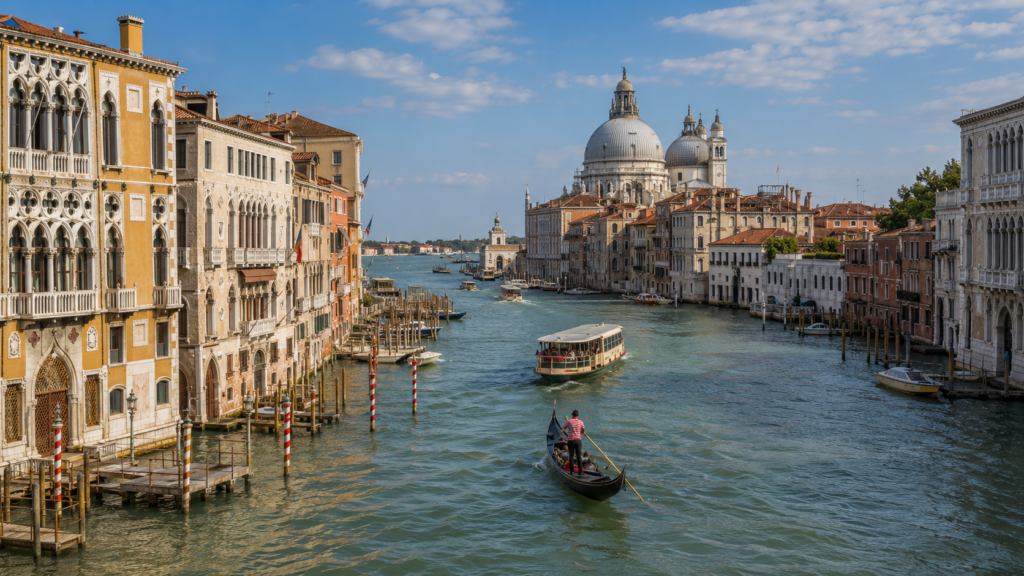
Arriving at Venezia Santa Lucia is one of the most memorable railway arrivals in Italy. Walk outside the station and the Grand Canal immediately opens in front of you, providing your first view of Venice’s waterways, historic buildings, boats, and bridges.
After leaving your luggage at your accommodation, begin exploring Venice on foot rather than immediately trying to visit every famous attraction.
Walk gradually toward the Rialto Bridge, allowing time to explore smaller streets and canals along the way. Venice is particularly rewarding when you occasionally move away from the busiest pedestrian routes.
The Rialto Bridge is one of the city’s most recognizable landmarks and provides views along the Grand Canal. The surrounding Rialto district has been an important commercial area for centuries and remains filled with shops, restaurants, and historic streets.
Continue toward Piazza San Marco, where some of Venice’s most important landmarks are concentrated.
St. Mark’s Basilica dominates the eastern side of the square with its distinctive domes, mosaics, and elaborate architecture. Nearby stands the Doge’s Palace, once the political center of the Venetian Republic.
Rather than filling your first afternoon with several long museum visits, spend time experiencing Venice itself. Walk along the waterfront, cross smaller bridges, explore quiet canals, and discover neighborhoods away from the busiest areas.
In the evening, consider exploring Dorsoduro or Cannaregio. Both provide opportunities to experience a somewhat quieter side of Venice after many daytime visitors have left.
Day 7 highlights: Grand Canal, Rialto Bridge, Piazza San Marco, St. Mark’s Basilica, canals, and historic neighborhoods.
Recommended pace: Moderate.
Travel time: Florence to Venice takes roughly two hours on the fastest direct high-speed services, although schedules vary.
Where to stay: San Marco for maximum convenience, Cannaregio for easier station access and a more residential atmosphere, or Dorsoduro for a quieter stay.
Good to know: Staying in Venice itself rather than on the mainland makes it much easier to experience the city early in the morning and later in the evening.
Day 8: Venice, St. Mark’s Basilica and the Lagoon
Begin your second day in Venice early, particularly if you want to experience Piazza San Marco before the busiest part of the day.
Visit St. Mark’s Basilica and explore its extraordinary Byzantine-influenced interior. Entry arrangements can change, and some areas require separate admission, so check current official information before your trip.
Continue to the Doge’s Palace, where grand ceremonial rooms provide insight into the wealth and political power of the former Venetian Republic.
The palace visit also includes passages connected with the famous Bridge of Sighs, one of Venice’s most recognizable architectural landmarks.
After exploring the San Marco area, decide whether you want to spend the afternoon discovering more of central Venice or exploring the Venetian Lagoon.
Option 1: Murano and Burano
Murano is internationally known for its centuries-old glassmaking tradition. Visitors can explore the island, browse glass workshops and shops, and learn more about this important Venetian craft.
Continue to Burano, famous for rows of brightly painted houses lining narrow canals. The island has a very different atmosphere from central Venice and is particularly appealing for photography and slower exploration.
Visiting both islands takes a significant portion of the day, so avoid combining the excursion with too many additional attractions.
Option 2: Explore Hidden Venice
If you prefer to remain in Venice, spend the afternoon exploring neighborhoods beyond the busiest areas around San Marco and Rialto.
Cannaregio contains quieter canals, residential streets, traditional restaurants, and important historic sites. Dorsoduro offers attractive waterfront walks, art museums, churches, and views across the lagoon.
Castello is another excellent area for travelers who want to see a more residential side of Venice.
Simply walking through these neighborhoods without a rigid itinerary can become one of the most memorable parts of a visit.
Should You Take a Gondola Ride?
A gondola ride is not necessary to experience Venice, but it can provide a unique perspective from water level.
If you decide to take one, consider choosing a route through smaller canals rather than focusing exclusively on the busiest sections around St. Mark’s Square.
Travelers who primarily want to experience the Grand Canal can use Venice’s public vaporetto water buses instead.
A vaporetto journey along the Grand Canal provides views of historic palaces, bridges, churches, and waterfront architecture at a much lower cost than a private boat experience.
Day 8 highlights: St. Mark’s Basilica, Doge’s Palace, Bridge of Sighs, Murano and Burano or Venice’s quieter neighborhoods.
Recommended pace: Moderate.
Book ahead: Major San Marco attractions if advance reservations are available for your travel dates.
Good to know: Venice becomes noticeably different early in the morning and after day visitors leave. These quieter hours are worth protecting in your itinerary.
Day 9: Venice to Milan
Take a morning train from Venice to Milan for the final stage of the itinerary.
Milan provides a striking contrast to the destinations visited earlier in the trip. While Rome is dominated by ancient history, Florence by Renaissance heritage, and Venice by canals and maritime architecture, Milan combines historic landmarks with fashion, design, business, and contemporary Italian city life.
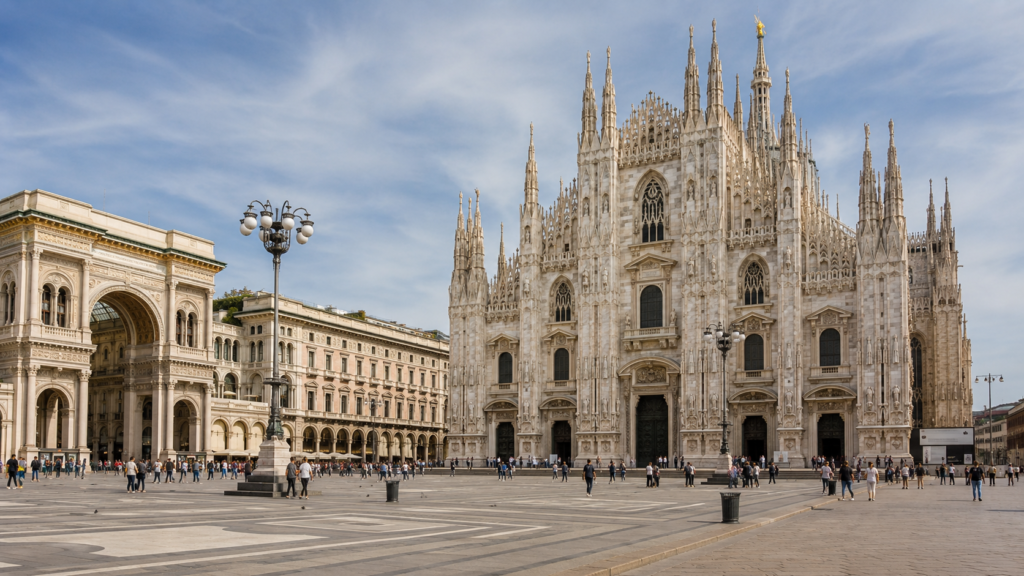
After checking into your accommodation, begin at Piazza del Duomo.
Milan Cathedral, or the Duomo di Milano, is one of the largest and most impressive Gothic churches in Europe. Its elaborate exterior contains an extraordinary collection of spires, sculptures, and architectural details.
One of the best experiences is visiting the cathedral rooftop, where travelers can walk among the Gothic spires while enjoying views across central Milan.
Beside the cathedral stands Galleria Vittorio Emanuele II, an elegant nineteenth-century shopping arcade covered by a magnificent glass roof.
Walk through the gallery toward the area surrounding Teatro alla Scala, one of the world’s most famous opera houses.
Later, continue toward the Brera district. Historic streets, galleries, restaurants, cafés, and attractive architecture make Brera an enjoyable place to spend the late afternoon and evening.
Another major Milan attraction is Leonardo da Vinci’s The Last Supper, housed at Santa Maria delle Grazie. Admission is highly controlled and tickets can be difficult to obtain, so travelers who consider it essential should investigate reservations well before arriving in Milan.
Day 9 highlights: Milan Cathedral, Duomo rooftop, Galleria Vittorio Emanuele II, Teatro alla Scala, Brera, and optionally The Last Supper.
Recommended pace: Moderate.
Travel time: Direct high-speed trains between Venice and Milan generally take around 2.5 hours, depending on the service.
Where to stay: Centro Storico, Brera, Porta Venezia, or near Milano Centrale if convenient transportation is your priority.
Book ahead: The Last Supper and popular Duomo experiences.
Day 10: Lake Como Day Trip
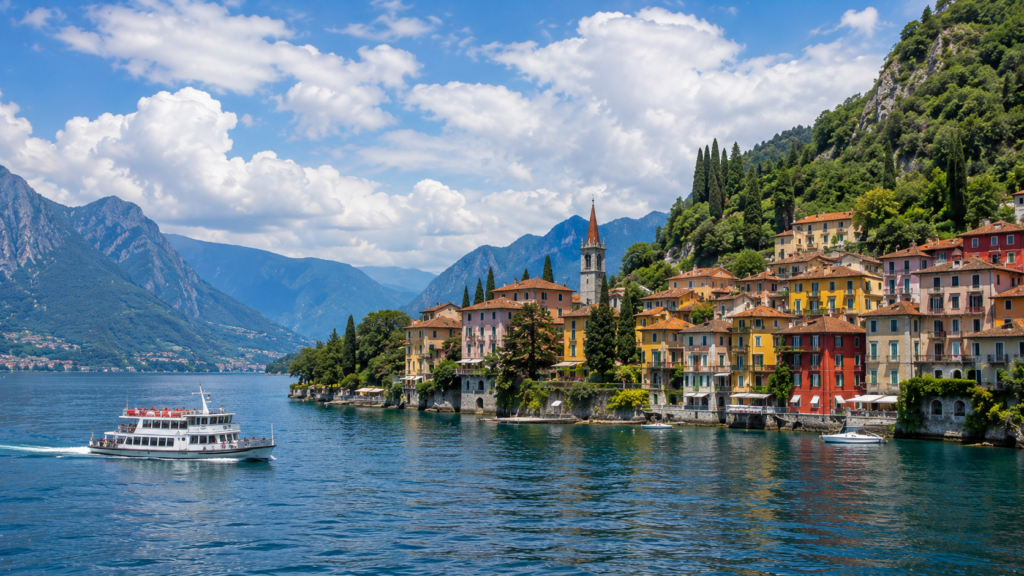
For the final day of this itinerary, take a day trip from Milan to Lake Como.
Lake Como provides a completely different final impression of Italy, replacing busy city streets with mountains, elegant lakeside towns, historic villas, gardens, and deep blue water.
Several towns can work for a day trip, but trying to visit too many in one day can make the experience unnecessarily rushed.
One straightforward option is to travel from Milan to Como and explore the southern part of the lake.
Como has an attractive historic center, cathedral, waterfront promenade, restaurants, and transportation connections to other communities around the lake.
Another popular option is Varenna, a smaller lakeside town with colorful waterfront buildings, narrow streets, gardens, and mountain scenery.
From Varenna, ferry connections can provide access to Bellagio, one of Lake Como’s most famous destinations.
Bellagio occupies a beautiful position where branches of the lake meet and is known for its historic streets, waterfront scenery, villas, gardens, restaurants, and mountain views.
If ferry schedules work well for your travel date, combining Varenna and Bellagio can create an excellent final day.
However, there is no need to collect as many Lake Como towns as possible. Spending several relaxed hours in one or two places is often more enjoyable than constantly waiting for trains and ferries.
Day 10 highlights: Lake Como, Varenna, Bellagio, or Como.
Recommended pace: Relaxed to moderate.
Best for: Lake scenery, mountain views, photography, waterfront walks, and a slower final day.
Good to know: Ferry schedules vary seasonally. Check current transportation schedules before deciding exactly which towns to combine.
Alternative Day 10: Stay in Milan
Lake Como should not be forced into the itinerary if you have an early flight, poor weather, or several Milan attractions still on your list.
Instead, spend another day exploring Milan.
You could visit Sforza Castle, walk through Parco Sempione, explore the Navigli canals, visit additional museums, shop around central Milan, or simply enjoy a slower final day.
Travelers flying home from Milan Malpensa Airport should leave a generous time buffer for reaching the airport.
If your flight departs early on Day 10, skip Lake Como entirely and treat Day 9 as your final sightseeing day.
The Complete 10-Day Italy Route
Your finished itinerary looks like this:
Day 1: Arrive in Rome – Spanish Steps, Trevi Fountain, Pantheon and Piazza Navona
Day 2: Ancient Rome – Colosseum, Roman Forum and Palatine Hill
Day 3: Vatican City – Vatican Museums, Sistine Chapel and St. Peter’s Basilica
Day 4: Rome to Florence – Duomo, Piazza della Signoria, Ponte Vecchio and Piazzale Michelangelo
Day 5: Florence – Renaissance art, Uffizi Gallery, Accademia and historic center
Day 6: Tuscany – Siena and San Gimignano or the Chianti wine region
Day 7: Florence to Venice – Grand Canal, Rialto Bridge and Piazza San Marco
Day 8: Venice – St. Mark’s Basilica, Doge’s Palace and Murano/Burano or hidden Venice
Day 9: Venice to Milan – Duomo, Galleria Vittorio Emanuele II and Brera
Day 10: Lake Como – Varenna, Bellagio or Como
This itinerary covers a substantial amount of Italy, but it avoids changing hotels every night and uses the country’s high-speed rail network for the longest city-to-city journeys.
It is intentionally designed as an introduction rather than an attempt to see the entire country. Southern Italy, the Amalfi Coast, Naples, Sicily, Sardinia, the Dolomites, Cinque Terre, Bologna, and many other destinations are better saved for another trip than squeezed into these ten days.
How to Travel Between Cities in Italy
One of the biggest advantages of this 10-day itinerary is that you do not need a rental car for most of the journey.
Italy’s high-speed rail network connects Rome, Florence, Venice, and Milan, making trains the most practical option for traveling between the major cities on this route.
The main high-speed operators are Trenitalia and Italo. Journey times and fares vary depending on the train, departure time, and how early you book.
For this itinerary, the main journeys are:
Rome to Florence: Approximately 1.5 hours by high-speed train.
Florence to Venice: Approximately 2 hours by high-speed train.
Venice to Milan: Approximately 2.5 hours by high-speed train.
Regional trains can then be used for destinations such as Lake Como, while buses, organized tours, or a short-term rental car can be useful for exploring Tuscany.
Booking high-speed trains in advance can provide access to lower fares, particularly when traveling during weekends, holidays, and popular tourism periods.
When selecting accommodation, consider how easily you can reach the main railway station. Staying reasonably close to public transportation can make travel days significantly easier, especially when carrying luggage.
Should You Rent a Car in Italy?
For this particular itinerary, renting a car for all ten days is unnecessary and may actually make the trip more complicated.
Rome, Florence, Venice, and Milan are much easier to explore on foot and by public transportation. Parking can be expensive or difficult, and historic centers often have restricted traffic zones.
Venice itself has no normal road traffic within the historic island city, making a rental car particularly unnecessary there.
The one part of this itinerary where a car can be genuinely useful is Tuscany.
Renting a car for Day 6 gives you greater freedom to explore countryside roads, vineyards, hilltop villages, and viewpoints that are more difficult to reach efficiently by public transportation.
If you do drive, research Italy’s ZTL restricted traffic zones carefully. Entering one without authorization can result in fines.
For most first-time visitors following this route, the simplest combination is:
High-speed trains between major cities + walking and public transportation within cities + optional one-day car rental or organized tour in Tuscany.
How Much Does a 10-Day Italy Trip Cost?
The cost of a 10-day trip to Italy varies significantly depending on season, accommodation standards, restaurants, attractions, transportation choices, and how early reservations are made.
Rather than planning around one fixed number, it is more useful to divide your budget into several categories.
Accommodation
Accommodation will usually be one of the largest expenses.
Rome, Florence, Venice, and Milan all offer everything from hostels and simple guesthouses to boutique hotels and luxury properties.
Venice can be particularly expensive if you stay within the historic island city, while accommodation farther from the most famous attractions may provide better value.
Prices increase significantly during popular travel periods, so booking accommodation early can make a substantial difference.
Transportation
High-speed trains are generally affordable when booked in advance but can become more expensive closer to departure.
Your transportation budget should include:
Rome airport transfer
Rome to Florence train
Florence to Venice train
Venice to Milan train
Local metro, tram, bus, and vaporetto tickets
Tuscany transportation or tour
Lake Como train and ferry tickets
You generally do not need domestic flights for this route.
Food
Food spending is one of the easiest areas to adjust according to your budget.
A day might include breakfast at a café, a simple lunch, gelato or another snack, and a traditional restaurant dinner.
You do not need to eat beside major tourist landmarks to experience good Italian food. Exploring restaurants slightly away from the busiest squares can often provide a more enjoyable experience.
Attractions
Several major attractions on this itinerary require paid admission.
Potential expenses include the Colosseum archaeological area, Vatican Museums, Uffizi Gallery, Accademia Gallery, Florence Cathedral experiences, Doge’s Palace, Milan Cathedral rooftop, and other museums or historic sites.
Decide which attractions matter most to you rather than automatically buying admission to everything.
A good Italy budget should also leave room for spontaneous experiences, additional transportation, coffee, gelato, aperitivo, and occasional changes of plan.
Where to Stay on This Italy Itinerary
Choosing the right neighborhood can save considerable time during a short trip.
You do not necessarily need to stay directly beside the most famous landmark. A well-connected neighborhood within walking distance of attractions or public transportation can often provide better value.
Where to Stay in Rome
For first-time visitors, Centro Storico provides excellent access to many famous landmarks but can be expensive.
Monti works well for travelers who want to stay close to the Colosseum while having restaurants and neighborhood atmosphere nearby.
Prati is convenient for Vatican City and generally feels more residential than the busiest parts of central Rome.
Trastevere is excellent for restaurants and evening atmosphere, although transportation to some attractions may require additional planning.
Where to Stay in Florence
Florence’s compact size makes accommodation relatively straightforward.
The historic center places you within walking distance of the Duomo, Uffizi Gallery, Ponte Vecchio, and many major attractions.
Santa Maria Novella is particularly convenient for travelers using trains.
Oltrarno provides a somewhat quieter atmosphere while remaining within walking distance of the historic center.
Where to Stay in Venice
If your budget allows, stay within historic Venice rather than commuting from the mainland.
San Marco provides maximum convenience for first-time sightseeing but is among the busiest areas.
Cannaregio is convenient for the railway station and contains quieter residential streets away from the main visitor routes.
Dorsoduro is another excellent option for travelers interested in art, attractive canals, restaurants, and a somewhat calmer atmosphere.
Where to Stay in Milan
Centro Storico provides convenient access to Milan Cathedral and many central attractions.
Brera combines historic streets, restaurants, galleries, and an attractive evening atmosphere.
Porta Venezia offers good transportation connections and a lively neighborhood environment.
Staying near Milano Centrale can be practical if you have an early train or need convenient transportation, although it provides a different experience from staying in the historic center.
Best Time for This 10-Day Italy Itinerary
Spring and autumn are particularly well suited to this route because much of the trip involves walking through historic cities.
April, May, late September, and October can provide comfortable sightseeing conditions, although weather is never guaranteed.
June offers long daylight hours but temperatures and visitor numbers begin increasing.
July and August can be extremely busy and hot, particularly in Rome and Florence. Major attractions may require more advance planning, and walking for several hours during the middle of the day can become uncomfortable.
August can also affect local business schedules in some places because many Italians traditionally take holidays during this period.
Winter offers lower visitor numbers in many destinations and can work well for travelers primarily interested in museums, food, architecture, and cities.
However, daylight hours are shorter and Lake Como or rural Tuscany will provide a very different experience compared with warmer months.
There is no universally perfect month. For a first trip following this particular route, late spring and early autumn provide an excellent balance between weather, daylight, and outdoor sightseeing.
What to Book in Advance
A successful Italy itinerary benefits from some advance reservations, but there is no need to schedule every hour of the trip.
Prioritize attractions where entry can genuinely become difficult.
Consider booking the following before departure:
Colosseum: Reserve your preferred entry option when tickets become available for your dates.
Vatican Museums: Advance booking is strongly recommended during busy periods.
Uffizi Gallery: Reserve ahead if this is one of your Florence priorities.
Accademia Gallery: Particularly important if seeing Michelangelo’s David is essential to your trip.
Florence Cathedral experiences: Dome access and other ticketed areas may require specific time slots.
St. Mark’s Basilica and Doge’s Palace: Check current reservation options before visiting Venice.
The Last Supper: This is one of the most important attractions to reserve early if you want to see it in Milan.
High-speed trains: Advance fares can be considerably better than flexible last-minute tickets.
Accommodation: Book early for Rome, Florence, Venice, and Milan during popular seasons.
Avoid scheduling major timed attractions immediately after arriving from another city. Train disruptions, luggage storage, hotel check-in, and unfamiliar transportation can create unnecessary stress.
What to Pack for 10 Days in Italy
Packing relatively light makes this itinerary much easier because you will travel between four major cities by train.
A medium suitcase or travel backpack is generally easier to manage than oversized luggage, particularly around railway stations, bridges, stairs, cobblestone streets, and older hotels.
Comfortable walking shoes are essential. Rome, Florence, Venice, and Milan all involve substantial walking.
During warmer months, pack lightweight clothing, sunscreen, sunglasses, and a reusable water bottle.
Also bring clothing appropriate for visiting churches and religious sites. Some locations require shoulders and knees to be covered.
A light jacket or additional layer remains useful even during warmer seasons, particularly for evenings, air-conditioned trains, and changing weather.
Keep valuable documents, medication, electronics, and other essentials in your carry-on rather than checked or stored luggage.
First-Time Italy Travel Tips
- Do not overpack your itinerary: Four major bases plus Tuscany and Lake Como are already substantial for ten days.
- Use high-speed trains: They are usually the easiest way to travel between Rome, Florence, Venice, and Milan.
- Validate tickets when required: Ticket rules vary depending on the type of transportation, so follow the instructions attached to your specific ticket.
- Watch for ZTL zones: Restricted traffic areas make driving into historic city centers complicated.
- Carry comfortable shoes: Expect considerably more walking than you might normally do at home.
- Book major attractions strategically: Reserve the difficult tickets while leaving portions of each day unscheduled.
- Avoid restaurants based only on landmark views: Walk several streets away from major attractions when looking for more options.
- Leave room for slow meals: Food is part of the travel experience rather than something that always needs to fit between attractions.
- Protect your belongings: As in other busy European destinations, remain aware of your belongings in crowded stations, public transportation, and major tourism areas.
- Check current information: Opening hours, ticket systems, transportation schedules, strikes, and attraction procedures can change.
- Do not try to see all of Italy: Ten days provides an introduction to the country, not a complete tour.
Frequently Asked Questions
Is 10 days enough for Italy?
Ten days is enough for an excellent first introduction to Italy if you limit the number of destinations.
This itinerary focuses on Rome, Florence, Tuscany, Venice, Milan, and Lake Como rather than attempting to include every famous region.
If you prefer slower travel, remove Milan and Lake Como and divide the additional time between Rome, Florence, Tuscany, and Venice.
Is this Italy itinerary too rushed?
The itinerary is active but manageable for travelers comfortable with regular sightseeing and changing hotels several times.
You stay three nights around Rome, three around Florence and Tuscany, two in Venice, and finish in Milan.
Travelers who strongly prefer slow travel should choose three bases rather than four.
Can I visit Rome, Florence and Venice in 10 days?
Yes. Rome, Florence, and Venice are one of the easiest combinations for a first Italy trip because all three cities are connected by high-speed rail.
With ten days, you can also include a Tuscany day trip and potentially Milan or another northern destination.
Should I choose Lake Como or spend another day in Milan?
Choose Lake Como if natural scenery, mountains, waterfront towns, and photography are priorities.
Choose Milan if you prefer architecture, museums, shopping, restaurants, or have an early departure flight.
Weather should also influence the decision. A rainy or heavily overcast day may make additional time in Milan more appealing.
Do I need a car for this itinerary?
No. You can complete almost the entire itinerary using trains and public transportation.
A car is useful for rural Tuscany but is not necessary if you join an organized excursion.
Should I include the Amalfi Coast in this itinerary?
Not with this exact route.
Adding the Amalfi Coast would require traveling south from Rome before reversing direction toward Florence and northern Italy, increasing transportation time considerably.
For a 10-day first trip, choose either a northbound Rome–Florence–Venice route or build a southern itinerary around Rome, Naples, Pompeii, and the Amalfi Coast.
Trying to combine both usually results in too much transit.
Where should I fly into and out of?
For this itinerary, flying into Rome and departing from Milan is usually the most logical arrangement.
This creates a one-direction journey through Italy and avoids returning to Rome simply to catch a flight.
Compare open-jaw or multi-city airfare with a standard round-trip ticket before booking because prices vary significantly.
Final Thoughts
Ten days will never be enough to see everything Italy has to offer, but it is enough to experience several of the country’s most remarkable destinations without turning the entire journey into a race.
Rome introduces ancient history and monumental architecture. Florence brings Renaissance art and Tuscan culture. The surrounding countryside provides medieval towns and vineyard landscapes. Venice offers an urban environment unlike anywhere else, while Milan and Lake Como reveal another side of northern Italy.
More importantly, this itinerary leaves major regions untouched.
Naples, Pompeii, the Amalfi Coast, Cinque Terre, Bologna, the Dolomites, Sicily, Sardinia, Puglia, and many other destinations provide obvious reasons for a future trip.
For your first visit, concentrate on experiencing the places you choose rather than measuring success by how many destinations you can fit into ten days.
Related Italy Travel Guides
Best Places to Visit in Italy in 2026
Explore more destinations across Italy, including historic cities, coastal regions, lakes, islands, countryside, and mountain landscapes.
Rome Travel Guide
Plan your time in Rome with detailed information about attractions, neighborhoods, transportation, food, accommodation, and practical travel tips.
Florence Travel Guide
Discover Florence’s Renaissance landmarks, museums, neighborhoods, viewpoints, restaurants, and the best ways to use the city as a base for exploring Tuscany.
Venice Travel Guide
Learn how to plan your time in Venice, including where to stay, how to use water transportation, which attractions to reserve, and how to experience quieter neighborhoods beyond San Marco.
Best Time to Visit Italy
Compare Italy’s seasons, weather patterns, visitor levels, prices, and regional differences to choose the best period for your trip.