
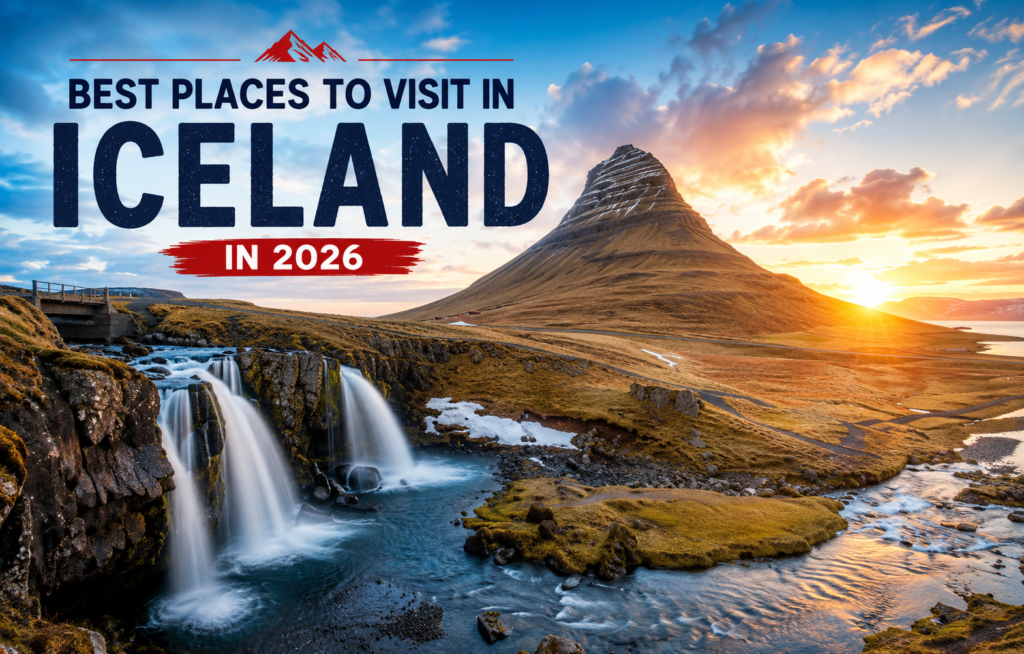
Iceland is one of the world’s most extraordinary travel destinations, where dramatic volcanic landscapes, powerful waterfalls, black sand beaches, glaciers, geothermal hot springs, and the magical Northern Lights create unforgettable adventures. Despite its relatively small size, Iceland offers an astonishing variety of natural wonders that attract millions of visitors every year.
Whether you’re planning a summer road trip along the famous Ring Road, exploring ice caves during winter, relaxing in geothermal lagoons, or chasing the Aurora Borealis, Iceland promises experiences unlike anywhere else on Earth. Excellent infrastructure, a high level of safety, and breathtaking scenery make it an ideal destination for solo travelers, couples, photographers, and families alike.
In this guide, you’ll discover the best places to visit in Iceland in 2026, including iconic attractions, hidden gems, practical travel tips, and everything you need to plan an unforgettable Icelandic adventure.
Why Visit Iceland in 2026?
Iceland continues to be one of Europe’s fastest-growing travel destinations thanks to its incredible combination of untouched wilderness and modern tourism infrastructure. Visitors can witness erupting volcanoes, walk on glaciers, swim in naturally heated lagoons, and experience landscapes that seem almost otherworldly.
The country offers unique adventures throughout every season. Summer provides nearly endless daylight under the Midnight Sun, making it perfect for road trips and hiking. Winter transforms Iceland into a snowy wonderland where visitors can explore ice caves and hunt for the spectacular Northern Lights.
Another major advantage is Iceland’s accessibility. Most of the country’s famous attractions are connected by well-maintained roads, allowing travelers to explore independently by rental car or through organized tours.
1. Reykjavík

As the world’s northernmost capital city, Reykjavík serves as the perfect gateway to Iceland. Despite its small size, the city offers a vibrant mix of modern Scandinavian culture, colorful architecture, fascinating museums, lively nightlife, and excellent restaurants.
The iconic Hallgrímskirkja Church dominates the skyline and provides panoramic views over the city from its observation tower. Just a short walk away, visitors can admire the striking Harpa Concert Hall, famous for its glass façade inspired by Iceland’s volcanic basalt formations.
Reykjavík is also home to excellent museums such as the National Museum of Iceland, the Perlan Museum with its interactive glacier exhibition, and the fascinating Whales of Iceland exhibition. The city’s Old Harbour is the departure point for whale watching tours, puffin excursions, and Northern Lights cruises during winter.
Food lovers will enjoy sampling fresh seafood, Icelandic lamb, rye bread baked using geothermal heat, and traditional dishes at both casual cafés and Michelin-starred restaurants.
Whether you’re spending one day or several, Reykjavík provides an ideal introduction to Icelandic history, culture, and hospitality.
2. Golden Circle

The Golden Circle is Iceland’s most famous sightseeing route and one of the country’s must-visit attractions. This scenic loop can easily be completed as a day trip from Reykjavík while showcasing three of Iceland’s most spectacular natural wonders.
The journey begins at Thingvellir National Park, a UNESCO World Heritage Site where visitors can walk between the North American and Eurasian tectonic plates. The park also holds great historical significance as the birthplace of Iceland’s parliament, founded in AD 930.
Next comes the geothermal valley of Haukadalur, home to the famous Strokkur Geyser. Every few minutes, Strokkur erupts dramatically, sending boiling water up to 30 meters into the air, providing one of Iceland’s most exciting natural spectacles.
The route concludes at the magnificent Gullfoss Waterfall, where glacial water crashes through a rugged canyon in two powerful tiers. On sunny days, rainbows frequently appear above the waterfall, making it one of Iceland’s most photographed landmarks.
Many visitors combine the Golden Circle with nearby geothermal lagoons, volcanic craters, horseback riding tours featuring Icelandic horses, or snowmobile adventures on Langjökull Glacier.
3. Blue Lagoon
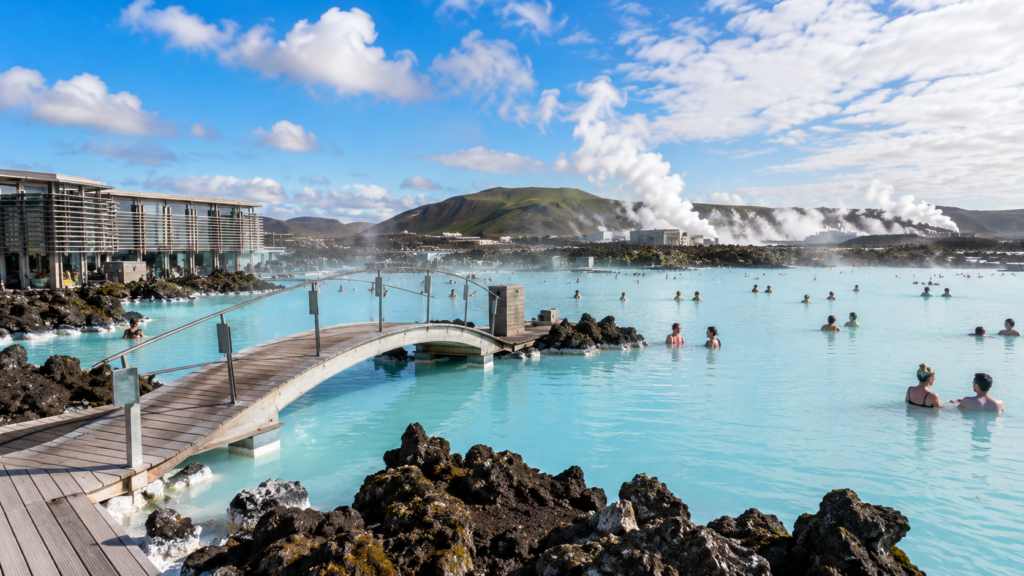
Located between Keflavík International Airport and Reykjavík, the Blue Lagoon is Iceland’s most famous geothermal spa and one of the country’s most iconic attractions.
The lagoon’s milky-blue waters are naturally heated by geothermal energy and rich in silica and minerals believed to benefit the skin. Surrounded by ancient lava fields, the setting creates an unforgettable combination of luxury and nature.
Visitors can relax in warm waters throughout the year, even while snow falls during winter. Complimentary silica mud masks, underwater massage treatments, steam rooms, saunas, and premium spa experiences make the Blue Lagoon much more than simply a swimming pool.
Advanced reservations are strongly recommended, particularly during the busy summer season, as entry times often sell out weeks in advance.
Although the Blue Lagoon is Iceland’s most famous geothermal spa, travelers looking for quieter alternatives may also enjoy Sky Lagoon near Reykjavík, Mývatn Nature Baths in northern Iceland, or the Forest Lagoon near Akureyri.
4. Jökulsárlón Glacier Lagoon

Jökulsárlón Glacier Lagoon is one of Iceland’s most breathtaking natural wonders and a destination that should be on every travel itinerary. Located within Vatnajökull National Park in southeastern Iceland, this spectacular glacial lake is filled with enormous icebergs that slowly drift toward the Atlantic Ocean.
The lagoon continues to grow each year as the Breiðamerkurjökull Glacier retreats, creating an ever-changing landscape of floating blue, white, and crystal-clear ice formations. Depending on the season, visitors can witness seals swimming among the icebergs or birds nesting along the shoreline.
Boat tours are among the most popular activities here. Amphibious boats and Zodiac tours allow visitors to cruise through the lagoon while learning about Iceland’s glaciers, geology, and climate. Photographers especially love visiting during sunrise and sunset when the light reflects beautifully off the ice.
The peaceful atmosphere and constantly shifting scenery make Jökulsárlón one of the most unforgettable places in Iceland.
5. Diamond Beach

Just across the road from Jökulsárlón lies Diamond Beach, one of Iceland’s most unique coastal landscapes.
Here, icebergs that drift out of the glacier lagoon wash ashore on a dramatic black volcanic sand beach. The contrast between sparkling crystal-blue ice and dark volcanic sand creates scenes unlike anywhere else in the world.
Every day is different because the tides constantly reshape the beach and move new ice formations onto the shore. Some pieces are small and transparent like diamonds, while others are enormous sculptures of blue glacier ice.
Diamond Beach is particularly spectacular during sunrise, when the sunlight illuminates the ice with brilliant colors. Winter often provides the best opportunities for dramatic photography, although the beach is beautiful throughout the year.
Visitors should remember that the Atlantic waves can be extremely powerful, so it’s important to admire the scenery from a safe distance.
6. Seljalandsfoss Waterfall
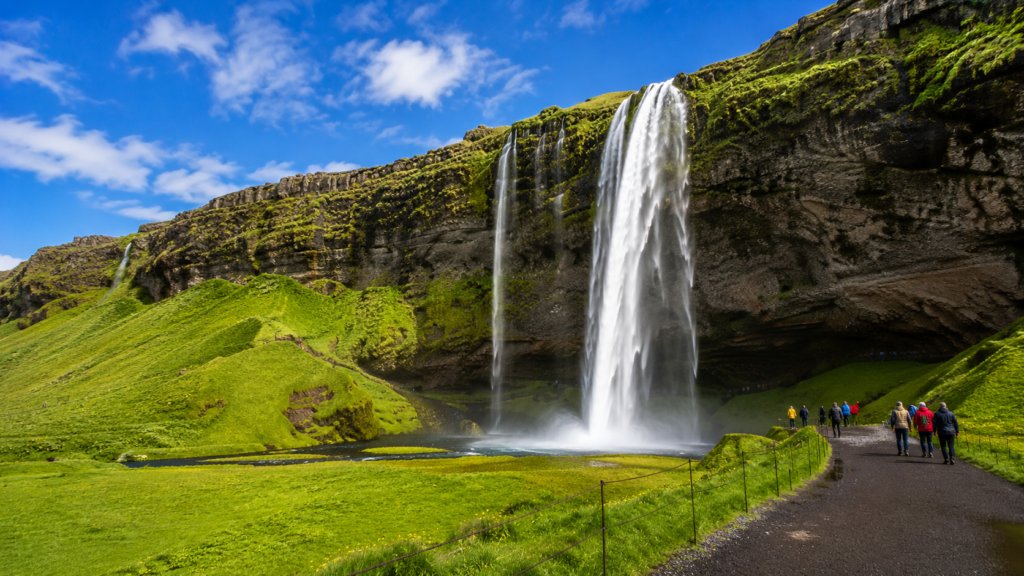
Standing 60 meters (197 feet) tall, Seljalandsfoss is one of Iceland’s most famous waterfalls and one of the few in the world where visitors can actually walk behind the cascading water.
Fed by meltwater from the Eyjafjallajökull Glacier, the waterfall plunges gracefully over ancient cliffs that once marked Iceland’s coastline thousands of years ago.
A walking path circles behind the waterfall during the warmer months, offering a completely different perspective as water crashes in front of visitors. Waterproof clothing is highly recommended because the mist can quickly soak anyone walking behind the falls.
Nearby, a short walking trail leads to Gljúfrabúi, a hidden waterfall tucked inside a narrow canyon that many travelers overlook. Visiting both waterfalls together creates one of southern Iceland’s most memorable experiences.
The area is easily accessible from the Ring Road, making it a popular stop for travelers driving Iceland’s famous South Coast.
7. Skógafoss Waterfall

Only about 30 minutes east of Seljalandsfoss stands another of Iceland’s legendary waterfalls—Skógafoss.
This powerful waterfall is approximately 60 meters high and 25 meters wide, producing an enormous curtain of water that often creates vivid rainbows on sunny days.
Visitors can admire Skógafoss from ground level or climb a staircase beside the waterfall for breathtaking panoramic views over the surrounding landscape. The viewing platform also marks the beginning of the famous Fimmvörðuháls hiking trail, one of Iceland’s premier trekking routes.
According to Icelandic legend, a Viking settler buried a treasure chest behind the waterfall centuries ago. Although the treasure has never been found, the story continues to attract curious visitors.
Its easy accessibility, dramatic scenery, and year-round beauty make Skógafoss one of Iceland’s most visited natural attractions.
8. Vík í Mýrdal
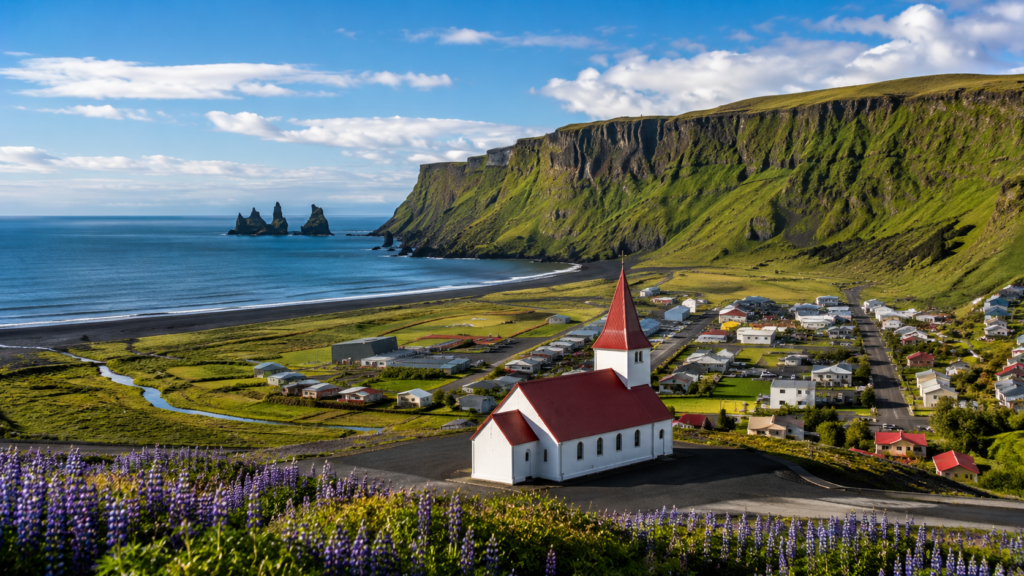
Vík í Mýrdal is Iceland’s southernmost village and one of the country’s most picturesque destinations.
Despite having a population of only a few hundred residents, Vík serves as an important stop along the South Coast thanks to its stunning scenery and convenient location.
The village is best known for Reynisfjara Black Sand Beach, famous for its volcanic sand, towering basalt columns, sea caves, and the dramatic Reynisdrangar sea stacks rising from the Atlantic Ocean.
Nearby Dyrhólaey Peninsula offers spectacular viewpoints where visitors can admire rugged cliffs, sweeping coastlines, and thousands of nesting puffins during the summer months.
Vík also serves as an excellent base for glacier hikes, ice cave tours, snowmobile adventures, and visits to nearby waterfalls and lava fields.
Although beautiful in every season, travelers should exercise caution along the beaches because Iceland’s sneaker waves are extremely dangerous and unpredictable.
9. Snæfellsnes Peninsula

Often referred to as “Iceland in Miniature,” the Snæfellsnes Peninsula showcases many of the country’s most iconic landscapes within a relatively compact area. Visitors can experience volcanic mountains, lava fields, dramatic sea cliffs, waterfalls, black sand beaches, charming fishing villages, and glaciers all in a single day.
The peninsula’s most recognizable landmark is Kirkjufell Mountain, one of Iceland’s most photographed locations. Rising beside Kirkjufellsfoss Waterfall, the mountain has become internationally famous for its distinctive shape and appearance in television series and travel photography.
At the western tip of the peninsula lies Snæfellsjökull National Park, home to the glacier-covered volcano that inspired Jules Verne’s classic novel Journey to the Center of the Earth. Visitors can explore lava caves, coastal cliffs, hiking trails, and volcanic beaches while enjoying spectacular views of the Atlantic Ocean.
Small villages such as Arnarstapi, Hellnar, and Stykkishólmur provide opportunities to experience Icelandic culture, seafood restaurants, and peaceful harbor scenery.
For travelers seeking fewer crowds than Iceland’s South Coast while still enjoying remarkable scenery, Snæfellsnes is an excellent choice.
10. Thingvellir National Park
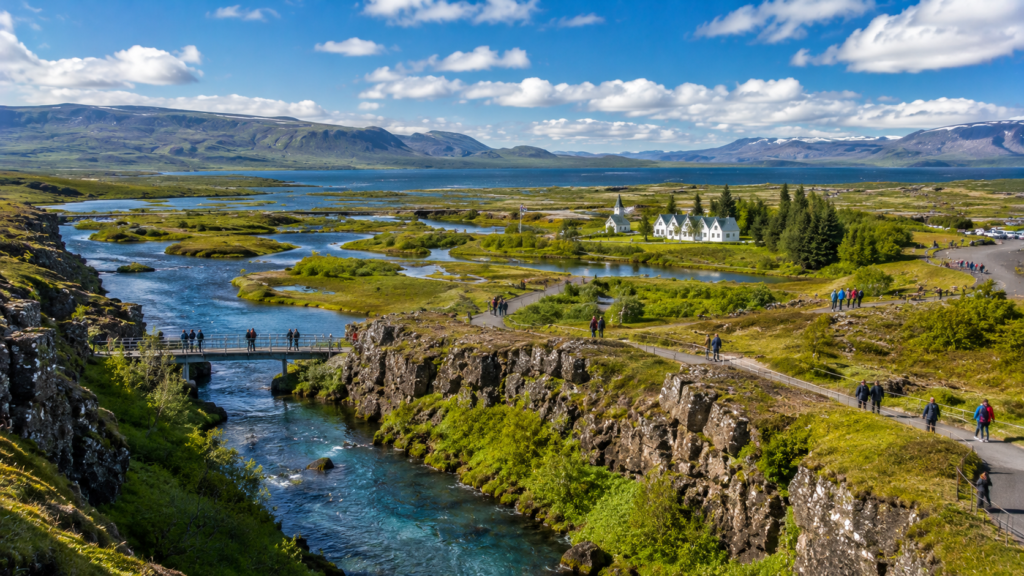
Thingvellir National Park is one of Iceland’s most historically and geologically significant destinations. Recognized as a UNESCO World Heritage Site, it is the birthplace of the Althing, one of the world’s oldest continuously operating parliaments, established in AD 930.
The park is also one of the few places on Earth where visitors can clearly see the boundary between two continental tectonic plates. Walking through the Almannagjá Rift Valley offers a rare opportunity to stand between the North American and Eurasian plates.
One of the park’s most remarkable attractions is Silfra Fissure, where crystal-clear glacial water allows certified divers and snorkelers to swim between two continents with visibility often exceeding 100 meters.
Thingvellir also features beautiful lakes, waterfalls, lava formations, and hiking trails, making it both an educational and scenic destination that appeals to history lovers and outdoor enthusiasts alike.
Best Time to Visit Iceland
Iceland is a year-round destination, with each season offering unique experiences.
Summer (June to August) brings mild temperatures, long daylight hours, and nearly 24-hour sunshine in some regions. This is the ideal season for hiking, camping, road trips, whale watching, and exploring the Highlands.
Autumn (September to October) offers colorful landscapes, fewer tourists, and the beginning of Northern Lights season.
Winter (November to March) transforms Iceland into a snowy wonderland. Visitors can explore ice caves, frozen waterfalls, glaciers, and enjoy some of the world’s best opportunities to see the Aurora Borealis.
Spring (April to May) provides longer daylight hours, melting waterfalls, migrating birds, and quieter attractions before the peak summer season begins.
Local Food to Try
Icelandic cuisine focuses on fresh, locally sourced ingredients from both land and sea.
Some traditional dishes worth trying include:
- Icelandic Lamb
- Fresh Atlantic Cod
- Arctic Char
- Langoustine Soup
- Skyr (traditional Icelandic dairy)
- Rye Bread baked using geothermal heat
- Fish and Chips
- Seafood Chowder
- Icelandic Hot Dogs
- Cinnamon Rolls and Icelandic pastries
Reykjavík also boasts a thriving restaurant scene ranging from casual cafés to Michelin-starred dining
Getting Around Iceland
The best way to explore Iceland is by renting a car, especially for travelers planning to drive the famous Ring Road.
Other transportation options include:
- Domestic flights to northern and eastern Iceland
- Guided day tours from Reykjavík
- Long-distance buses connecting major towns
- Ferry services to selected islands
- Taxi services within larger towns
Road conditions can change quickly due to weather, particularly during winter, so checking forecasts before driving is highly recommended.
Where to Stay
Accommodation options in Iceland suit a wide range of budgets.
Popular choices include:
- Luxury spa resorts
- Boutique hotels
- Family guesthouses
- Farm stays
- Mountain lodges
- Hostels
- Self-catering apartments
- Camping sites during summer
Booking several months in advance is strongly recommended for summer travel, as accommodations often sell out quickly.
Practical Travel Tips
- Carry waterproof clothing throughout the year.
- Weather changes rapidly, even during summer.
- Always check road and weather conditions before driving.
- Respect safety barriers near waterfalls and cliffs.
- Keep a safe distance from powerful ocean waves.
- Book Blue Lagoon and popular tours in advance.
- Credit cards are accepted almost everywhere.
- Tap water is among the cleanest in the world and completely safe to drink.
- Download offline maps before traveling to remote regions.
- Leave no trace and help protect Iceland’s fragile natural environment.
Frequently Asked Questions
Is Iceland expensive?
Yes. Iceland is one of Europe’s more expensive destinations, but careful planning and self-driving can help reduce costs.
How many days should I spend in Iceland?
A minimum of 7–10 days is recommended to comfortably explore the Ring Road and major attractions.
Official Tourism Website
For more travel inspiration, seasonal recommendations, and up-to-date visitor information, visit the Official Visit Iceland Website.
Official Visit Iceland Website: https://visiticeland.com/