
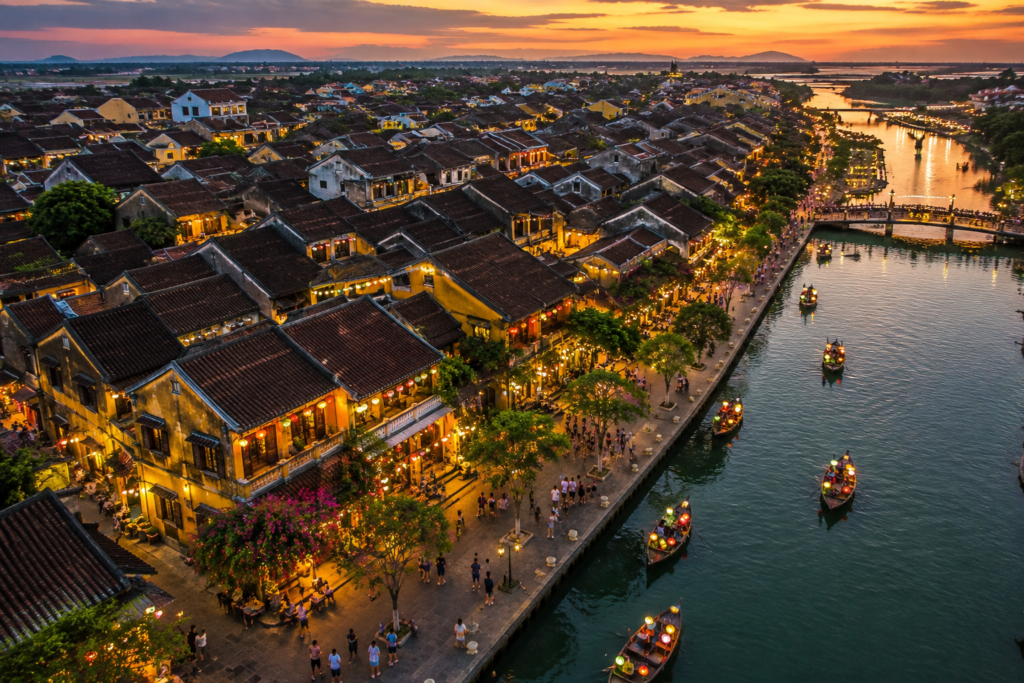
There is a reason why so many travelers arrive in Hoi An planning to stay for two days but end up extending their trip.
At first glance, Hoi An may seem like a small destination compared to bustling cities such as Hanoi or Ho Chi Minh City. It doesn’t have skyscrapers, busy metro systems, or endless shopping malls. Instead, it offers something that has become increasingly rare in modern travel: the chance to slow down.
Walking through Hoi An rarely feels like checking attractions off a list. The experience is built around simple moments. The smell of fresh bread drifting from a neighborhood bakery before sunrise. The quiet sound of bicycle wheels rolling over old streets. The reflection of colorful lanterns dancing across the Thu Bon River after sunset. A family restaurant that has served the same recipe for generations. These moments gradually become the memories travelers remember long after returning home.
Recognized as a UNESCO World Heritage Site, Hoi An preserves centuries of history while remaining wonderfully alive. Historic merchant houses stand beside cafés filled with young locals. Ancient temples share the same streets as talented tailors, family-run restaurants, and artists creating handmade lanterns.
Whether you are visiting Vietnam for the first time or returning to explore more deeply, Hoi An deserves far more than a rushed afternoon stop. It is a destination that rewards curiosity, patience, and slow exploration.
Why Visit Hoi An?
Unlike many famous tourist destinations, Hoi An does not rely on a single iconic attraction.
Its greatest strength is the atmosphere created by hundreds of small details working together.
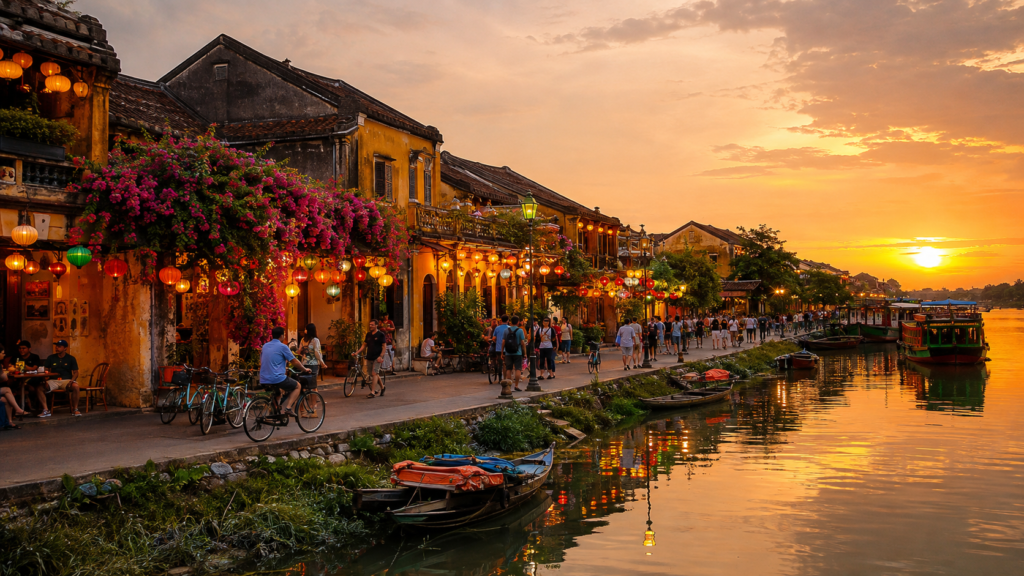
As you wander through the Ancient Town, nearly every street reveals something different. One corner is filled with the aroma of freshly brewed Vietnamese coffee, while another leads to a peaceful courtyard hidden behind weathered wooden doors. Elderly residents water flowering plants outside centuries-old homes as travelers quietly admire architecture that has changed very little over generations.
One of the greatest pleasures of Hoi An is simply walking without a plan.
Many visitors begin their day intending to visit a specific museum or temple but quickly become distracted by a charming bookstore, a riverside café, or an inviting local restaurant where lunch unexpectedly lasts two hours.
Unlike larger Vietnamese cities, distances are short.
You can spend the morning exploring historic streets, enjoy lunch at a traditional family restaurant, cycle through green rice fields in the afternoon, relax on a nearby beach before sunset, and return to the Ancient Town for dinner without ever feeling rushed.
Hoi An combines history, culture, food, beaches, countryside, shopping, and relaxation in a surprisingly compact destination.
Best Time to Visit Hoi An
Hoi An offers something unique throughout the year, although each season provides a different experience.
From February to April, temperatures are generally pleasant, humidity remains relatively comfortable, and rainfall is limited. These months are considered by many travelers to be the ideal time for sightseeing. Walking through the Ancient Town during late afternoon becomes enjoyable rather than exhausting, while photographers appreciate the clear skies and warm evening light.
Summer, from May through August, brings bright sunshine and perfect conditions for visiting nearby beaches such as An Bang Beach and Cua Dai Beach. Days become considerably warmer, however, and many locals avoid outdoor activities during the hottest afternoon hours. Visitors quickly discover that early mornings and evenings provide the most comfortable time for exploration.
The period between September and January introduces more frequent rain showers. Although occasional flooding may affect parts of the Ancient Town during particularly heavy rains, these quieter months reveal a different side of Hoi An. Wet stone streets reflect colorful lanterns, cafés become cozy shelters from afternoon showers, and the town often feels calmer after many day-trippers have left.
Regardless of the season, Hoi An is most enjoyable when explored slowly rather than according to a strict schedule.
How to Get to Hoi An
Although Hoi An is one of Vietnam’s most famous destinations, it does not have its own airport.
Most international visitors arrive through Da Nang International Airport, located approximately thirty kilometers away.
After leaving the airport, reaching Hoi An is straightforward. Taxis, Grab, private transfers, hotel shuttle services, and shared buses are all readily available. Depending on traffic, the journey usually takes between forty and fifty minutes.
Travelers arriving from Hanoi, Hue, or Ho Chi Minh City by train will also arrive in Da Nang before continuing by road to Hoi An.
The drive itself offers an enjoyable introduction to Central Vietnam, passing coastal scenery, small villages, and stretches of green countryside before entering the historic town.
Exploring the Ancient Town
The best way to experience Hoi An is simply to walk.
Cars are restricted in many areas of the Ancient Town during certain hours, creating a relaxed atmosphere rarely found in major Asian cities.
There is no need to hurry.
Some of the most rewarding experiences happen unexpectedly.
A tiny art gallery hidden inside an old merchant house.
A local family preparing traditional lanterns by hand.
A quiet temple where incense gently fills the air.
An elderly craftsman patiently carving intricate wooden decorations exactly as previous generations once did.
Rather than following maps too closely, allow yourself time to explore side streets.
Many visitors discover their favorite places entirely by accident.
Experience Sunrise Before Everyone Else
If you only follow one piece of advice during your visit, wake up early at least once.
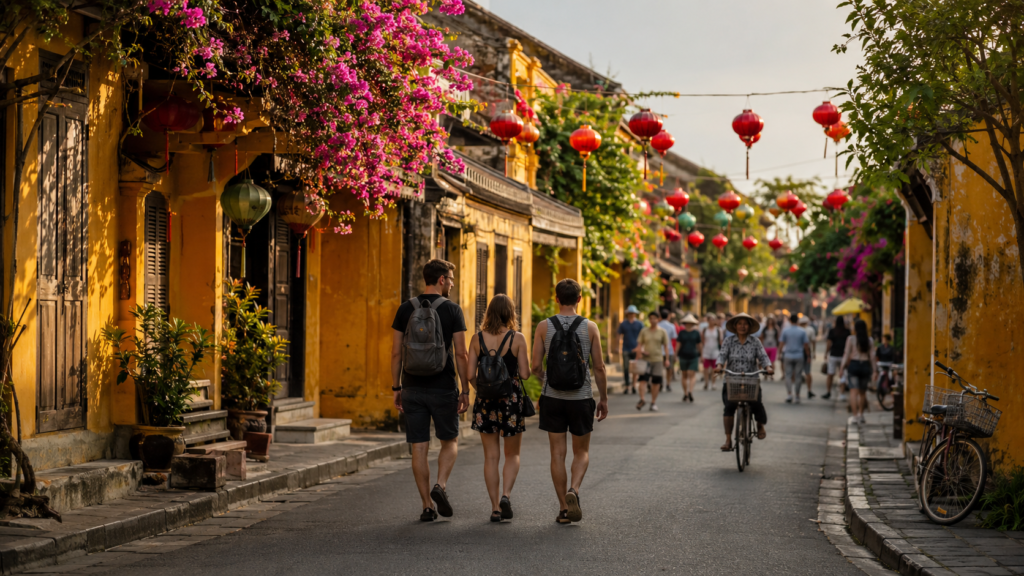
Before seven o’clock in the morning, Hoi An feels completely different.
The streets remain wonderfully peaceful.
Restaurant owners prepare fresh ingredients for breakfast.
Local residents cycle to markets carrying baskets filled with vegetables and flowers.
Shopkeepers slowly open heavy wooden shutters that have protected their businesses overnight.
Morning sunlight softly illuminates yellow walls that later become crowded with visitors taking photographs.
Without the afternoon crowds, every detail becomes easier to appreciate.
Even the famous Japanese Covered Bridge feels surprisingly quiet.
Many photographers consider this short window after sunrise to be the most beautiful time of the day.
Sunset Beside the Thu Bon River
As daylight begins to fade, the entire atmosphere gradually transforms.
Lanterns hanging above the streets begin glowing one after another.
Restaurants fill with conversations in dozens of languages.
Wooden boats gently gather along the riverbank.
Street musicians begin performing while children laugh nearby.
People naturally slow their pace.
Nobody seems eager to leave.
Watching the sunset beside the Thu Bon River requires no ticket and no reservation.
Simply find a bench, order a Vietnamese coffee, or walk slowly along the waterfront.
Sometimes the simplest moments become the most memorable.
Beyond the Ancient Town
Although most visitors focus on the historic center, Hoi An offers much more than old buildings.
Only a short bicycle ride away, peaceful rice fields stretch toward the horizon.
Traditional farming villages continue daily routines much as they have for generations.
Water buffalo quietly graze beside narrow country roads.
Farmers wearing traditional hats carefully tend vegetables beneath the morning sun.
Cycling through this landscape offers a completely different perspective of Hoi An.
The pace slows even further.
Traffic almost disappears.
Birdsong replaces the sounds of busy streets.
For travelers seeking a deeper understanding of rural Vietnam, these quiet roads often become one of the highlights of the trip.
Beaches Worth Visiting
Many first-time visitors are surprised to discover how close beautiful beaches are to Hoi An.
An Bang Beach has become a favorite for both locals and international travelers.
The atmosphere feels relaxed rather than crowded.
Small cafés serve fresh seafood, tropical fruit smoothies, and cold drinks only steps from the sand.
Further south, Cua Dai Beach offers longer stretches of coastline where visitors can simply enjoy the sound of waves without feeling surrounded by large crowds.
Spending the morning exploring the Ancient Town before relaxing on the beach during the afternoon creates one of the most balanced travel days in Vietnam.
Local Food Is Part of the Experience

Food is not simply another attraction in Hoi An.
It is part of the town’s identity.
Breakfast often begins with Cao Lau, a noodle dish found almost exclusively in Hoi An.
Lunch may include delicate White Rose Dumplings prepared using recipes passed through generations.
Afternoon naturally calls for strong Vietnamese coffee while watching life unfold beside the river.
As evening arrives, the smell of grilled pork, fresh herbs, seafood, and crispy pancakes fills the narrow streets.
Rather than choosing one expensive restaurant, consider enjoying several smaller meals throughout the day.
Many experienced travelers believe this is the best way to discover the true flavors of Hoi An.
Where to Stay
Accommodation options suit every travel style.
Visitors wanting to experience lantern-lit evenings without transportation should stay within walking distance of the Ancient Town.
Travelers searching for tranquility often choose boutique resorts surrounded by rice fields, where mornings begin with birdsong instead of traffic.
Those who prefer beach holidays may enjoy staying near An Bang Beach, combining coastal relaxation with easy access to the historic center.
Fortunately, Hoi An remains compact enough that almost every accommodation provides convenient access to major attractions.
Practical Travel Tips
Start sightseeing early in the morning to avoid both crowds and afternoon heat.
Carry some cash, as smaller family businesses may not always accept international cards.
Wear comfortable shoes because exploring Hoi An involves far more walking than many visitors expect.
Respect local customs when entering temples by dressing modestly and speaking quietly.
Allow free time within your itinerary.
Some of Hoi An’s greatest experiences cannot be scheduled.
Final Thoughts
Hoi An does not try to impress visitors through grand monuments or dramatic skylines.
Instead, it quietly reveals itself through everyday moments.
The first cup of coffee beside the river.
The scent of fresh bread drifting from a neighborhood bakery.
The reflection of lanterns dancing across calm water.
The smile of a tailor proudly showing work completed by hand.
The peaceful silence of ancient streets before sunrise.
These are the moments that define Hoi An.
Years after your journey through Vietnam has ended, you may forget the names of certain museums or monuments.
But chances are you will still remember exactly how Hoi An made you feel.
And that, more than anything else, is why so many travelers find themselves dreaming of returning.